Aditya Birla Sun Life Insurance Company Limited

Endowment Policy types explained: Which benefit structure fits your goal?

Icon-Calender September 3, 2026
Icon-Clock5 min read
4.5
Rated by 1000 readers
https://lifeinsurance.adityabirlacapital.comnullCLOSE-BUTTON

Plan Smarter, Live Better!

*Min 3 characters allowed
+91
*Please enter a valid 10 digit Mobile No
https://lifeinsurance.adityabirlacapital.comnullCLOSE-BUTTON
ICON-TICK

Thank you for your details. We will reach out to you shortly.

https://lifeinsurance.adityabirlacapital.comnullCLOSE-BUTTON
ICON-TICK

Currently we are facing some issue. Please try after sometime.

banner-imagemob-image
  • Icon-Index
    Table of Contents

Endowment Policies can be grouped by how benefits are determined, when payouts occur, and how premiums are paid. The most useful starting point is to separate Participating from Non-Participating Policies, then check whether the plan pays only at death or maturity, provides survival payouts during the term, or uses a limited premium-payment schedule. The policy document decides the classification.

What is an Endowment Policy?

An Endowment Policy is a Life Insurance contract that provides an applicable death benefit during the policy term and a maturity benefit if the life assured survives to the end of that term. It is designed for protection and structured long-term saving, but the exact payout, premium obligation, and early-exit value depend on the chosen product.

A policy should not be classified from its marketing name alone. Read the product classification, policy schedule, benefit illustration, and Customer Information Sheet together. These documents show whether benefits are guaranteed, dependent on bonus declarations, paid as a lumpsum, or spread across scheduled survival payments.

What are the main types of traditional Endowment Policies?

For practical decision-making, traditional Endowment Policies are best grouped by benefit certainty and payout timing. Participating and non-participating describe whether the policy shares in declared surplus. Standard and money-back structures describe when survival benefits are paid. Premium patterns such as regular-pay or limited-pay describe the contribution schedule.

Type or structure

How it works

Main point to verify

Participating endowment

May receive bonuses declared by the insurer in addition to applicable contractual benefits

Guaranteed benefits and non-guaranteed bonus assumptions must be shown separately.

Non-participating endowment

Does not participate in insurer surplus. Follows the benefit schedule in the contract

Conditions attached to each guaranteed* benefit.

Standard lump-sum endowment

Usually pays the survival benefit at maturity, with death cover during the term

Maturity date, death-benefit formula, and premium term.

Money-back or anticipated endowment

May pay stated survival benefits at scheduled points and a remaining benefit at maturity

Whether survival payouts reduce, replace, or sit alongside other benefits.

Limited-pay endowment

Premiums are due for a period shorter than the policy term

Total premiums payable and continued cover after payments end.

Single-premium endowment

A single premium funds the contract at inception

Liquidity, surrender terms and benefit conditions.

*Guaranteed benefits apply only as stated in the policy contract, subject to all terms and conditions and provided all due premiums are paid.

How does a Participating Endowment Policy work?

A Participating Policy combines contractual benefits with the possibility of bonuses declared from the participating fund. The type, timing, and vesting of a bonus depend on the product terms and insurer declaration. A future bonus rate is not guaranteed, so it should not be added to the assured amount as though it were certain.

The signed benefit illustration should present guaranteed and non-guaranteed scenarios separately. Ask whether a bonus, once declared and vested, becomes payable under the policy, and when. Also check whether terminal or final bonuses are discretionary and payable only on specified events such as death or maturity.

How does a Non-Participating Endowment Policy work?

A Non-Participating Policy does not share in the insurer’s participating surplus. Its benefit pattern is set out in the policy schedule and may include guaranteed* income, additions, or lumpsum benefits if the product provides them. The word “guaranteed” must always be read with the premium-payment conditions, exclusions, and other contractual requirements.

Check the entire benefit schedule, not only the headline total. Note when payments begin, how long they continue, whether the life assured must survive to each due date, and what becomes payable after death. A long payout stream is not interchangeable with an immediate lump sum of the same headline amount.

What is a money-back or anticipated-endowment structure?

A money-back or anticipated-endowment structure may pay survival benefits at specified intervals during the policy term, with a further amount at maturity if the life assured survives. Death benefits are governed separately by the contract. Scheduled payouts can support timed goals, but they also change how much value remains for later dates.

Review each payment date and the condition for receiving it. Confirm whether previously paid survival benefits affect the death or maturity benefit. Do not assume that all premiums are returned or that every scheduled payout remains available after a policy becomes paid-up.

Do regular-pay, limited-pay, and single-premium plans provide different benefits?

These labels primarily describe premium timing. Regular pay usually requires premiums across the stated payment term, limited pay ends premiums earlier than the policy term, and single premium requires one upfront payment. Benefit amounts may differ between products, so no payment pattern is automatically more valuable or more suitable.

Compare the total premium commitment, not only the instalment. A limited pay policy can require higher periodic payments, while a long regular pay term creates a longer affordability obligation. With single premium policies, consider the effect of committing a large amount at once and the contract’s surrender provisions.

Are Unit-Linked Endowment Policies the same as traditional Endowment Policies?

No. A Linked Insurance product combines life cover with units whose value depends on the chosen funds and market performance. Its investment risk is borne by the policyholder. It should not be presented as a traditional Endowment Policy or as a guaranteed-return product. Charges, fund options, and the five-year liquidity restriction require separate evaluations.

If a linked product is discussed or offered, read its key features, charges, fund risks, and benefit illustration independently. The mandatory linked-product disclosure in the compliance footer applies, and returns are not guaranteed.

Which benefits should you compare across Endowment Policy types?

Compare the death benefit, maturity or survival benefits, premium term, guaranteed and non-guaranteed components, surrender value, and paid-up rules. The correct type is the one whose contractual schedule fits your goal and cash flow while leaving you with adequate life protection. A product label alone cannot establish suitability.

  • Death protection: Test the cover against dependents, liabilities, and future obligations.
  • Maturity timing: Match the benefit date to a defined financial goal.
  • Benefit certainty: Separate guaranteed* amounts from declared or illustrative bonuses.
  • Liquidity: Understand surrender value, Policy Loans, and reduced paid-up treatment.
  • Affordability: Stress-test premiums across the entire premium-payment term.

What are the limitations of Endowment Policies?

Endowment Policies involve a long-term commitment and may offer limited early liquidity. Surrender value can be lower than premiums paid, especially in the earlier policy years. Stopping premiums may lead to lapse or reduced paid-up benefits under the contract. A savings-oriented benefit can also leave a protection gap if life cover is chosen too low.

Bonuses in Participating Policies are not assured. Policy Loans, where available, attract interest, and may reduce benefits. Riders add cost and have separate definitions and exclusions. These limitations do not make every policy unsuitable, but they must be understood before the proposal is completed.

How should you choose an Endowment Policy type?

Choose only after defining the goal amount and date, the life-cover need, the sustainable premium, and the required access to money. Then map those needs to the policy’s actual benefit schedule. If certainty matters, inspect guaranteed* amounts. If participating benefits are considered, assess the policy without treating future bonuses as certain.

Your priority

Structure to examine

Question to ask

Single future milestone

Standard lumpsum endowment

Does the maturity date and assured amount match the goal?

Scheduled cash needs

Money-back or anticipated endowment

What is payable on each date and after death?

Finish premiums earlier

Limited pay structure

Can I sustain the higher periodic commitment?

Possible bonus participation

Participating Policy

Which benefits are guaranteed and which depend on declaration?

Contractually stated benefit schedule

Non-Participating Policy

What conditions apply to every guaranteed* amount?

What documents should you read before buying?

Read the policy wording, Customer Information Sheet, signed benefit illustration, proposal form, and applicable sales prospectus. Confirm the product classification, premium and policy terms, benefit formula, exclusions, surrender value, reduced paid-up rules, revival conditions, nomination details, and grievance route. Seek written clarification for any inconsistency before paying.

How can ABSLI help?

Aditya Birla Sun Life Insurance Company Limited provides official product pages, policy documents, and servicing channels for its Life Insurance products. When considering an ABSLI Endowment Plan, verify the current product classification, UIN, eligibility, and benefit conditions in the approved sales literature. The issued policy contract remains authoritative, and product terms or availability may change.

How Much Helpful You Found This Article?

Rating_Star
Rated by 0 reader
/ 5 ( 0 reviews )
Not helpful
Somewhat helpfull
Helpful
Good
Best
RatingTick

Thank you for your feeback

Don’t forgot to share helpful information in your circle

To learn more, click here

Frequently asked questions

Do not classify a policy from that phrase alone. A Non-Participating Plan may state guaranteed* benefits, while a Participating Plan can contain both guaranteed and non-guaranteed elements. Identify each amount in the policy schedule and signed benefit illustration. Guaranteed benefits remain subject to the contract and payment of all due premiums.

No. Future bonuses depend on declaration by the insurer and are not guaranteed. The policy documents explain the bonus type and when a declared bonus vests or becomes payable. Review the guaranteed and non-guaranteed columns separately and avoid using an illustrative rate as a promised return.

No. Limited pay shortens the premium-payment period but can increase the amount due per instalment. Suitability depends on affordability, total premiums, policy term, and benefit schedule. Compare the complete contract rather than assuming that fewer payment years mean lower cost or higher value.

After the grace period, the policy may lapse or continue with reduced paid-up benefits if the relevant conditions are met. Revival may be available within the stated period. The effect depends on premiums already paid and the policy wording, so check paid-up, surrender, and revival clauses before purchase.

It may be surrendered after acquiring surrender value under the contract. The amount can be lower than total premiums paid, particularly in early years. Review guaranteed surrender value, any special surrender value provision, outstanding Loans, and the effect on protection before deciding.

Show All
Hide

References

  • Insurance Regulatory and Development Authority of India, Insurance Products Regulations, 2024, notified 1 April 2024: https://irdai.gov.in/
  • IRDAI policyholder education and consumer resources: https://policyholder.gov.in/
  • ABSLI, live source article, “Endowment Policy: Meaning, Types & Benefits,” accessed 2 September 2026: https://lifeinsurance.adityabirlacapital.com/articles/savings-insurance/endowment-policy-meaning-types-and-benefits/
  • ABSLI corporate and customer-service details: https://lifeinsurance.adityabirlacapital.com/

Thanks for reaching out. We will reach out to you shortly.

Thanks for reaching out. Currently we are facing some issue.

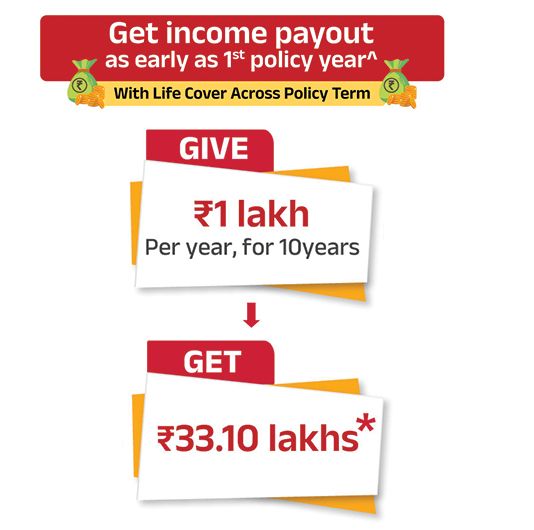
Get immediate income payout after 1 day of policy issuance^

*Min 3 characters
+91phone-icon
*Please enter a valid 10 digit Mobile No.
*This field is required.

ABSLI Nishchit Aayush Plan

ICON-CLICK

Guaranteed# income

ICON-CLICK

Life Cover across policy term

ICON-CLICK

Lumpsum Benefit at policy maturity, in addition to Income

Get :
₹33.74 lakhs~

Pay: ₹10K/month for 10 years

This article is for general information and education only. It is not financial, legal or tax advice and does not constitute a recommendation or solicitation. Life insurance benefits, exclusions, surrender values, bonuses, riders, eligibility and premium terms vary by product. Please read the applicable sales prospectus, benefit illustration, Customer Information Sheet and policy document carefully before concluding a sale. In case of conflict, the policy contract prevails.

*Guaranteed benefits apply only as stated in the policy contract, subject to all terms and conditions and provided all due premiums are paid.

Linked insurance products are different from traditional life insurance products and are subject to risk factors. In unit-linked policies, the investment risk in the investment portfolio is borne by the policyholder. Linked insurance products do not offer liquidity during the first five years of the contract. The policyholder cannot withdraw or surrender monies invested in linked insurance products, completely or partially, until the end of the fifth year from inception. Unit prices may go up or down based on fund performance and factors influencing capital markets. Please understand the associated risks and applicable charges from the policy document. Returns are not guaranteed.

For more details on risk factors, terms and conditions, please read the sales prospectus carefully before concluding the sale.

Aditya Birla Sun Life Insurance Company Limited (ABSLI), Registered Office: One World Center, Tower 1, 16th Floor, Jupiter Mill Compound, 841, Senapati Bapat Marg, Elphinstone Road, Mumbai 400013. CIN: U99999MH2000PLC128110. IRDAI Registration No. 109. Toll-free: 1800 270 7000. Website: https://lifeinsurance.adityabirlacapital.com/

Trade Logo “Aditya Birla Capital” is owned by Aditya Birla Management Corporation Private Limited and used by Aditya Birla Sun Life Insurance Company Limited under licence.

BEWARE OF SPURIOUS PHONE CALLS AND FICTITIOUS / FRAUDULENT OFFERS: IRDAI or its officials do not engage in activities such as selling insurance policies, announcing bonuses or investing premiums. Members of the public receiving such calls should lodge a police complaint.

whatsapp-imagewhatsapp-image