A Term Insurance Plan is built to answer three separate risks, not one. Most buyers price it only against death, but a well-structured Term Plan also responds to disability and disease through riders. The death benefit replaces lost income for your family. A disability rider funds the extra cost of living with a permanent or temporary disability.
A Critical Illness Rider pays out when a serious diagnosis, not death, is what disrupts your finances. Checking all three Ds, not just one, decides whether your cover actually holds up when life goes wrong.
What is the death benefit in Term Insurance?
The death benefit is a fixed sum your policy pays to your nominee if you die during the policy term. It is the core purpose of a Term Plan: replacing your income so your family's day-to-day life, Loans, and long-term goals are not derailed by your absence. You choose how this amount reaches your family at the time you buy the policy. Common payout structures are:
- Lumpsum
- Level monthly income
- Increasing monthly income
- Lump sum + level monthly income
- Lump sum + increasing monthly income
A lumpsum suits a family that will clear a large Loan or invest the amount themselves. A monthly income option suits a family that wants a steady, predictable replacement for your salary. Some plans let you split the payout across both, which is worth considering if part of the money is earmarked for debt and part for ongoing expenses.
What happens if a disability stops you from earning?
A standard Term Plan does not automatically cover disability. If an accident leaves you unable to work, the base policy pays nothing until death occurs. You have to add a rider to close this gap. Two riders typically address this:
- Accidental Disability Rider: Pays out if an accident leaves you disabled, to help cover extra living costs such as physiotherapy, mobility aids, and home or vehicle modifications. The payout structure usually depends on how severe and how long the disability lasts:
|
Type of disability
|
Typical rider payout
|
|
Temporary disability
|
A fixed amount paid in instalments, acting as replacement income for everyday expenses
|
|
Permanent disability
|
A lump sum payment
|
Terms and conditions on this split vary by insurer and plan. Always check the policy document for your specific plan.
- Waiver of Premium in Accidental Disability: if an accident leaves you permanently disabled, your future premiums are waived once you inform your insurer, subject to the policy's terms and conditions and any waiting period. Your cover continues, and if you die during the remaining term, your family still receives the full death benefit.
What if you are diagnosed with a critical or terminal illness?
Health-related risk is a financial risk as well. The treatment cost and the loss of income can hit a family as hard as death does. Two riders are built for this:
- Critical Illness Rider: Pays a lumpsum equal to the critical illness sum assured if you are diagnosed with a major illness named in your policy document. Depending on how the rider is structured, this amount is either an addition to your base cover or a withdrawal from it. A related option, waiver of premium due to critical illness, stops future premiums once a covered diagnosis is confirmed.
- Terminal Illness Benefit Rider: Pays out a percentage of your base cover in advance if you are diagnosed with a terminal illness, while you are still alive. This advance amount is then deducted from the eventual death benefit. It exists specifically to fund ongoing care, medication, and therapy costs at the point they are hardest to afford, rather than after death.
Both riders carry waiting periods and exclusions, so read the policy wording before assuming a diagnosis is covered.
Why do the 3 Ds matter together?
Looking at death, disability, and disease as one decision, rather than three separate purchases, changes two things: how much cover you need, and how efficiently you get it.
- Comprehensive protection. A death-only plan leaves you exposed the moment an accident or a diagnosis, not death, is what stops your income. Riders close that gap on the same policy.
- Cost efficiency. Adding riders to one Term Plan is typically affordable than the combined cost of arranging separate standalone covers for disability and illness, because the insurer is underwriting one policy with one set of overheads instead of three.
- Adaptability across life stages. Younger buyers with dependents and an active career often lean harder on the disability and critical illness riders. Buyers closer to retirement often prioritise the death benefit and terminal illness cover instead. Because riders can be chosen and adjusted at the time of purchase, the same base plan can be shaped to fit where you are in life.
What is the most common mistake seen in 3D planning?
The most common mistake is treating riders as an afterthought once the base sum assured is finalised, instead of sizing each rider to a real number. A death benefit is usually sized against annual income multiplied by the years your family would need support.
A Critical Illness Rider should be sized against the actual cost of treatment for the illnesses most relevant to your family history and city, not a round number picked at random. Buyers who size riders this way rarely end up under-covered when a claim actually happens.
How can an ABSLI Term Plan help with the 3 Ds?
If you are comparing plans, the ABSLI Super Term Plan is a Non-Linked, Non-Participating Individual Life Insurance built for salaried individuals, with a life cover option of ₹1 crore. It is designed to be paired with riders so the death, disability, and disease pieces can sit on one policy rather than three.
When you are evaluating any Term Plan for how well it will actually pay out, the insurer's claim settlement track record is worth checking. ABSLI’s individual claim settlement ratio stood at 98.86% for FY 25-26. Product features, exact rider structures, and premiums should always be confirmed against the current policy brochure before you buy.





 September 15, 2026
 5 mins


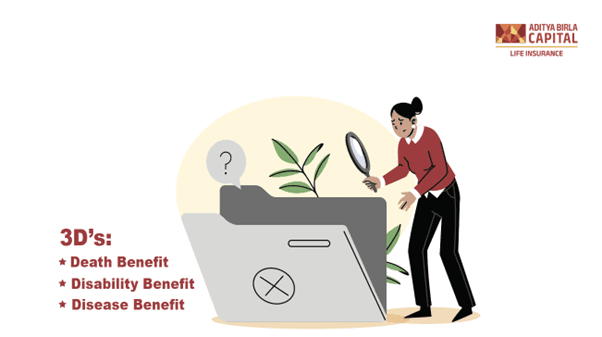
 Table of Contents


 BUY ONLINE