Aditya Birla Sun Life Insurance Company Limited

Is ₹5 crore enough to retire in India in 2026?

Icon-Calender September 17, 2026
Icon-Clock5 mins
★
4.5
Rated by 1000 readers
https://lifeinsurance.adityabirlacapital.comnullCLOSE-BUTTON

Plan Smarter, Live Better!

*Min 3 characters allowed
+91
*Please enter a valid 10 digit Mobile No
https://lifeinsurance.adityabirlacapital.comnullCLOSE-BUTTON
ICON-TICK

Thank you for your details. We will reach out to you shortly.

https://lifeinsurance.adityabirlacapital.comnullCLOSE-BUTTON
ICON-TICK

Currently we are facing some issue. Please try after sometime.

banner-imagemob-image
  • Icon-Index
    Table of Contents

₹5 crore may be enough for retirement in India if your first-year withdrawals are modest, major goals are separately funded, and the plan can absorb inflation, tax, healthcare costs, and a long retirement. It may be inadequate if spending starts high, retirement begins early or a large part of the corpus is illiquid. The useful question is not whether ₹5 crore sounds large, but how much you need to draw from it each year.

How can you test whether ₹5 crore is enough?

Start with the household's expected annual retirement spending, not an assumed return. Remove expenses that will end before retirement, add costs that may rise, and keep one-off goals outside the core retirement corpus. Then divide first-year withdrawals by ₹5 crore. That percentage is a clear starting measure, although it does not guarantee how long the money will last.

For example, the table below assumes the full ₹5 crore is available for retirement and excludes tax, fees, and one-off withdrawals. It is a diagnostic, not a recommendation.

First-year monthly withdrawal

First-year annual withdrawal

Percentage of ₹5 crore

₹1,00,000

₹12,00,000

2.4%

₹1,50,000

₹18,00,000

3.6%

₹2,00,000

₹24,00,000

4.8%

₹2,50,000

₹30,00,000

6.0%


A lower starting percentage leaves more room for rising expenses and weak market periods. A higher percentage places more pressure on future returns and may require spending reductions. There is no universal safe rate for every Indian household because taxes, asset mix, retirement length, and cash-flow needs differ.

Why is dividing ₹5 crore by today's expenses misleading?

A static division assumes your annual cost never rises. Retirement spending changes over time, and inflation reduces what the same rupee amount can buy. A plan must therefore increase future spending assumptions instead of treating today's budget as permanent. Consider a household spending ₹1 lakh a month at retirement. At an illustrative 5% annual inflation rate, the same lifestyle would cost about ₹1.63 lakh a month after 10 years and about ₹2.65 lakh after 20 years.

These are mathematical illustrations, not inflation forecasts. The actual path will vary across food, housing, travel, and healthcare.

Which costs should sit outside the monthly budget?

Separate irregular or high-impact costs before judging adequacy. If they are hidden inside a broad monthly estimate, a ₹5 crore corpus can appear stronger than it is. Ring-fencing also prevents one large payment from disrupting income needed for daily living.

  • Emergency liquidity for repairs, family support, or temporary income gaps.
  • Healthcare deductibles, excluded treatments, and long-term care support beyond Insurance cover.
  • Home renovation, vehicle replacement, and large family commitments.
  • Any legacy amount you intend to preserve rather than spend during retirement.

If ₹75 lakh is reserved for these purposes, only ₹4.25 crore remains to support regular spending. A ₹18 lakh first-year withdrawal would then equal about 4.24% of the usable corpus, not 3.6% of the headline amount.

How do retirement age and longevity change the answer?

The same corpus has to work harder when retirement starts earlier. Someone retiring at 50 may need income for several more years than someone retiring at 65. Couples should also plan for the possibility that income continues for the longer-living spouse, while some household expenses remain after the first death. Use a planning horizon that extends beyond average experience rather than trying to predict an exact lifespan.

Test the plan to age 90 or 95, then check whether essential spending remains affordable if the household lives longer. This is a planning assumption, not a statement about personal life expectancy.

What can make a ₹5 crore plan fail?

A retirement plan can fail even when average returns look acceptable. The timing of weak years matters because withdrawals made during a market fall permanently reduce the amount available to recover. This is called sequence-of-returns risk:

  • High withdrawals in the first decade of retirement.
  • A large unplanned medical or family expense.
  • Too little readily available money for near-term needs.
  • Concentrating the corpus in assets that are volatile, illiquid, or difficult to value.
  • Ignoring tax and product charges when estimating spendable income.

A practical review should include a lower-return case, an inflation shock, and an early one-off expense. If essential spending still works under those conditions, the plan is more resilient. The exercise does not remove risk, but it reveals where adjustments may be needed.

How should income needs be organised after retirement?

Match the source of money to the type of expense. Keep near-term essential spending in accessible assets, plan separately for discretionary spending, and review longer-term assets at scheduled intervals. This reduces the need to sell long-term holdings solely because a monthly bill is due.

  1. List essential monthly expenses and discretionary expenses separately.
  2. Set aside the next 12 to 24 months of expected withdrawals in an accessible bucket as an illustrative planning range, based on personal circumstances.
  3. Map known large expenses to their expected dates.
  4. Review actual spending, inflation, tax and asset values at least annually, and after a major life event.
  5. Decide in advance which discretionary costs can be reduced during a difficult year.

Where can guaranteed lifetime income fit?

An annuity can convert an eligible purchase amount into income according to the chosen option and policy terms. It may help cover part of essential spending or reduce uncertainty about outliving an income stream. However, annuity rates, liquidity, death benefits, surrender provisions, and tax treatment differ by option. Read the policy wording and benefit illustration before deciding.

ABSLI offers retirement and annuity solutions. Product suitability depends on age, goals, income needs, and the selected option. This article does not recommend a product or promise a return.

What should you do before deciding that ₹5 crore is enough?

Run the decision in this order: confirm the usable corpus, estimate first-year essential spending, calculate the starting withdrawal percentage, inflate future costs, reserve money for healthcare and one-off goals, and stress-test a long retirement. Then compare the result with income sources that do not depend on drawing from this corpus.

If the plan falls short, the answer need not be a single drastic change.

Retiring later, reducing early discretionary spending, separately funding major goals, or building an additional income source may improve the margin. Review the plan with a qualified financial adviser and, where relevant, a tax professional.

How Much Helpful You Found This Article?

Rating_Star
Rated by 0 reader
/ 5 ( 0 reviews )
Not helpful
Somewhat helpfull
Helpful
Good
Best
RatingTick

Thank you for your feeback

Don’t forgot to share helpful information in your circle

Frequently asked questions

Possibly, but an early retirement creates a longer funding period and greater exposure to inflation and poor return sequences. Test spending through at least age 90 or 95, separate large goals, and check whether the plan works after tax and healthcare costs. A personal cashflow projection is necessary before deciding.

There is no fixed amount unless a specific contract defines it. Drawing ₹1 lakh a month equals 2.4% of the corpus in the first year, while ₹2 lakh equals 4.8%. Whether either level lasts depends on inflation, tax, fees, asset performance, withdrawal timing, and retirement length.

At a fixed ₹1 lakh monthly withdrawal, ignoring inflation, tax and every other cost, ₹5 crore divided by ₹12 lakh is about 41.7 years. That arithmetic is not a retirement forecast because real expenses change and large one-off costs occur.

Yes. Budget for premiums, deductibles, exclusions, routine care, and costs beyond policy limits. Keep a separate medical contingency if appropriate. Health Insurance can transfer specified risks, but coverage remains subject to policy terms, exclusions, waiting periods, and claim conditions.

Review it at least once a year and after retirement, bereavement, a major diagnosis, relocation, or a large expense. Compare actual spending with the plan and update inflation, taxes, assets, liabilities, nominees, and income needs.

Show All
Hide

Also Read

References

  • Reserve Bank of India, Monetary Policy Statement, August 2026. CPI inflation for FY 2026-27 projected at 5.1%: https://www.rbi.org.in/Scripts/BS_PressReleaseDisplay.aspx?prid=62864
  • Reserve Bank of India, Review of Monetary Policy Framework discussion paper, 21 August 2025: https://www.rbi.org.in/Scripts/PublicationsView.aspx?id=23171
  • IRDAI, consolidated regulations, including Insurance Products Regulations 2024 and Protection of Policyholders' Interests Regulations 2024: https://irdai.gov.in/consolidated-gazette-notified-regulations
  • Existing ABSLI article reviewed: https://lifeinsurance.adityabirlacapital.com/articles/retirement-insurance/is-5-crore-enough-for-your-retirement-in-india/
  • All corpus percentages and inflation illustrations are author calculations from the assumptions stated in the relevant paragraph.

Thank you for your details. We will reach out to you shortly.

Thanks for reaching out. Currently we are facing some issue.

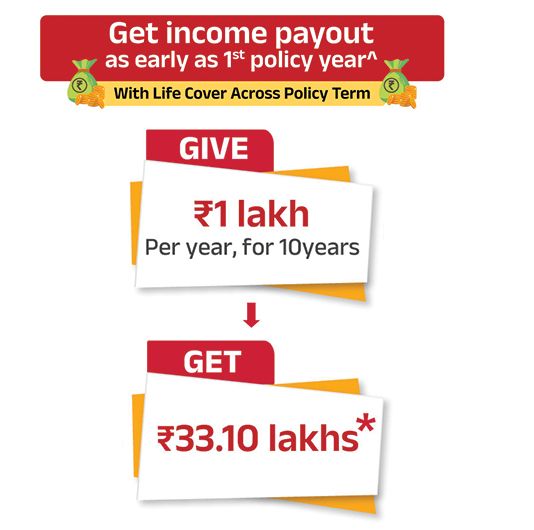
Give ₹1 lakh/ month for 5 years and Get ₹ 4.01 lakhs every year till your life1

*Min 3 characters
+91phone-icon
*Please enter a valid 10 digit Mobile No.
*This field is required.

ABSLI Guaranteed Annuity Plus

Multiple annuity options, Regular income stream.

ICON-CLICK

Guaranteed# lifelong income

Icon-Income-Benefit

Top-up option for annuity

ICON-CLICK

Single/Joint Life cover option

ICON-CLICK

Deferred annuity option

Give :
₹ 1 lakhs/Month for 5 year¹

Get :
₹4.01 lakhs/-

This article is for general information and education only. It does not constitute financial, investment, tax, legal or retirement-planning advice. Illustrations are based on stated assumptions and are not promises, projections or guarantees of returns, income or corpus longevity. Actual outcomes depend on inflation, taxes, expenses, product terms, asset performance and personal circumstances.

Tax benefits and tax treatment are subject to prevailing tax laws, conditions and amendments. Please consult a qualified tax adviser for advice relevant to your circumstances. Insurance is the subject matter of solicitation.

whatsapp-imagewhatsapp-image