

- All Insurance
- Endowment Plans
- Savings PlansNew
- Term Insurance
- Pension PlansNew
- Critical Illness Insurance
- ULIP Plan
- Group Insurance
- Protection Solutions
- Employer Employee
- Voluntary
- Affinity
- Credit Life
- Retirement Solutions
- Annuity Scheme
- Gratuity
- Leave Encashment
- Post Retirement Medical Benefits Scheme
- Superannuation
- Withdrawn Products
- NRI Plans
- Articles
- Where Do I?
- Find Customer Service
- Learn About Life Insurance
- Become a Life Insurance Advisor
- Know Our Funds
- Manage My Claim
- Know more about UPI Autopay
- Read FAQs
- Register For One ABC Id
- Download Forms
- Read Market Outlook
- Download Public Disclosures
- Disclosure of Key Performance and Financial Parameters
- Financial Calculator
- Know your Advisor
- Term Insurance
- Manage My Policy
- Her Insurance

Connect
Aditya Birla Sun Life Insurance Company Limited



Aditya Birla Sun Life Insurance Company Limited
How to show gratuity in your ITR?
 October 6, 2026
 5 mins read

Plan Smarter, Live Better!


 Table of Contents
How Much Helpful You Found This Article?

Rated by 0 reader
/ 5 ( reviews )
Not helpful
Somewhat helpfull
Helpful
Good
Best

Thank you for your feeback
Frequently asked questions
You can still claim it yourself. As long as you were eligible (generally 5 years of service, with exceptions for death or disability), you can manually enter the exempt amount under Section 10(10) while filing your ITR, even if it's missing from your Form 16.
Yes. Even a fully tax-free gratuity needs to be shown in Schedule EI. Undisclosed large inflows can trigger a mismatch query from the tax department.
ITR-1 generally works for salaried individuals with no other complex income. If you also have capital gains in the same year, use ITR-2.
The exempt amount is the least of, the actual gratuity received, ₹20 lakh, or a formula based on your last drawn salary and years of service. Most ITR portals require you to calculate and enter this figure yourself.
Yes, as a belated return, though you may lose certain benefits and pay a late fee (up to ₹5,000, or a lower amount if your total income is below the applicable threshold).
Report ₹20 lakh (the exempt portion) in Schedule EI and the remaining ₹5 lakh (the taxable portion) in the Salary Schedule.
No. The Section 10(10) and Schedule EI fields work the same way under both the old and new tax regimes.
The relief is typically disallowed, and you'd be required to pay tax as if the entire taxable gratuity was earned in a single year.
Yes, you can file a revised return under Section 139(5) within the timeline allowed for the relevant assessment year, generally before the end of that assessment year.
Show All
Hide
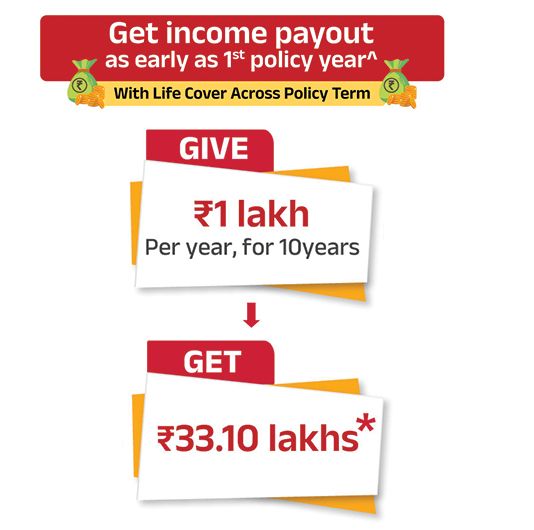
Give ₹1 lakh/ month for 5 years and Get ₹ 4.01 lakhs every year till your life1
ABSLI Guaranteed Annuity Plus
Multiple annuity options, Regular income stream.

Guaranteed# lifelong income

Top-up option for annuity
Single/Joint Life cover option
Deferred annuity option
Give :
₹ 1 lakhs/Month for 5 year¹
Get :
₹4.01 lakhs/-
 ENQUIRE NOW
Recently Added Article





Most Popular Calculator


