Aditya Birla Sun Life Insurance Company Limited

Gratuity Tax Under the New Tax Regime vs Old Tax Regime

Icon-Calender April 24, 2026
Icon-Clock5 mins read
4.5
Rated by 1000 readers
https://lifeinsurance.adityabirlacapital.comnullCLOSE-BUTTON

Plan Smarter, Live Better!

*Min 3 characters allowed
+91
*Please enter a valid 10 digit Mobile No
https://lifeinsurance.adityabirlacapital.comnullCLOSE-BUTTON
ICON-TICK

Thank you for your details. We will reach out to you shortly.

https://lifeinsurance.adityabirlacapital.comnullCLOSE-BUTTON
ICON-TICK

Currently we are facing some issue. Please try after sometime.

banner-imagemob-image
  • Icon-Index
    Table of Contents

In the ever-evolving landscape of Indian personal finance, the debate between the Old Tax Regime and the New Tax Regime has reached a fever pitch. By March 2026, the New Tax Regime has become the default choice for most, but the Old Regime remains a powerful sanctuary for those with heavy investments.

However, when it comes to Gratuity, a question often arises: Do I lose my tax exemption if I switch to the New Tax Regime?

The answer is a resounding No.

Gratuity remains one of the few "survivalist" exemptions that exist in both worlds. In this comprehensive guide, we will break down how gratuity is treated under both regimes in 2026 and why this "tax-free" asset is your most reliable retirement friend.

1. New vs. Old Regime Basics

Before we dive into gratuity, let's look at the broader context of 2026.

  • The Old Regime: High tax rates, but you can claim deductions like 80C (Life Insurance), 80D (Health Insurance), and HRA.
  • The New Regime (2026 Default): Lower tax rates and simplified slabs (now starting at ₹4 Lakhs for 0% tax), but almost all deductions are gone.

The Crucial Exception: Section 10(10), which governs gratuity exemptions, is available in both regimes. Whether you are a fan of the new simplified slabs or the old deduction-heavy system, your gratuity remains tax-protected.

2. Gratuity Under the New Tax Regime: The "Clean" Benefit

In the New Tax Regime, you've sacrificed your HRA and 80C benefits for lower tax rates. This makes your Gratuity Exemption even more valuable, as it is one of the last remaining ways to receive a large sum of money without the government taking a cut.

  • Exemption Limit: Up to ₹20 Lakhs1 remains the statutory limit for private-sector employees in 2026.
  • How it works: When you receive your gratuity, the exempt portion (calculated via the "Least of Three" rule) is subtracted from your total income before the new tax slabs are applied.
  • Standard Deduction: Don't forget, in 2026, the New Tax Regime also offers a Standard Deduction of ₹75,000, which works alongside your gratuity exemption to lower your tax liability.

3. Gratuity Under the Old Tax Regime: The "Layered" Benefit

For those who have stuck with the Old Tax Regime to maximize their home loan interest (Section 24b) and insurance deductions (80C), gratuity acts as the "final layer" of protection.

  • Strategic Advantage: If you are in the 30% bracket in the Old Regime, every rupee of gratuity that stays exempt saves you a massive amount of tax.
  • Calculated Base: The Old Regime is where your Salary Structure (Basic vs. Allowances) used to matter most. However, with the 2026 50% Wage Rule2, the "base" for your gratuity is now standardized at 50% of your CTC2, regardless of which tax regime you choose.

4. Comparison Table: Gratuity Treatment in 2026

FeatureOld Tax RegimeNew Tax Regime (Default)
Section 10(10) ExemptionAvailableAvailable
Private Sector Limit₹20 Lakhs₹20 Lakhs
Govt. Sector LimitFully ExemptFully Exempt
Standard Deduction₹50,000₹75,000
80C/HRA DeductionsAvailableNot Available
Tax on Excess GratuityAs per Old Slabs (Up to 30%)As per New Slabs (Up to 30%)

5. The "50% Wage Rule" & Tax Regimes

A significant update for 2026 is that the Wage Definition has been decoupled from your tax choice.

Whether you pick the New or Old regime, your employer must ensure your gratuity is calculated on at least 50% of your CTC2. This means your "Taxable Excess" (the amount above ₹20 Lakhs) might be slightly higher in 2026 because your actual gratuity payout is now larger1.

6. Filing Your ITR: The 2026 Process

Regardless of your regime, the process for reporting gratuity in your Income Tax Return (ITR) remains consistent:

  1. Report the Total: Enter the total gratuity received under "Income from Salary."
  2. Claim Exemption: Enter the exempt portion (up to ₹20 Lakhs) under the specific Section 10(10) dropdown.
  3. Section 89 Relief: If the taxable portion of your gratuity (anything above ₹20 Lakhs) pushes you into a higher tax bracket in either regime, you can still file Form 10E to claim tax relief.

7. Strategic Advice: Which Regime is Better for Payout Year?

If 2026 is the year you are retiring or resigning with a large gratuity:

  • Check the "Excess": If your gratuity is ₹35 Lakhs, you will have ₹15 Lakhs of taxable income.
  • Run the Math: The New Tax Regime’s slabs (e.g., 10% for ₹8-12 Lakhs and 15% for ₹12-16 Lakhs) are often much softer on this "taxable excess" than the Old Regime’s flat 20% or 30% rates for the same amounts.
  • ABSLI Tip: Use the year of your gratuity payout to re-evaluate your regime. The New Regime is often the winner in "high-income years" like retirement.

8. Conclusion: Your tax-free Anchor

In the complex tug-of-war between tax regimes, Gratuity stands as a neutral and highly beneficial territory. It is one of the most resilient tax-free assets in the Indian financial system. Whether you prefer the simplicity of the New Regime or the traditional deductions of the Old, your gratuity remains protected up to ₹20 Lakhs.

At Aditya Birla Sun Life Insurance, we recommend that you don't just "receive" your gratuity; plan for it. Knowing that it will be tax-free regardless of your regime allows you to direct that money into long-term wealth-creation tools like Annuities or ULIPs, ensuring that your "tax-free entry" turns into a "wealthy future."

How Much Helpful You Found This Article?

Rating_Star
Rated by 0 reader
/ 5 ( 0 reviews )
Not helpful
Somewhat helpfull
Helpful
Good
Best
RatingTick

Thank you for your feeback

Don’t forgot to share helpful information in your circle

FAQs

No. The exemption under Section 10(10) is a "Retirement Benefit" exemption, not a "Deduction." It is fully available in the New Tax Regime.

Only if you choose the Old Tax Regime. In the New Tax Regime, you can claim the Gratuity exemption but you must forfeit the HRA deduction.

The tax exemption for government employees is unlimited in both regimes. However, the payout ceiling is ₹25 Lakhs as of 2026.

For the financial year 2025-26, the Standard Deduction is ₹75,000 in the New Tax Regime, compared to ₹50,000 in the Old Regime.

No. Only the ₹2 Lakhs (the amount above the ₹20 Lakh limit) is taxable. The first ₹20 Lakhs remains exempt.

No. Unlike HRA or 80C, you don't need to submit "proofs" for gratuity. Your employer calculates it based on your tenure and salary records already in their system.

Yes. Whether you get gratuity after 1 year (as a contract worker) or 5 years (as permanent), the same tax exemption rules apply.

No. Gratuity (Section 10(10)) and Provident Fund (Section 10(11)) have separate tax rules and separate limits.

Yes, if you are a salaried individual without business income, you can choose your regime every year at the time of filing your return.

Yes. If your taxable gratuity pushes you into a higher slab, you can claim Section 89 relief in both regimes.

Show All
Hide

Thank you for your details. We will reach out to you shortly.

Thanks for reaching out. Currently we are facing some issue.

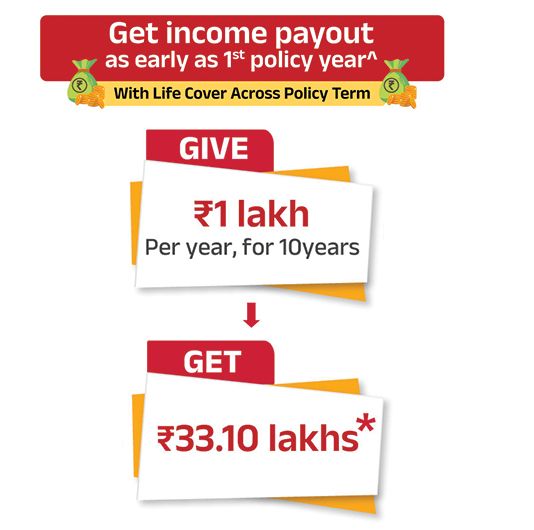
Give ₹1 lakh/ month for 5 years and Get ₹ 4.01 lakhs every year till your life1

*Min 3 characters
+91phone-icon
*Please enter a valid 10 digit Mobile No.
*This field is required.

ABSLI Guaranteed Annuity Plus

Multiple annuity options, Regular income stream.

ICON-CLICK

Guaranteed# lifelong income

Icon-Income-Benefit

Top-up option for annuity

ICON-CLICK

Single/Joint Life cover option

ICON-CLICK

Deferred annuity option

Give :
₹ 1 lakhs/Month for 5 year¹

Get :
₹4.01 lakhs/-

Sources
1https://www.pib.gov.in/newsite/PrintRelease.aspx?relid=189273&reg=3&lang=2

2https://timesofindia.indiatimes.com/business/india-business/gratuity-calculation-definition-of-wages-what-new-labour-codes-mean-for-employees-organisations-salary-benefits-rules-explained/articleshow/126412722.cms

Disclaimer

With effect from 1st April 2026, the provisions of the Income Tax Act, 2025 shall prevail. Accordingly, any references to sections mentioned above shall be construed as corresponding to the relevant section and provisions of the applicable prevailing Act, as amended from time to time.

Please note that we have provided our above views based on current interpretation of income tax provisions. Such interpretations may differ at customer’s consultant level. ABSLI shall not be responsible for tax positions adopted by customer.

This blog is for information and awareness purposes only and does not purport to any financial or investment services and do not offer or form part of any offer or recommendation. The information is not and should not be regarded as investment advice or as a recommendation regarding any particular security or course of action.

Every effort is made to ensure that all information contained in this blog is accurate at the date of publication, however, the Aditya Birla Sun Life shall not have any liability for any damages of any kind (including but not limited to errors and omissions) whatsoever relating to this material.

ADV/4/26-27/76

whatsapp-imagewhatsapp-image