When you buy Life Insurance, the insurer asks about smoking and tobacco use to assess your health risks and determine the terms on which it can offer you cover. Aditya Birla Sun Life Insurance Company Limited (ABSLI), like other life insurers, uses the information you provide to evaluate your application. Whether you smoke regularly, occasionally, or have quit, disclose your history accurately based on the wording of the proposal form. Your smoking status may influence your premium or the terms offered, depending on the insurer’s underwriting rules.
Why does smoking matter when an insurer assesses your Term Insurance application?
Smoking and tobacco use can be associated with higher health risks. An insurer may therefore consider smoking status alongside your age, medical history, occupation, sum assured, policy term, and other information when assessing an application. Depending on the insurer’s rules and your circumstances, smoking may affect the premium, the underwriting decision, or the terms offered.
There is no universal percentage by which every smoker’s premium increases. The impact depends on the product, the information disclosed, and the insurer’s assessment. Use a premium estimate only as an initial guide. You can explore the ABSLI Term Insurance Calculator to estimate a term insurance premium, but the result is not a final underwriting decision or a guarantee of the price you will be offered.
How should you answer the smoking question on a Life Insurance form?
There is no single answer that fits every applicant. The right response depends on your actual history and the wording of the proposal form. Do not answer “no” simply because you smoke socially, have reduced how much you smoke, or stopped recently. Read the question carefully and disclose the information it asks for. The insurer can then assess your application using its applicable underwriting rules.
How should you answer if you used to smoke but have quit?
If you previously smoked but no longer do, disclose that history when the form asks about past smoking or asks how long it has been since you quit. Do not assume that quitting automatically makes you eligible for non-smoker rates. Insurers may use different definitions, tobacco-free periods, and evidence requirements when classifying applicants. Be ready to state when you stopped, what you used and how regularly you smoked, to the extent requested.
If the form only asks about current use, check the accompanying instructions or ask the insurer how to report a past habit. A clear answer is better than trying to interpret the question in a way that might lower the quote.
What if you smoke only occasionally or socially?
Occasional smoking still needs to be disclosed when the application asks about smoking or tobacco use. A few cigarettes at social events, smoking only on weekends, or using tobacco infrequently does not automatically mean you can select “non-smoker.” The insurer decides how to classify the information under its underwriting rules. Describe your use honestly, including frequency and the date of most recent use if requested.
If the proposal form does not clearly explain whether occasional use counts, contact the insurer or authorised intermediary before submitting it. Do not leave the question unanswered or assume that an occasional habit is too minor to matter.
Do cigarettes count as the only form of tobacco or nicotine use?
Not necessarily. The proposal form may ask about tobacco or nicotine in forms beyond cigarettes, which can include cigars, pipes, chewing tobacco, gutka, or vaping products. The wording varies, so read the question rather than relying on your own definition of smoking. If you use a product and are unsure whether it falls within the question, disclose it and ask the insurer for clarification.
Also answer related questions about frequency, duration, or cessation accurately. Do not assume nicotine replacement products or vaping are treated identically by every insurer. The relevant form and underwriting guidance determine what information is required. If you are uncertain, request written clarification where possible and keep a copy of the response with your application records.
What can happen if you hide your smoking habit?
Giving an inaccurate answer or withholding information that the proposal form asks for can create problems later. If you hide your smoking habit or provide incorrect information, it may affect your policy or claim later, as the insurer may have made a different decision had it known the facts. The consequences depend on the facts and the applicable rules, so it is not accurate to say that every omission automatically results in claim rejection.
The safer approach is to answer each question truthfully and completely. Do not guess, minimise your use or rely on an agent or intermediary to fill in an answer without checking it. Review the completed proposal form before submitting it, correct any mistake promptly, and keep the submitted copy and any acknowledgement.
What should you do if you quit smoking after buying a policy?
If you stop smoking after your policy has been issued, do not assume that your existing premium will automatically decrease or that your policy status will change. A policy is issued based on the application and underwriting decision at that time. Whether the insurer offers a reassessment or a change to terms depends on its current rules and the specific policy.
Contact the insurer and ask whether any formal reassessment is available, what tobacco-free period or evidence may be required, and whether a change would apply to the existing policy or only to a new application. Continue paying the premium due under your current policy unless the insurer confirms a change in writing. Never stop or reduce payments based on an assumption.
What if you start smoking after buying Life Insurance?
If you begin smoking after your policy starts, check the policy terms and contact the insurer if you are unsure whether you have a duty to report the change. Requirements can differ by product and policy wording. Do not assume that every policy has the same notification rule, and do not make changes to your disclosures without guidance from the insurer. Keep the policy schedule, proposal form, and any correspondence accessible. If you apply for additional cover or a new policy later, answer the new application’s smoking questions based on your current and past use as requested.
Existing cover and a new application may be assessed differently, so ask the insurer about the specific situation rather than relying on general advice.
How can you make sure your smoking disclosure is accurate?
Before submitting a proposal form, use this practical checklist:
- Read the complete smoking or tobacco-use question, including any definition or look-back period.
- Disclose current and past use as requested, including occasional use and non-cigarette products covered by the question.
- Give accurate dates and frequency if the form asks when you started, stopped, or last used tobacco.
- Ask the insurer or authorised intermediary to clarify any ambiguous wording before you submit the form before submitting.
- Review every answer entered on your behalf and correct errors before submission where possible.
- Keep a copy of the completed proposal form, medical disclosures, written clarifications, and all related records.






 October 21, 2026
 3 mins read




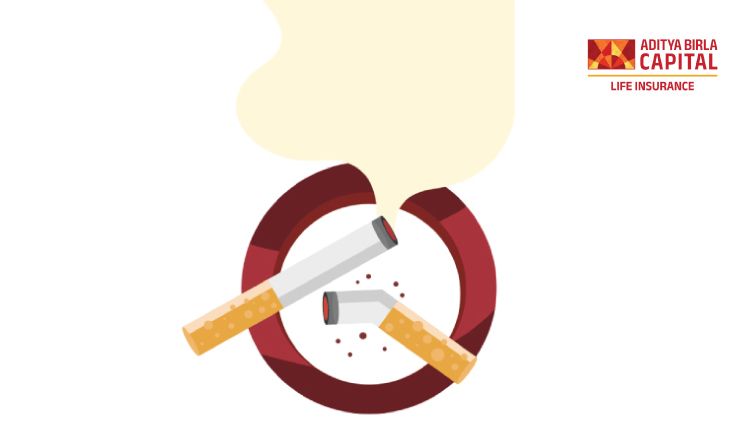
 Table of Contents


 BUY ONLINE