

- All Insurance
- Endowment Plans
- Savings PlansNew
- Term Insurance
- Pension PlansNew
- Critical Illness Insurance
- ULIP Plan
- Group Insurance
- Protection Solutions
- Employer Employee
- Voluntary
- Affinity
- Credit Life
- Retirement Solutions
- Annuity Scheme
- Gratuity
- Leave Encashment
- Post Retirement Medical Benefits Scheme
- Superannuation
- Withdrawn Products
- NRI Plans
- Articles
- Where Do I?
- Find Customer Service
- Learn About Life Insurance
- Become a Life Insurance Advisor
- Know Our Funds
- Manage My Claim
- Know more about UPI Autopay
- Read FAQs
- Register For One ABC Id
- Download Forms
- Read Market Outlook
- Download Public Disclosures
- Disclosure of Key Performance and Financial Parameters
- Financial Calculator
- Know your Advisor
- Term Insurance
- Manage My Policy
- Her Insurance

Connect
Aditya Birla Sun Life Insurance Company Limited



Aditya Birla Sun Life Insurance Company Limited
Are you planning your retirement correctly?
 October 5, 2026
 5 mins read

Plan Smarter, Live Better!



 Table of Contents
How Much Helpful You Found This Article?

Rated by 0 reader
/ 5 ( reviews )
Not helpful
Somewhat helpfull
Helpful
Good
Best

Thank you for your feeback
Frequently asked questions
EPF and NPS can form part of your retirement resources, but whether you need another retirement product depends on your overall retirement needs, expected income, and how your existing resources are structured.
Both can be relevant at different stages. During your working years, you may focus on building retirement benefits and a corpus. As retirement approaches, you may need to consider how those resources will support your regular expenses.
It is useful to think about income generation before retirement rather than waiting until you stop working. This gives you time to understand your expected income gap and explore options that may suit your needs.
Look at your expected retirement expenses, the retirement corpus you are building and the income you expect from sources such as EPF, NPS, gratuity, savings, and Retirement Plans. This can help you identify whether there is a gap between your expected needs and available resources.
A retirement corpus and a regular retirement income serve different purposes. If you need income after retirement, you can explore options designed to convert eligible retirement resources into a regular income stream, including annuity plans.
You can use it for immediate expenses, keep an emergency reserve, meet outstanding liabilities, allocate money towards longer-term needs, or consider options that can create a regular retirement income. Pension and Annuity Plans are among the options you can explore depending on your requirements.
Show All
Hide
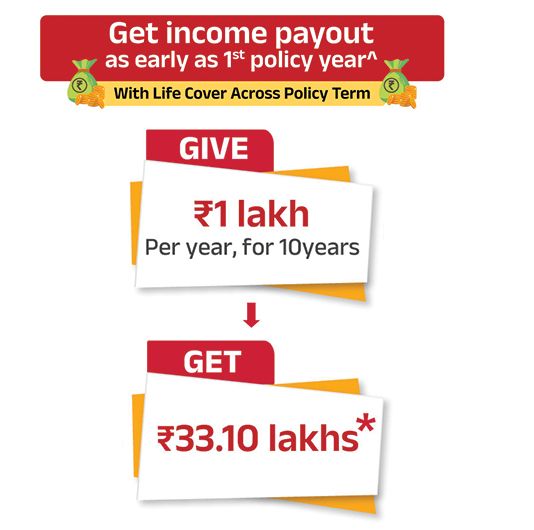
Give ₹1 lakh/ month for 5 years and Get ₹ 4.01 lakhs every year till your life1
ABSLI Guaranteed Annuity Plus
Multiple annuity options, Regular income stream.

Guaranteed# lifelong income

Top-up option for annuity
Single/Joint Life cover option
Deferred annuity option
Give :
₹ 1 lakhs/Month for 5 year¹
Get :
₹4.01 lakhs/-
 ENQUIRE NOW
Recently Added Article





Most Popular Calculator


This article is for informational purposes only. The information provided is subject to change and should not be considered as financial, legal, medical or tax advice. Insurance is the subject matter of solicitation. Please refer to the policy document, prospectus and terms and conditions for complete details. Tax benefits are subject to change as per prevailing tax laws (Income Tax Act, 2025). Please consult a qualified tax advisor.

