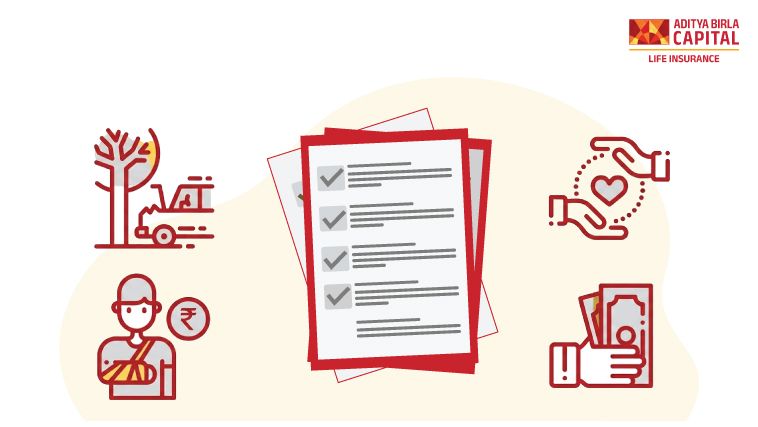
Life Insurance can give people who depend on you a payment if you die while covered. That money may help with living costs, debts, and future expenses. Some policies also pay benefits while you are alive, but these features vary by contract. Start with the protection your household would need, then assess any other features separately.
How does Life Insurance work?
A Life Insurance Policy is a contract under which you pay premiums, and the insurer pays benefits when the events stated in the policy occur. The policy schedule identifies the insured person, cover amount, term, nominees, and applicable benefits. Payouts depend on the policy remaining valid and, on its exclusions, disclosures, and claims requirements.
The policyholder owns the contract, while the life assured is the person whose life is covered. These can be different people. A nominee is the person designated to receive the proceeds, subject to applicable law and the terms of the policy. Check these details when you receive the policy and update the nomination after major family changes.
What is the main benefit of Life Insurance?
The central benefit is financial support for beneficiaries after the insured person’s death during the covered period. They can use an eligible claim payout to replace lost household income, meet essential expenses, or address liabilities. The amount and payment form follow the policy, so the cover should reflect actual obligations rather than headline figures.
Consider regular household spending, the years dependents may need support, outstanding borrowing, and education costs. Subtract resources already available for those needs and account for existing life cover. Revisit the estimate after a change in income, debt, dependents, or employment. A benefit paid to a nominee does not automatically clear every Loan. Lenders’ rights and any assignment or separate credit cover matter.
Can Life Insurance help pay off a Home Loan or other debts?
Yes, a death benefit payout may give family funds to repay outstanding borrowing, provided the claim is payable, and the cover is sufficient. The Loan does not disappear merely because the borrower had Life Insurance. Check the outstanding balance, whether the policy is assigned to a lender, and what your family would need after settling the debt.
A fixed cover amount may remain level as the Loan balance falls. Some credit linked arrangements reduce cover over time. Read the payout and assignment terms carefully so you understand who receives the money and what remains available for dependents.
Do all Life Insurance Policies pay a maturity benefit?
No. A pure Term Policy generally pays only on an insured event during its term and ordinarily has no payout if the life assured survives it. Some policies provide a maturity benefit, and some term variants include a specified return-of-premium feature. The amount, timing, and conditions must be checked in the actual policy.
Endowment, Moneyback, and other Savings Policies may combine protection with scheduled benefits. The premium can reflect those additional features. Do not infer a maturity amount from the sum assured alone, and do not assume that every maturity payout is tax exempt.
What are survival benefits, surrender values, and Policy Loans?
These are distinct features that appear only where the policy provides them. A survival benefit is paid at specified milestones while the insured is alive. A surrender value may be payable if an eligible policy is ended early. A Loan Against a Policy is available only if its contract allows one and relevant value has accrued.
The end of a limited premium-payment period is not necessarily a survival-benefit date. Early surrender can yield substantially less than premiums paid, and a Policy Loan can reduce proceeds or require interest. Ask for the benefit illustration and policy wording, including charges and the consequences of missing premiums.
How should you choose between policy types?
Choose first by the risk you need covered and how long that risk lasts. A Term Policy focuses on death cover for a specified period. Other Life Policies may include maturity or periodic benefits, subject to their terms. Compare the cost and conditions of each feature, including exclusions, premium duration, payout choices, and what happens if you stop paying.
Where a policy is unit linked, its fund value is market linked and returns are not guaranteed. Investment risk in the investment portfolio is borne by the policyholder. A linked policy should be assessed through its benefit illustration, charges, and risk disclosures. Life cover and fund value are different concepts.
Are there tax benefits from Life Insurance?
There may be, but they are conditional. Premium deductions depend on the tax regime selected, statutory limits, and eligibility rules. The tax treatment of death, maturity, and other proceeds can differ and may depend on premium thresholds, policy issue date, and other conditions. Obtain current tax advice for your circumstances before relying on a benefit.
Tax law and interpretations can change. This discussion is general information, not a promise of deduction or tax-free proceeds. The policy’s protection need should still make sense without a tax advantage.
What should you check before buying?
Estimate the protection gap first, then check whether the proposed premium remains affordable throughout the payment term. Read the benefit illustration, customer information sheet, policy wording, exclusions, waiting periods where relevant, nomination, and claims process. Disclose health, occupation, and lifestyle information accurately in the proposal.
When the policy arrives, compare it with your proposal and keep the documents accessible to your nominee. Check the applicable free-look terms in the policy if something differs from what you expected. Review cover periodically, especially after borrowing, marriage, a child’s birth, or a major change in income.
How can ABSLI help?
Aditya Birla Sun Life Insurance Company Limited publishes policy documents and benefit illustrations for its Life Insurance products. A reader considering one of its policies can review the relevant customer information sheet, prospectus, policy wording, exclusions, and servicing channels before applying. Product features and eligibility depend on the chosen plan and underwriting.






 September 25, 2026
 3 mins read



 Table of Contents


 BUY ONLINE