

- All Insurance
- Endowment Plans
- Savings PlansNew
- Term Insurance
- Pension PlansNew
- Critical Illness Insurance
- ULIP Plan
- Group Insurance
- Protection Solutions
- Employer Employee
- Voluntary
- Affinity
- Credit Life
- Retirement Solutions
- Annuity Scheme
- Gratuity
- Leave Encashment
- Post Retirement Medical Benefits Scheme
- Superannuation
- Withdrawn Products
- NRI Plans
- Articles
- Where Do I?
- Find Customer Service
- Learn About Life Insurance
- Become a Life Insurance Advisor
- Know Our Funds
- Manage My Claim
- Know more about UPI Autopay
- Read FAQs
- Register For One ABC Id
- Download Forms
- Read Market Outlook
- Download Public Disclosures
- Disclosure of Key Performance and Financial Parameters
- Financial Calculator
- Know your Advisor
- Term Insurance
- Manage My Policy
- Her Insurance

Connect
Aditya Birla Sun Life Insurance Company Limited



Aditya Birla Sun Life Insurance Company Limited
Do you need Accidental Death Cover or more Life Insurance?
 September 28, 2026
 5 mins

Plan Smarter, Live Better!

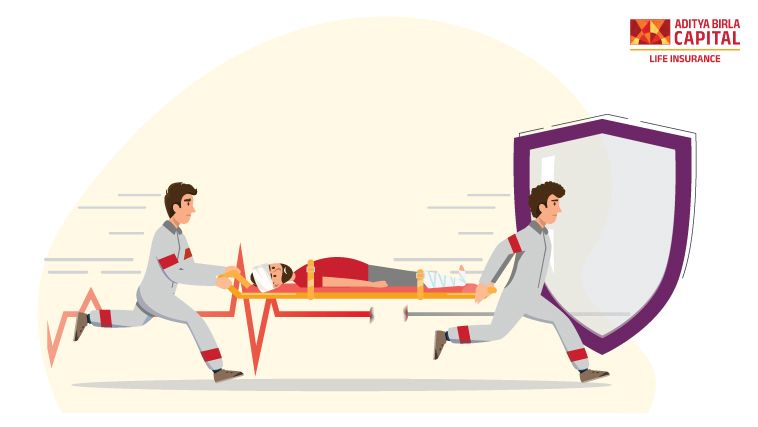
 Table of Contents
How Much Helpful You Found This Article?

Rated by 0 reader
/ 5 ( reviews )
Not helpful
Somewhat helpfull
Helpful
Good
Best

Thank you for your feeback
Frequently asked questions
No. The base policy pays the contractual death benefit if the claim is valid. An additional accident amount is payable only when the relevant rider or separate policy is in force and its claim conditions are satisfied. There is no general rule that a life policy doubles its benefit after an accident.
An Accidental Death Rider is designed for a qualifying accidental death under its wording. Illness alone does not meet that trigger. A valid base Life Insurance claim may still pay, subject to its terms. Check the rider’s definitions and exclusions for the precise outcome.
It depends on the product and insurer rules. Some riders must be chosen at policy inception. Others may be offered later subject to approval, underwriting, and limits. Check your policy and ask the insurer for the applicable current options rather than assuming that the rider can be attached at any time.
Usually it cannot fill a general protection gap because its extra benefit is limited to a defined accidental death. Calculate the cover your dependents need across causes of death, then decide whether the rider adds useful protection within your budget.
Show All
Hide
Buy ₹1 Crore Term Insurance at Just ₹575/month*
ABSLI Super Term Plan
Term plan designed for salaried individual.

3 Plan Options

Health Management Service Worth ₹74000

100% return of premium
Life Cover
₹1 crore
Premium:
₹575/month*
 BUY ONLINE
Recently Added Article



Most Popular Calculator


This article is for general information. Insurance benefits are subject to the policy and rider terms, conditions, exclusions, underwriting and premium payment requirements. Please read the sales prospectus and policy document carefully before purchase.

