A Life Insurance policyholder in India can cancel a policy within a 30-day free look, is entitled to a proposal decision within seven days, and has the right to timely claim settlement and a complaint process. The duties are to disclose facts truthfully, pay premiums on time and keep contact and nominee details current.
The meaning of Life Insurance for a policyholder is practical. It is a contract, and both sides have obligations under it. The sections below set out what the insurer owes you, what you owe the insurer, and where to go when something goes wrong.
What are your rights as a Life Insurance policyholder?
You have the right to a decision on your proposal within seven days, policy documents within 15 days of acceptance, a 30-day free look, service requests acknowledged immediately and completed in seven days, death claims settled within 15 days (45 days if investigated), and a complaint resolved within 14 days.
- Proposal decision: Within seven days of receiving the further details the insurer asked for, with reasons within seven days if it does not accept the proposal.
- Policy documents: Within 15 days of acceptance, free of charge.
- Free look: 30 days from receiving the policy document.
- Service requests: Acknowledged immediately and updated within seven days.
- Claims: 15 days from intimation for a death claim, 45 days if an investigation is warranted, with interest at the bank rate plus 2% on delay.
- Complaints: Acknowledged immediately and resolved within 14 days.
What documents must the insurer give you after you buy?
Within 15 days of accepting your proposal, the insurer must give you, without charge, a covering letter explaining the free look period, the policy document, a copy of your proposal form, the benefit illustration, and the Customer Information Sheet. A need analysis is included for savings-oriented products and annuities.
Check the policy document against what the intermediary or insurer explained at the time of sale, and read the Customer Information Sheet, which sets out the main features in simple words. If you find an inconsistency, take it up with the insurer, which must address it in a time-bound manner.
How does the free look period work?
You have 30 days from receiving the policy document to review its terms. If you object to any term, you can send the policy back stating your reasons and receive a refund of the premium, after deduction of the proportionate risk premium for the period of cover, medical examination expenses, and stamp duty charges.
What are your duties when you buy a policy?
Fill in the proposal form yourself, completely and truthfully, and disclose all material facts, because the form is the basis of the contract. Do not leave columns blank or sign a blank form. Read the policy document, the benefit illustration, and the prospectus, and check them against what was explained to you.
- If you are not comfortable with the language of the form, ask the insurer to explain it.
- Choose a policy term and premium you can sustain, whether it is a term plan policy or a savings policy.
- Choose a premium frequency that suits your income and use an electronic mode of payment for safety and records.
- Name your nominee accurately, with relationship, contact details, and Bank Account.
What are your duties while the policy is in force?
Pay premiums on or before the due date, within the grace period of 15 days for monthly mode or 30 days for other modes. Do not wait for a reminder, because it is only a courtesy. Update your address, phone number, email, bank details, and nominee when they change. If the premium is not paid within the grace period, the policy lapses.
A lapsed policy can be revived during the period stated in the policy document by paying the unpaid premiums with interest or a late fee, and you may be asked for a health declaration or a medical examination.
How do you change a nomination or appoint an appointee?
You can change your nomination at any time during the policy term by sending a nomination change request to the insurer. The insurer must acknowledge it immediately and update it within seven days. If a nominee is a minor, appoint an adult to receive the money on the child's behalf. Ask the insurer for the form it requires and ask the appointee to sign the endorsement consenting to act. Read what happens when no nominee is on record in this guide on who gets the money if there is no nominee.
What if you lose your policy document?
Tell the insurer at once and ask for a duplicate policy document. A duplicate carries the same rights as the original. Insurers issue policies in electronic form and must also issue a physical copy if you ask for one. Keep a soft copy and the policy number somewhere safe. Keep a soft copy in your email and share the insurer's contact details with your nominee, so that a lost paper copy never delays a claim.
What are your rights when you make a claim?
Report the insured event to the insurer at the earliest, in person or online, through the distribution channel or the insurer's call centre. IRDAI states that no claim should be rejected or closed for want of documents or for delayed intimation. A death claim must be settled within 15 days of intimation, or 45 days if investigation is warranted. If the insurer is late, the claimant is entitled to interest at the bank rate plus 2%, which the insurer must pay on its own along with the claim amount.
No claim may be repudiated without legally tenable evidence, and no life policy is contestable on any ground after three years from the date of the policy. Your duty at claim time is to meet the insurer's reasonable requirements. See this guide to filing a life insurance claim for the steps.
What rights do employees have under a Group Policy?
In an employer-employee Group Policy, the employer is the master policyholder and employees are members. The employer must share the policy with members as confirmation of each person's cover, and claims are paid directly to the employee or the beneficiary, except for group fund-based products.
In a Group Policy for a non-employer group, the individual member is the insured and receives a certificate of insurance stating the benefits, period of cover, premium, and exclusions.
What additional rights apply to a Unit-Linked Policy?
A Unit-Linked Policy is a Life Insurance product whose fund value moves with market movements. It has a five-year lock-in, during which no withdrawal is allowed. After the lock-in, partial withdrawals and surrender follow the policy terms, and the surrender value is the fund value less any surrender charge. Depending on the policy terms, you may be able to switch between funds or redirect future premiums.
Read the policy document and the fund details before you choose and note that the investment risk in a ULIP is borne by the policyholder.
How can you complain if something goes wrong?
Complain first to the insurer by branch, letter, email, website, or call centre. It must acknowledge immediately and resolve within 14 days, giving reasons if it does not accept your complaint. You can also register on IRDAI's Bima Bharosa portal and escalate unresolved complaints to the Insurance Ombudsman for claims up to ₹50 lakh.
An Ombudsman complaint is free of charge and can be made in person, online or in writing. The insurer must comply with an Ombudsman award within 30 days of receiving it, failing which it pays a penalty of ₹5,000 a day to the complainant, in addition to penal interest. Keep the acknowledgement and every reply, in date order.






 October 21, 2026
 5 mins




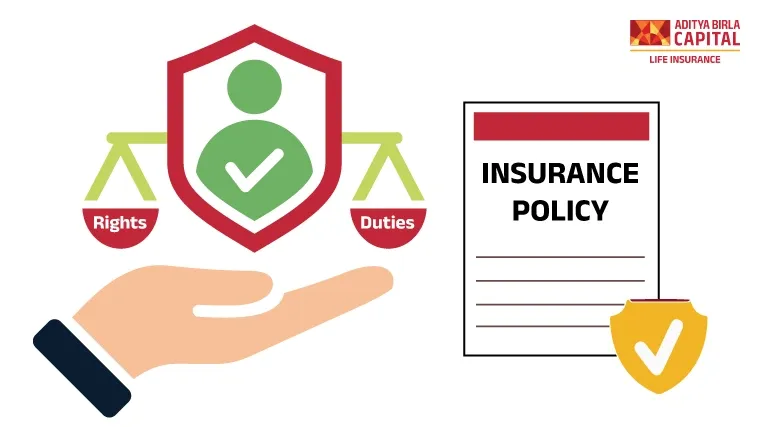
 Table of Contents


 BUY ONLINE