To plan for your daughter’s education, work out when each fee is due and how much of it you can cover from savings. Sukanya Samriddhi is a government savings account for eligible girls. Life Insurance can help protect your funding plan if the insured parent dies during the policy term, subject to policy terms.
What do people mean by a Girl Child Plan?
“Girl Child Insurance [lan” is a search phrase families use when looking to fund a daughter’s future. It can lead to information about Sukanya Samriddhi or Life Insurance taken for a family’s education goal. For an Insurance Policy, identify the life assured, the benefit recipient, and the events that trigger payment. The policyholder owns the policy. The life assured is the person whose life is covered. The nominee is the person designated to receive a death benefit, subject to applicable law and policy terms.
These roles matter when you want the policy to respond to the death of a parent. If the contract covers your daughter’s life, check separately whether it contains a benefit that applies when a parent dies.
How does Sukanya Samriddhi work for education expenses?
A guardian can open a Sukanya Samriddhi Account for a girl who has yet to turn 10. Deposits can be made for 15 years from opening, and the account ordinarily matures 21 years from opening. The scheme permits an earlier withdrawal for eligible education costs, subject to age or schooling criteria, documents, and a balance limit. For education, the account holder must have turned 18 or passed Class 10, whichever happens first.
The withdrawal ceiling is 50% of the balance at the end of the financial year preceding the application year. The amount is further limited to the documented education requirement. Check the confirmed admission offer or fee slip and ask the account office about the applicable withdrawal process before committing to a payment date.
Suppose you open the account when your daughter is 6 and her first college fee falls due at 18. The account would ordinarily mature around age 27. The family can check whether an education withdrawal is available for admission and keep money accessible for any remaining fees. These ages illustrate the scheme timetable.
What can happen if the insured parent dies?
If a parent is the life assured and dies during the policy term, the insurer assesses the claim against the contract. A payable death benefit goes to the person entitled under the policy and applicable law. The amount, payout schedule and any continuation of future education benefits depend on the policy wording. Some contracts specify a premium waiver for a covered event.
If that event occurs and the waiver conditions are met, specified future premiums cease to be payable, and the policy continues as stated in the contract. Ask whose death triggers the waiver, which premiums qualify, and which benefits remain payable. A death benefit, waiver, and maturity benefit can follow different rules.
Read how child insurance can work after an insured parent dies.
How can you plan for each college payment?
Put the date and amount of each expected payment beside the date and amount of each available source of funds. Count a policy payout only in the period in which it is due, and check how much you can withdraw from Sukanya Samriddhi. Any uncovered amount is the funding gap for that period. Start with the institution’s current fee schedule. Include the admission deposit, tuition instalments, accommodation, and other expenses the family expects to pay.
Revisit the amounts when you have a shortlist of institutions. If you are still years away from admission, record your assumptions so you can update them as new fee schedules appear. For example, assume ₹2 lakh is due at admission, and you reasonably expect ₹1.2 lakh to be accessible by that date. The remaining gap is ₹80,000. If a scheduled Insurance benefit falls due after admission, place it against a later fee in your worksheet. These figures are illustrative arithmetic, with no assumption about policy or savings returns.
Keep the worksheet in fee order and give a copy to the adult who would manage payments if you could not. Include the account office contact, the policy number, and where to find the admission documents. If the first tuition instalment is due before the account office can process a withdrawal, identify which accessible funds could cover it while the paperwork is underway.
See how to match child insurance payouts to college fees.
What should you check before choosing a policy?
Read the Customer Information Sheet, policy wording, and any applicable benefit illustration together. Check whose life is insured, when benefits are payable, what could prevent a claim, and how long premiums stay due. Ask for written clarification if the documents leave you unsure whether the policy meets your family’s education dates or budget.
- Cover and recipients: Confirm the life assured, the person entitled to the death benefit, and the process if a nominee is a minor. Check relevant exclusions and keep contact details updated.
- Payout timing: Record the policy term, premium-paying term, and benefit dates separately. Mark any amounts that vary or depend on conditions in the policy.
- Premium affordability: Check whether you can maintain payments during a period of reduced income. Ask when cover or benefits change if you miss a payment and what revival would require.
- Early exit: Ask whether and when the policy acquires a surrender value. Request a written quote for the date you are considering and check the impact on future cover and benefits.
How does ABSLI support education planning?
Aditya Birla Sun Life Insurance provides information on planning for a child’s education and servicing an existing policy. If you are considering coverage, ask for the applicable policy wording, Customer Information Sheet, and benefit illustration. Check the identity of the life assured and the benefit schedule against the fee dates you have written down.
Read about child education savings insurance and payouts.






 November 20, 2026
 5 mins read




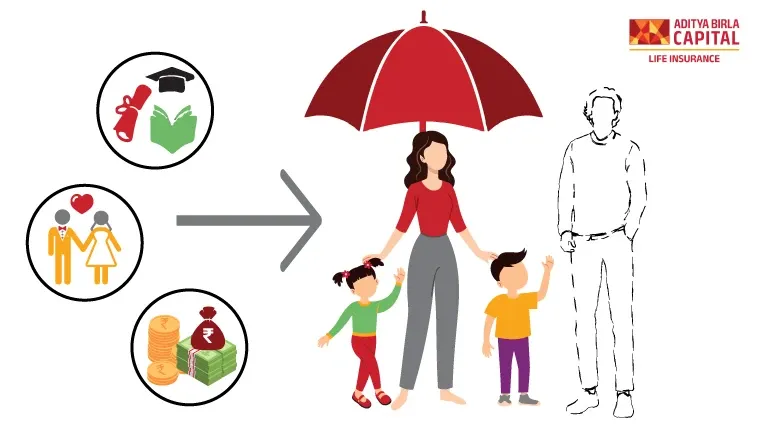
 Table of Contents


 BUY ONLINE