Aditya Birla Sun Life Insurance Company Limited

Senior Citizen Investment Plans With Medical Expense Coverage

Icon-Calender June 29, 2026
Icon-Clock5 mins read
4.5
Rated by 1000 readers
https://lifeinsurance.adityabirlacapital.comnullCLOSE-BUTTON

Plan Smarter, Live Better!

*Min 3 characters allowed
+91
*Please enter a valid 10 digit Mobile No
https://lifeinsurance.adityabirlacapital.comnullCLOSE-BUTTON
ICON-TICK

Thank you for your details. We will reach out to you shortly.

https://lifeinsurance.adityabirlacapital.comnullCLOSE-BUTTON
ICON-TICK

Currently we are facing some issue. Please try after sometime.

banner-imagemob-image
  • Icon-Index
    Table of Contents

Retirement planning is not just about income. It is also about shock absorption.

For many senior citizens, the biggest financial disruption does not come from routine monthly spending. It comes from health events: a hospital admission, a surgery, recurring tests, long-term medicines, home care, or sudden specialist treatment. That is why a sensible retirement plan should never treat medical expenses as a side note. They need their own place in the structure.

This matters even in a system where public health spending has improved. Government data from the National Health Accounts estimates shows that out-of-pocket health expenditure as a share of total health expenditure in India declined from 62.6% in 2014–15 to 39.4% in 2021–22.1 While this represents significant progress, households still bear a substantial portion of healthcare costs directly.

So when we talk about senior citizen investment plans with medical expense coverage, the real goal is not simply earning returns. It is building a retirement system where one health crisis does not wreck the entire corpus.

Why medical planning must be built into retirement investing

Medical costs behave differently from ordinary expenses.

Groceries and electricity bills are recurring and somewhat predictable. Healthcare is often lumpy, urgent, and emotionally stressful. A retiree may go several months with manageable costs and then face one large episode that demands immediate liquidity. The World Health Organization notes that out-of-pocket spending can be financially damaging and regressive, especially when households must pay directly at the point of care.

For senior citizens, this creates three financial risks at once:

  • liquidity risk, because money may be needed quickly
  • corpus risk, because long-term investments may need to be broken early
  • income risk, because ongoing retirement cash flow may be disturbed by sudden medical spending

That is why retirement planning should not ask only, “How much monthly income will I get?” It should also ask, “What happens if health costs jump suddenly?”

A good plan separates income from medical protection

One of the most common mistakes in retirement planning is mixing everything into one pool of money.

If all the money is expected to do every job at once, the plan becomes fragile. A better approach is to separate retirement assets by function.

1. The monthly living bucket
This is the portion meant for everyday expenses such as food, utilities, transport, domestic help, and routine lifestyle costs. It should be built around stability and regularity.

2. The medical buffer bucket
This is the money specifically reserved for healthcare needs that may not be fully reimbursed or anticipated. It is not there to produce the highest return. It is there to be available.

3. The emergency hospitalization bucket
This should remain highly liquid and accessible. It is meant for immediate large costs such as admission deposits, urgent procedures, or major diagnostics.

4. The long-term growth bucket This is the part that helps protect the overall corpus against inflation over time. It exists because retirement may last many years, and medical costs tend not to become cheaper with age.

This bucket structure works because it keeps a health emergency from destabilizing the rest of retirement life.

Medical coverage is not the same as medical readiness

Many people assume that if some kind of medical coverage exists, the problem is solved. Retirement has a habit of mocking that assumption.

Even with coverage in place, senior citizens may still face:

  • exclusions
  • waiting periods
  • co-payments
  • non-payable items
  • medicine costs outside hospitalization
  • caregiver expenses
  • travel and follow-up treatment costs

That is why investment planning should prepare for both covered and uncovered healthcare costs.

Government data itself reflects the point indirectly. Even after improvement, out-of-pocket spending still accounted for 39.4% of total health expenditure in 2021–22.1

In other words, coverage helps, but households still end up paying directly in many cases.

The first rule: keep a medical reserve that is easy to access

A senior citizen medical reserve should not be trapped in instruments that are hard to liquidate quickly.

This reserve should ideally be:

  • easy to access
  • separate from the monthly-income pool
  • large enough to handle at least one meaningful medical event without forcing distress withdrawals elsewhere

This is where many retirement plans fail. They optimise beautifully for return and then become awkward the moment quick cash is needed.

The medical reserve is boring money, and boring money is excellent. It prevents panic.

The second rule: do not use high-volatility assets for near-term health needs

If money may be required in the near term for treatment, testing, or ongoing care, it should generally not sit in highly volatile investments.

That does not mean growth assets have no place in retirement. It means the wrong money should not be exposed to the wrong risk.

Health events are stressful enough without adding “we need to sell during a market fall” to the list of problems.

The third rule: assume healthcare inflation is real

Even when headline inflation appears moderate, healthcare can remain a stubborn pressure point. Government and policy discussions around health financing continue to emphasize financial protection because direct medical spending can still create hardship.

That means a retirement plan designed only for today’s medical expenses may age badly. Medicines, diagnostics, specialist consultations, mobility support, and home-care assistance can all rise over time.

So while the medical buffer should remain stable and liquid, the broader retirement plan may still need some long-term growth component to preserve purchasing power over the years ahead.

The fourth rule: plan for recurring care, not just one emergency

People often think of medical expenses as one dramatic event. Retirement reality is often less cinematic and more repetitive.

The real drain can come from:

  • monthly medicines
  • recurring tests
  • physiotherapy
  • chronic disease management
  • hearing, vision, or mobility support
  • periodic assistance at home

This means the investment plan should account for both:

  • big episodic costs
  • slow recurring health costs

The first needs liquidity. The second needs budgeting discipline and income support.

A practical structure for medical-expense-aware retirement planning

A sensible investment structure for senior citizens with medical expenses in mind may look like this:

Stable income layer
This funds regular household living costs so that routine expenses do not eat into the medical reserve.

Dedicated medical reserve
This is kept separate for foreseeable but uncertain healthcare spending.

Immediate emergency liquidity
This handles sudden treatment needs without forcing rushed financial decisions.

Moderate long-term growth layer
This supports inflation protection so that the broader corpus keeps pace with rising costs over a long retirement.

Documentation and access layer
This is often ignored, but it matters. Family members should know where the funds are, how to access them, and what each pool is for.

A plan is not really a plan if nobody can operate it during a stressful week.

Simplicity matters more with age

A retirement structure that is too scattered or too clever can become difficult to manage later.

For senior citizens, especially when health issues may affect mobility, energy, or decision-making, simplicity becomes a form of financial protection.

That means:

  • fewer moving parts
  • clear purpose for each pool of money
  • easy access instructions
  • updated nominations and records
  • visible paperwork for family support if needed

This is not glamorous finance. It is functional finance. Functional finance is vastly underrated.

What this kind of plan is really trying to do

At a deeper level, an investment plan with medical-expense coverage is trying to prevent one bad event from causing three more.

Without planning, a health shock can trigger:

  • debt
  • premature liquidation of long-term savings
  • loss of monthly income stability
  • family financial stress

With planning, the same event is still unpleasant, but it is less likely to become financially destructive.

That is the real purpose of retirement investing at this stage: not maximum excitement, but maximum resilience.

Conclusion

Senior citizen investment plans with medical expense coverage should be built around separation, liquidity, and resilience. Medical costs should not be treated as an afterthought or folded vaguely into “future expenses.” They deserve their own reserve, their own emergency access, and their own place in the retirement structure.

That is especially true in India, where out-of-pocket health spending, though reduced significantly, still accounted for 39.4%1 of total health expenditure in 2021–22 according to official government data.

The strongest retirement plan is not the one that looks most impressive on paper. It is the one that can survive both ordinary months and difficult ones without falling apart.

How Much Helpful You Found This Article?

Rating_Star
Rated by 0 reader
/ 5 ( 0 reviews )
Not helpful
Somewhat helpfull
Helpful
Good
Best
RatingTick

Thank you for your feeback

Don’t forgot to share helpful information in your circle

FAQs

Medical expenses should be included because healthcare costs can rise significantly after retirement and may not always be predictable. A retirement plan that ignores medical needs can become unstable if a senior citizen faces hospitalization, recurring treatment, or long-term care expenses.

Not always. Regular retirement income may cover routine living expenses, but medical costs can be sudden, large, and recurring. That is why a separate healthcare-focused financial reserve is often important in addition to normal monthly income planning.

Medical coverage usually refers to financial support available for health-related treatment under an existing arrangement, while medical expense planning means preparing for both covered and uncovered costs. Many healthcare-related expenses may still need to be paid directly, so investment planning should not assume that every cost will be fully taken care of.

A separate medical reserve helps ensure that healthcare costs do not disturb the rest of the retirement plan. Without such a reserve, a senior citizen may have to break long-term investments, disturb regular income arrangements, or sell assets at the wrong time during a health emergency.

A sensible structure usually separates money into different purposes, such as a monthly expense bucket, a medical reserve, an emergency liquidity bucket, and a longer-term growth bucket. This helps reduce the risk of one healthcare event affecting all parts of the retirement portfolio at once.

Usually, no. Money that may be needed for treatment in the near term should generally be kept in relatively stable and accessible instruments. High-volatility investments may not be suitable for near-term medical needs because their value can fluctuate at the wrong time.

Liquidity is important because medical costs often require quick access to funds. Hospital admissions, diagnostic tests, urgent procedures, and follow-up treatment may involve immediate spending. If money is locked into illiquid investments, it can create unnecessary financial stress during emergencies.

No, planning should also include recurring medical expenses such as medicines, doctor consultations, tests, physiotherapy, mobility support, and home-care-related costs. In many cases, these smaller but repeated costs can affect retirement finances significantly over time.

Healthcare costs can rise over time, and retirement may last for many years. If an investment plan does not account for rising medical expenses, the financial buffer set aside today may become inadequate in the future. That is why long-term retirement planning should consider healthcare inflation as well as present-day costs.

Relying only on long-term savings can be risky if those savings are not easy to access or are meant for other goals. It is usually better to keep a specific medical reserve so that healthcare needs do not disrupt income planning, spouse security, or other long-term financial objectives.

There is no single amount that fits everyone. The right reserve depends on age, current health, family medical history, monthly expenses, and access to outside financial support. However, it is generally wise to keep enough easily accessible money to handle at least one meaningful medical event without disturbing the broader retirement plan.

Simplicity helps because healthcare emergencies can be stressful and may affect the senior citizen’s ability to manage finances quickly. A clear and well-organised financial structure makes it easier for the person and their family to access funds and understand what each pool of money is meant for.

Common mistakes include keeping no dedicated medical reserve, assuming all healthcare costs will be covered elsewhere, locking too much money into long-term or hard-to-access investments, underestimating recurring medical expenses, and failing to organise financial records for family access.

Yes, in many cases they can. A senior citizen may still need some long-term growth in the overall portfolio to help manage inflation. The key is to ensure that money meant for near-term medical needs remains stable and accessible, while any growth-oriented exposure is carefully limited and appropriately placed.

A good plan is one that separates routine living expenses from healthcare reserves, keeps emergency funds accessible, allows for future inflation, and remains simple enough to manage comfortably. The aim is to make sure medical costs do not derail financial stability during retirement.

Show All
Hide

Thanks for reaching out. We will reach out to you shortly.

Thanks for reaching out. Currently we are facing some issue.

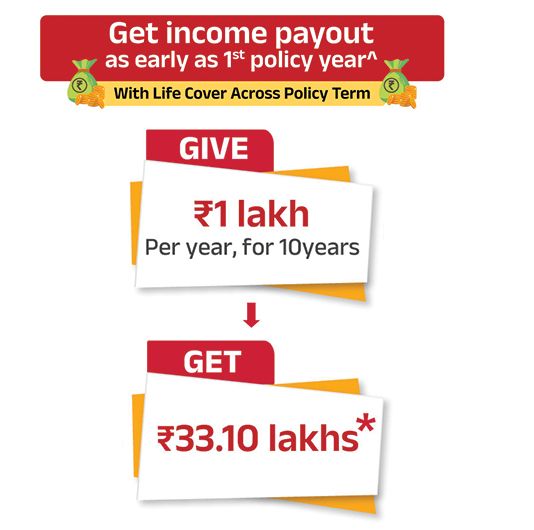
Get immediate income payout after 1 day of policy issuance^

*Min 3 characters
+91phone-icon
*Please enter a valid 10 digit Mobile No.
*This field is required.

ABSLI Nishchit Aayush Plan

ICON-CLICK

Guaranteed# Income

ICON-CLICK

Life Cover across policy term

ICON-CLICK

Lumpsum Benefit at policy maturity.

Get:
₹33.74 lakhs~

Pay:
₹10K/month for 10 years

Sources
1https://www.pib.gov.in/PressReleaseIframePage.aspx?PRID=2114761&reg=48&lang=2

Disclaimer
This blog is for information and awareness purposes only and does not purport to any financial or investment services and do not offer or form part of any offer or recommendation. The information is not and should not be regarded as investment advice or as a recommendation regarding any particular security or course of action.

Every effort is made to ensure that all information contained in this blog is accurate at the date of publication, however, the Aditya Birla Sun Life shall not have any liability for any damages of any kind (including but not limited to errors and omissions) whatsoever relating to this material.

ADV/6/26-27/397

whatsapp-imagewhatsapp-image