Aditya Birla Sun Life Insurance Company Limited

NPS vs PPF vs EPF: Choosing the suitable Retirement Plan for You [2026 Guide]

Icon-Calender May 11, 2026
Icon-Clock5 mins read
4.5
Rated by 1000 readers
https://lifeinsurance.adityabirlacapital.comnullCLOSE-BUTTON

Plan Smarter, Live Better!

*Min 3 characters allowed
+91
*Please enter a valid 10 digit Mobile No
https://lifeinsurance.adityabirlacapital.comnullCLOSE-BUTTON
ICON-TICK

Thank you for your details. We will reach out to you shortly.

https://lifeinsurance.adityabirlacapital.comnullCLOSE-BUTTON
ICON-TICK

Currently we are facing some issue. Please try after sometime.

banner-imagemob-image
  • Icon-Index
    Table of Contents

Building a robust retirement corpus in India requires a balanced portfolio, and the three most popular pillars of long-term savings are the National Pension System (NPS), the Public Provident Fund (PPF), and the Employees' Provident Fund (EPF). All three are government-backed or government-regulated schemes, making them highly secure. However, each scheme serves a distinct purpose, has different tax implications, and offers varying levels of liquidity.

Choosing the suitable retirement plan in India isn't about picking just one; it's about understanding how NPS vs PPF vs EPF work together to maximize your returns while minimizing your tax liability. Let’s dive into a comprehensive comparison of these investment heavyweights for your financial future.

The Core Differences: NPS vs PPF vs EPF at a Glance

The primary distinction between these three schemes lies in their regulatory framework, risk profile, and, most importantly, their tax status, often referred to by the 'E-E-E' rule (Exempt, Exempt, Exempt).

EPF is mandatory for salaried employees and is the safest, PPF is a fixed-income, low-risk tool for guaranteed# returns, and NPS is a market-linked, hybrid scheme offering the potential for higher returns and liquidity.

FeatureEmployees' Provident Fund (EPF)Public Provident Fund (PPF)National Pension System (NPS)
EligibilityMandatory for most salaried employees (establishments with 20+ workers)(2)Any Indian Resident (Salaried/Self-Employed)Any Indian Citizen (Resident or NRI)
Risk ProfileLowest (Fixed Interest Rate)Low (Fixed Interest Rate)Market-Linked (Moderate to High Risk)
Tax Status (E-E-E)Exempt, Exempt, Exempt (E-E-E)2Exempt, Exempt, Exempt (E-E-E)2Exempt, Exempt, Exempt (E-E-E)3
Returns (2024-2025)FixedFixed (currently 7.1%)1Variable
Lock-in PeriodUntil retirement (age 58)15 yearsUntil retirement (age 60)
Mandatory AnnuityNoNoYes (40% of corpus upon maturity)(3)

Taxation and Withdrawal: Where the Money is Made (and Saved)

The tax treatment of a retirement corpus in India is structured around three stages: Contribution, Accumulation, and Withdrawal. This is where the schemes vary significantly.

PPF and EPF offer the most generous tax treatment (E-E-E) but NPS offers an additional tax deduction under Section 80CCD(1B)7 for non-80C contributions, which is a major incentive for extra retirement savings.

1. Tax on Contribution (Entry)
All three schemes qualify for the deduction under Section 80C7 of the Income Tax Act, 1961, up to the overall limit of ₹1.5 Lakh.

  • EPF: The employee's mandatory contribution is automatically deducted under 80C7.
  • PPF: Voluntary contributions are tax-deductible up to ₹1.5 Lakh under 80C7.
  • NPS: Contributions are deductible under 80C7. More importantly, an additional deduction of up to ₹50,000 is available exclusively for NPS Tier I contribution under Section 80CCD(1B)7, over and above the ₹1.5 Lakh limit.

2. Tax on Accumulation (Growth)
The interest earned in EPF and PPF, and the capital gains generated in NPS, are tax-exempt during the accumulation phase.

3. Tax on Withdrawal (Exit)
This is the most crucial difference, particularly between EPF/PPF and NPS.

  • EPF & PPF (E-E-E): If the EPF account is maintained for 5 continuous years, the entire corpus (interest and principal) received at maturity or retirement is 100% tax-exempt. PPF is also fully tax-exempt upon maturity.
  • NPS (E-E-T): At age 60, up to 60% of the corpus can be withdrawn as a tax-free lump sum. However, the remaining 40% must be used to purchase an Annuity Plan (pension), and the periodic pension income received from that annuity is taxable as per the individual’s income slab(3).

Risk and Liquidity: Balancing Safety with Returns

Your choice of suitable retirement plan in India must align with your risk tolerance and your need for access to funds before retirement.

EPF and PPF are preferred for conservative savers who prioritize guaranteed#, government-backed returns, while NPS is ideal for younger investors seeking higher, market-driven returns through equity exposure over the long term.

1. Risk Profile and Fund Allocation

  • EPF & PPF: These are pure Debt instruments. The return (interest rate) is declared by the government, offering capital protection and highly predictable accumulation.
  • NPS: This is a hybrid structure. Subscribers choose their asset allocation between Equity (E), Corporate Bonds (C), Government Securities (G), and Alternative Investments (A). Younger individuals can allocate up to 75% in Equity (Class E), leveraging market growth to potentially achieve a higher retirement corpus over 20-30 years.

2. Access and Withdrawal Rules

  • EPF (Low Liquidity): Withdrawal is permitted only for specific purposes like purchasing a house, children's education, or medical treatment, and only after 5-10 years of service, as per EPFO guidelines.
  • PPF (Moderate Liquidity): Partial withdrawal is allowed after the completion of 5 years from the end of the subscription year. Loans can be availed from the third financial year. The full withdrawal is only possible after the 15-year maturity period.
  • NPS (Moderate Liquidity): Subscribers can make up to three partial withdrawals before retirement (after 3 years of contribution). Each withdrawal is capped at 25% of the contributions made and must be for specified purposes (e.g., child's education/marriage, buying a house, or critical illness treatment)(3).

The suitable Retirement Plan in India: A Combined Strategy

The most effective retirement planning in India involves utilizing all three accounts to create a multi-layered savings strategy that combines safety, liquidity, and growth potential.

  • Foundation (EPF & PPF): Maximize your EPF contribution and ensure you utilize the PPF limit (₹1.5 Lakh). This guarantees a tax-free, debt-based safety cushion that is impervious to market volatility.
  • Growth Engine (NPS): Use NPS as your primary long-term wealth builder. The additional ₹50,000 tax benefit under 80CCD(1B)7 is a direct incentive to invest more here, and the equity exposure will help your corpus beat long-term inflation.
  • Guaranteed# Income: As retirement approaches, use a portion of your liquid savings to purchase a dedicated Annuity Plan from ABSLI, ensuring a guaranteed#, lifelong monthly expenses after retirement stream.

Conclusion

Deciding on the suitable retirement plan in India requires balancing your need for liquidity (PPF/NPS partial withdrawals), safety (EPF/PPF fixed returns), and long-term growth (NPS equity exposure). While EPF and PPF offer superior tax benefits* at withdrawal (E-E-E), NPS is the most powerful tool for compounding wealth and earning the additional ₹50,000 tax deduction. By maintaining contributions to all three, you create a diversified retirement corpus capable of withstanding market risks and funding a comfortable future.

How Much Helpful You Found This Article?

Rating_Star
Rated by 0 reader
/ 5 ( 0 reviews )
Not helpful
Somewhat helpfull
Helpful
Good
Best
RatingTick

Thank you for your feeback

Don’t forgot to share helpful information in your circle

FAQs

NPS is generally considered better for long-term wealth accumulation due to its market-linked returns (equity exposure). PPF is better for safety and guaranteed# tax-free withdrawal. Financial advisors usually recommend utilizing both for balance.

Complete withdrawal from EPF is usually allowed only upon retirement (age 58) or if you remain unemployed for two continuous months(2). Partial withdrawals are permitted for specific, approved reasons like home purchase or medical emergencies.

At maturity (age 60), 40% of the NPS corpus must be mandatorily used to buy an annuity plan (pension) from a life insurance company. The monthly income received from this pension is fully taxable as income(3).

If you withdraw PPF prematurely (between 5 and 15 years, for approved reasons), the entire amount received remains tax-free. However, premature closure is permitted only under specific circumstances (e.g., medical treatment or higher education).

For PPF, the minimum annual contribution is ₹500. For NPS Tier I account, the minimum annual contribution is ₹1,000 to keep the account active.

Show All
Hide

Thank you for your details. We will reach out to you shortly.

Thanks for reaching out. Currently we are facing some issue.

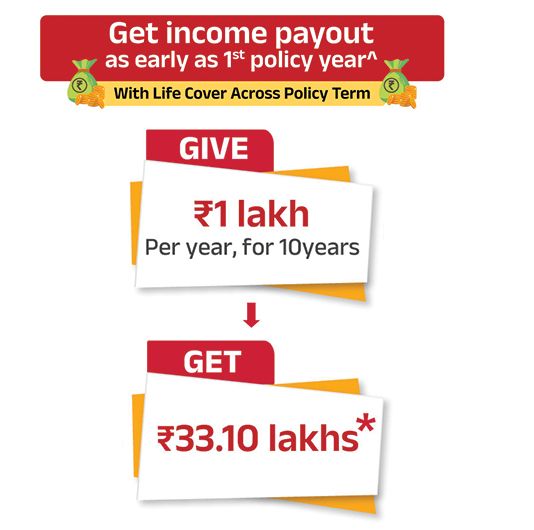
Give ₹1 lakh/ month for 5 years and Get ₹ 4.01 lakhs every year till your life1

*Min 3 characters
+91phone-icon
*Please enter a valid 10 digit Mobile No.
*This field is required.

ABSLI Guaranteed Annuity Plus

Multiple annuity options, Regular income stream.

ICON-CLICK

Guaranteed# lifelong income

Icon-Income-Benefit

Top-up option for annuity

ICON-CLICK

Single/Joint Life cover option

ICON-CLICK

Deferred annuity option

Give :
₹ 1 lakhs/Month for 5 year¹

Get :
₹4.01 lakhs/-

Sources
1https://www.nsiindia.gov.in/(S(2czf53zqsgflq0ygssfn0j55))/InternalPage.aspx?Id_Pk=132

2https://www.livemint.com/money/personal-finance/public-provident-fund-ppf-employees-epf-voluntary-vpf-compare-investment-interest-rates-tax-benefits-tenure-retirement-11773421132277.html

(3)NPS Tax Benefit (80CCD(1B)) and Exit Rules, PFRDA / The Economic Times:

Disclaimer
*Tax benefits are subject to changes in tax laws. Kindly consult your financial advisor for more details

#Provided all due premiums are paid.

7Deduction under section 80C, 80CCD(1B) is allowable subject to other provisions of the Act.

Please note that we have provided our above views based on current interpretation of income tax provisions.

Such interpretations may differ at customer’s consultant level. ABSLI shall not be responsible for tax positions adopted by customer.

This blog is for information and awareness purposes only and does not purport to any financial or investment services and do not offer or form part of any offer or recommendation. The information is not and should not be regarded as investment advice or as a recommendation regarding any particular security or course of action.

Every effort is made to ensure that all information contained in this blog is accurate at the date of publication, however, the Aditya Birla Sun Life shall not have any liability for any damages of any kind (including but not limited to errors and omissions) whatsoever relating to this material.

ADV/5/26-27/135

whatsapp-imagewhatsapp-image