
- All Insurance
- Endowment Plans
- Savings PlansNew
- Term Insurance
- Pension PlansNew
- Critical Illness Insurance
- ULIP Plan
- Group Insurance
- Protection Solutions
- Employer Employee
- Voluntary
- Affinity
- Credit Life
- Retirement Solutions
- Annuity Scheme
- Gratuity
- Leave Encashment
- Post Retirement Medical Benefits Scheme
- Superannuation
- Withdrawn Products
- NRI Plans
- Articles
- Where Do I?
- Find Customer Service
- Learn About Life Insurance
- Become a Life Insurance Advisor
- Know Our Funds
- Manage My Claim
- Know more about UPI Autopay
- Read FAQs
- Register For One ABC Id
- Download Forms
- Read Market Outlook
- Download Public Disclosures
- Disclosure of Key Performance and Financial Parameters
- Financial Calculator
- Know your Advisor
- Term Insurance
- Manage My Policy
- Her Insurance

Connect
Aditya Birla Sun Life Insurance Company Limited



Aditya Birla Sun Life Insurance Company Limited
EPS vs Gratuity: How Both Work Together in Retirement
 April 14, 2026
 5 mins read

Plan Smarter, Live Better!


 Table of Contents
How Much Helpful You Found This Article?

Rated by 0 reader
/ 5 ( reviews )
Not helpful
Somewhat helpfull
Helpful
Good
Best

Thank you for your feeback
FAQs
No. A landmark 2026 High Court ruling (reiterated in February 2026) confirmed that Gratuity and Pension are "parallel tracks." An employer cannot deny you your statutory gratuity just because they are already contributing to your pension.
Your Gratuity is paid out to you by the old employer. Your EPS is not paid out; it stays in the EPFO system under your UAN and continues to accumulate "service years" when you join your next job.
The ₹7,500 minimum pension (effective Jan 2026) applies to eligible members of the EPS-95 scheme. However, the final amount still depends on your actual "Pensionable Salary" and total "Pensionable Service."
Only if your total service is less than 10 years. Once you complete 10 years, you cannot "withdraw" the full amount; you are locked into receiving a monthly pension after age 58.
Yes. Since your employer's 8.33% contribution to EPS is based on your "Wages," and the 2026 rules mandate that Wages be 50% of your CTC1, your pensionable salary base has likely increased, leading to a higher final pension.
You get the best of both worlds. You are eligible for pro-rata Gratuity after 1 year and you continue to build your EPS pension years just like a permanent employee.
Yes. The nominee receives the Death Gratuity (tax-free) and a Widow/Orphan Pension (monthly) under the EPS scheme.
You don't have to choose! Both are statutory requirements. Your focus should be on completing 10 years of total service to ensure you don't lose out on the lifetime pension benefit.
In 2026, while there isn't a monthly "inflation index" like DA for private pensions yet, the government has started periodic revisions (like the 2026 hike) to help pensioners deal with rising costs.
The EPFO (Employees' Provident Fund Organisation) manages the EPS fund, while your Employer (or their insurer, like ABSLI) manages the Gratuity fund.
Show All
Hide
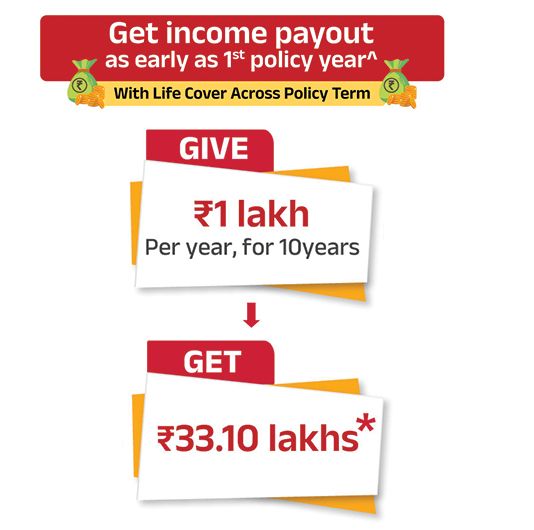
Give ₹1 lakh/ month for 5 years and Get ₹ 4.01 lakhs every year till your life1
ABSLI Guaranteed Annuity Plus
Multiple annuity options, Regular income stream.

Guaranteed# lifelong income

Top-up option for annuity
Single/Joint Life cover option
Deferred annuity option
Give :
₹ 1 lakhs/Month for 5 year¹
Get :
₹4.01 lakhs/-
 ENQUIRE NOW
Recently Added Article




Most Popular Calculator


Disclaimer
With effect from 1st April 2026, the provisions of the Income Tax Act, 2025 shall prevail. Accordingly, any references to sections mentioned above shall be construed as corresponding to the relevant section and provisions of the applicable prevailing Act, as amended from time to time.
Please note that we have provided our above views based on current interpretation of income tax provisions. Such interpretations may differ at customer’s consultant level. ABSLI shall not be responsible for tax positions adopted by customer.
This blog is for information and awareness purposes only and does not purport to any financial or investment services and do not offer or form part of any offer or recommendation. The information is not and should not be regarded as investment advice or as a recommendation regarding any particular security or course of action.
Every effort is made to ensure that all information contained in this blog is accurate at the date of publication, however, the Aditya Birla Sun Life shall not have any liability for any damages of any kind (including but not limited to errors and omissions) whatsoever relating to this material.
ADV/4/26-27/35

