Aditya Birla Sun Life Insurance Company Limited

Can Gratuity Be Transferred to a New Employer?

Icon-Calender April 14, 2026
Icon-Clock5 mins read
4.5
Rated by 1000 readers
https://lifeinsurance.adityabirlacapital.comnullCLOSE-BUTTON

Plan Smarter, Live Better!

*Min 3 characters allowed
+91
*Please enter a valid 10 digit Mobile No
https://lifeinsurance.adityabirlacapital.comnullCLOSE-BUTTON
ICON-TICK

Thank you for your details. We will reach out to you shortly.

https://lifeinsurance.adityabirlacapital.comnullCLOSE-BUTTON
ICON-TICK

Currently we are facing some issue. Please try after sometime.

banner-imagemob-image
  • Icon-Index
    Table of Contents

In the Indian employment landscape, your Provident Fund (PF) is the king of portability. You move jobs, you provide your UAN (Universal Account Number), and your money follows you. Naturally, many employees assume that Gratuity, being a similar long-term retirement benefit, should work the same way.

But gratuity has always been a different beast. Unlike PF, which is a contribution-based fund where you and your boss both put in money every month, gratuity is a statutory liability of a specific employer.

Here is the reality of gratuity transfer in the 2026 workplace.

1. The Private Sector: Is Portability Finally Here?

In the traditional private sector, the answer remains generally No, but with a 2026 twist.

  • The "Settlement" Rule: When you leave a private company after completing your eligibility period (5 years for permanent, 1 year for fixed-term), the company is legally required to "settle" the account. They must pay you the lump sum.
  • The 2026 "Social Security Fund" Proposal: The new labor codes have introduced the idea of a Centralized Social Security Fund, especially for gig and platform workers. While the goal is to make benefits portable via a unique ID (similar to a UAN), for regular private-sector employees, the system still defaults to a payout rather than a transfer.
  • Why can't it be transferred? Since gratuity is calculated on your Last Drawn Salary, a new employer doesn't want to inherit the "liability" of your past 10 years at a different company where they didn't control your pay hikes.

2. The Exception: Group Companies and Conglomerates

This is the one area where "transfer" is common and highly beneficial. If you are moving between two companies that belong to the same parent group (e.g., moving within the Tata Group, Reliance, or the Aditya Birla Group):

  • Service Continuity: Many large conglomerates allow for a "Transfer of Service." Instead of paying you out, your old company transfers your "gratuity provision" to the new company’s books.
  • The Benefit: If you spent 4 years at Company A and move to Company B (within the same group), your 5-year clock doesn't reset. You hit your milestone in just one more year.
  • The Documentation: This is not automatic. It must be explicitly mentioned in your transfer or appointment letter. If it’s not there, you are effectively starting from zero.

3. The Government Sector: Technical Resignations

In the government sector, the rules are much more flexible, provided you follow the right procedure.

  • Technical Resignation: If a government employee resigns from one department to join another (Central or State) or a PSU, they can opt for a Technical Resignation.
  • Service Carry-Forward: In this case, the past service is "counted" for the purpose of gratuity in the new department. The liability is transferred, and the employee receives a single, larger payout at the end of their entire government career.
  • The 2026 NPS/UPS Update: With the introduction of the Unified Pension Scheme (UPS) and updates to the NPS (National Pension System) in 2025, the government has further streamlined how retirement benefits move between departments to ensure civil servants don't lose their "years of service" when they take up new roles within the state.

4. The "Implicit Portability" of the 2026 Wage Code

While you might not be able to "move the money," the 2026 rules have made your eligibility more portable in spirit.

  • Fixed-Term Parity: In the past, if you moved every 3 years, you got ₹0 gratuity. Now, if you move between Fixed-Term Contracts, you get your gratuity at every stop (after 1 year).
  • The result: You are essentially "carrying" the value of your benefits with you in the form of cash payouts at every job switch, rather than waiting for a 20-year retirement.

5. Why a Payout is Often Better Than a Transfer

Many employees feel disappointed that they can't transfer their gratuity, but in the private sector, a payout is often the better deal.

  1. Compound Growth: When you get a payout of ₹5 Lakhs at age 35, you can invest that money into a ULIP, Equity Fund, or a high-yield Savings Plan. Over the next 25 years, that money could grow significantly more than if it sat as a "provision" on a company's balance sheet.
  2. Tax Efficiency: Receiving smaller chunks of gratuity (each under the ₹20 Lakh limit) across your career can be more tax-efficient than receiving one massive ₹50 Lakh payout at age 60, where a large portion would be taxable. However, 20 lakh limit is cumulative across all employers.
  3. Liquidity: A job switch is often an expensive time (relocation, new house deposits). Having that gratuity cash in hand provides a vital financial cushion.

6. How to Ensure a Smooth "Non-Transfer" (The Exit Process)

Since you likely won't be transferring the money, you need to ensure the exit settlement is perfect.

  • Form I: Ensure you formally apply for the payout.
  • Gratuity Certificate: Ask your old employer for a certificate stating the number of years you served and the amount paid. This is crucial for your Lifetime Tax-Free Limit (₹20 Lakhs)1. You will need to show this to your future employer so they know how much of your tax-exempt "quota" is left.
  • Nomination Update: When you join the new employer, immediately fill out Form F. Since you are starting a "fresh clock," your family needs to be protected from Day 1.

7. Strategic Advice from ABSLI: Bridging the Gap

At Aditya Birla Sun Life Insurance, we view the "non-portability" of gratuity as a call to action. Since your gratuity clock resets every time you join a new private firm, there is a gap in your retirement security during those first five years of a new job.

  1. The "Safety Net" Plan: Use your gratuity payout from your old job to start a dedicated Retirement Plan. This ensures that even if you leave your new job in 3 years (getting ₹0 gratuity), your retirement corpus hasn't stopped growing.
  2. Life Insurance Parity: Remember that gratuity is paid out in case of death without a 5-year wait. When you switch jobs, ensure your Term Insurance covers any temporary "dip" in the death benefits you might have had at your old, long-tenure firm.

8. Conclusion: Portability is in the Payout

In 2026, the dream of "Transferring Gratuity" like a PF account is still largely limited to government employees and group transfers. For the average private-sector professional, portability happens through Cash Settlement.

The new labor codes haven't made the money "move," but they have made it accessible (through the 1-year rule) and larger (through the 50% wage rule). Your goal shouldn't be to move the liability—it should be to collect the payout and invest it wisely to create your own "Universal Gratuity Fund."

How Much Helpful You Found This Article?

Rating_Star
Rated by 0 reader
/ 5 ( 0 reviews )
Not helpful
Somewhat helpfull
Helpful
Good
Best
RatingTick

Thank you for your feeback

Don’t forgot to share helpful information in your circle

FAQs

No. These are separate legal entities. Your MNC must pay you out after you resign, and your "gratuity clock" starts from zero at the startup.

Get this in writing. If the new company (which is not a group company) agrees to this, they are essentially taking on a huge financial gift for you. This is very rare and is usually only done for top-tier executive hires.

No. The UAN is currently for EPF (Provident Fund) and Pension (EPS). While there are plans to link all social security benefits to a single ID under the new codes, the actual funds for gratuity are still managed individually by employers.

Yes. Even if your service is continuous, each company is a separate legal unit for records. You should file a fresh Form F with the new entity to ensure there are no administrative delays.

The payout from your old job has no impact on the amount your new employer will pay you later. However, it does count toward your lifetime tax-exempt limit of ₹20 Lakhs.

Usually, taking the payout is better. It gives you immediate control of the funds to invest in market-linked instruments (like ULIPs) that can outpace the slow growth of a standard gratuity provision.

This is a "Transfer of Undertaking." In most cases, the new owner is legally bound to take over all employee liabilities, including your past years of service. Your gratuity remains "transferable" in this specific scenario.

Yes. This is done through a "Technical Resignation" and a "Transfer of Pro-rata Gratuity" between departments. You must ensure the proper paperwork is filed before you leave the first job.

Because gratuity is a defined benefit (calculated on your final salary), it’s hard to predict. If you move from a low-paying job to a high-paying job, the "liability" for your old years suddenly becomes much more expensive. Companies are unwilling to pay for the "hikes" you received at a competitor.

Since you won't have gratuity protection for the first 5 years at a new permanent job, consider a Short-term Savings Plan or a Term Life Insurance policy to ensure your family is protected during that "waiting period."

Show All
Hide

Thank you for your details. We will reach out to you shortly.

Thanks for reaching out. Currently we are facing some issue.

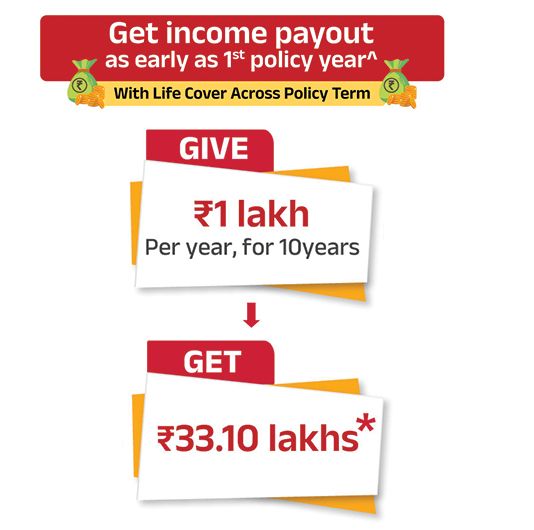
Give ₹1 lakh/ month for 5 years and Get ₹ 4.01 lakhs every year till your life1

*Min 3 characters
+91phone-icon
*Please enter a valid 10 digit Mobile No.
*This field is required.

ABSLI Guaranteed Annuity Plus

Multiple annuity options, Regular income stream.

ICON-CLICK

Guaranteed# lifelong income

Icon-Income-Benefit

Top-up option for annuity

ICON-CLICK

Single/Joint Life cover option

ICON-CLICK

Deferred annuity option

Give :
₹ 1 lakhs/Month for 5 year¹

Get :
₹4.06 lakhs/-

Sources
1https://www.pib.gov.in/newsite/PrintRelease.aspx?relid=189273&reg=3&lang=2

Disclaimer
With effect from 1st April 2026, the provisions of the Income Tax Act, 2025 shall prevail. Accordingly, any references to sections mentioned above shall be construed as corresponding to the relevant section and provisions of the applicable prevailing Act, as amended from time to time.

Please note that we have provided our above views based on current interpretation of income tax provisions. Such interpretations may differ at customer’s consultant level. ABSLI shall not be responsible for tax positions adopted by customer.

This blog is for information and awareness purposes only and does not purport to any financial or investment services and do not offer or form part of any offer or recommendation. The information is not and should not be regarded as investment advice or as a recommendation regarding any particular security or course of action.

Every effort is made to ensure that all information contained in this blog is accurate at the date of publication, however, the Aditya Birla Sun Life shall not have any liability for any damages of any kind (including but not limited to errors and omissions) whatsoever relating to this material.

ADV/4/26-27/33

whatsapp-imagewhatsapp-image