To make a death claim, the nominee informs the insurer, submits the claim form with the death certificate and policy documents, and receives the payout. A maturity claim is simpler: you return a discharge form with bank details, and the insurer pays on the maturity date. This guide takes both claim types in order: who can claim, the steps, the documents, the timelines, what Section 45 means for a policy older than three years, and what to do if a claim is rejected or delayed.
What is Life Insurance? How do death and maturity claims fit into it?
Life Insurance is a contract under which the insurer pays a sum assured to your nominee if you die during the policy term, and some plans also pay a benefit on maturity or survival. A death claim is made by the nominee after the policyholder passes away. A maturity claim is made by the policyholder when the term ends. Which claim applies depends on the plan. A Term Plan pays only on death within the term, unless it is a return-of-premium variant that also refunds premiums at maturity.
Savings and Endowment Plans pay a maturity benefit, and some pay survival benefits during the term. Life Insurance in India differ in what they pay and when, so read the benefit section of your policy before you plan for either claim.
Who can make a death claim on a Life Policy?
The nominee named in the policy makes the death claim. Under Section 39 of the Insurance Act, 1938, a nominee who is the policyholder's spouse, parent or child is treated as the beneficiary of the proceeds. If there is no nominee, or the nominee has also died, the legal heirs claim by producing proof of heirship. A frequently seen mistake is a nomination that is blank, outdated, or names a minor without an appointee.
Update the nomination after a marriage, the birth of a child or a death in the family. It takes one form and spares your family avoidable paperwork at a hard time.
How do you make a death claim on a Life Policy?
To make a death claim, start as soon as practical, because the insurer's decision period runs from the date of intimation.
- Intimate the claim: Contact the insurer through its website, toll-free number, email or a branch. Give the policy number, the name of the life assured, the date, place and cause of death, and your name and relationship.
- Submit the claim form and documents: The core set is the claimant's statement (the claim form), the original policy document, the death certificate, and identity and bank proof. The next section lists the extra documents for specific situations.
- Reply to queries in full: Send every pending document in one go. Partial replies lead to repeat requests and slow the claim.
- Receive payment: After approval, the insurer pays the claim amount by electronic transfer to the claimant's bank account.
Fill the claim form from the policy and the death certificate, not from memory. Names, dates, and the cause of death must match across the form, the certificate, and any medical records, because mismatches are a common reason for an insurer to ask for clarification. Write bank details exactly as they appear on the cancelled cheque, since payment goes to the claimant's own account.
What documents are needed for a Life Insurance death claim?
Every death claim needs the claim form, the original policy document, the death certificate, and the claimant's identity and bank proof. Further documents depend on the circumstances:
|
Situation
|
Additional documents usually asked (use your insurer's own checklist)
|
|
Death due to illness, at home or in hospital
|
Medical attendant certificate from the treating or family doctor, and hospital records if the person was admitted. If no doctor treated the person, a written declaration by the claimant.
|
|
Accident, suicide or other unnatural death
|
FIR and post-mortem report, as applicable.
|
|
Original policy document lost
|
Indemnity bond for loss of the policy document, on stamp paper, and notarised as the insurer specifies.
|
|
No nominee, or the nominee has died
|
Legal heir certificate, succession certificate, or an application for dispensing with legal evidence of title, as the insurer requires.
|
|
Nominee is a minor and no appointee is named
|
Guardianship certificate or legal documents from the custodian of the minor.
|
How long does an insurer take to settle a death claim?
IRDAI requires a death claim that needs no investigation to be paid or rejected with reasons within 15 days of intimation, and one that needs investigation within 45 days. If the insurer misses the limit, it must pay interest at the bank rate plus 2%. The earlier IRDAI framework gave insurers 30 days from receipt of all papers, or up to 90 days for investigation followed by 30 days to settle. Many articles still quote those periods.
The 2024 limits run from intimation, which is why reporting the death early and submitting complete papers matters.
How do you make a maturity claim on Life Insurance?
For making a maturity claim:
- Note the maturity date and benefit: Both appear in the policy schedule.
- Expect the intimation: Insurers send a maturity intimation with the discharge form ahead of the due date. If nothing has arrived a few months before maturity, contact the insurer. An outdated address or mobile number is a common cause.
- Complete the discharge form: Sign it, since it acts as your receipt for the payment. Attach a cancelled cheque in your name for the electronic transfer.
- Submit and receive: Send the form with the original policy document (or the policy details if it is held electronically), your identity proof and bank proof. The insurer pays on the due date.
Can an insurer reject a death claim?
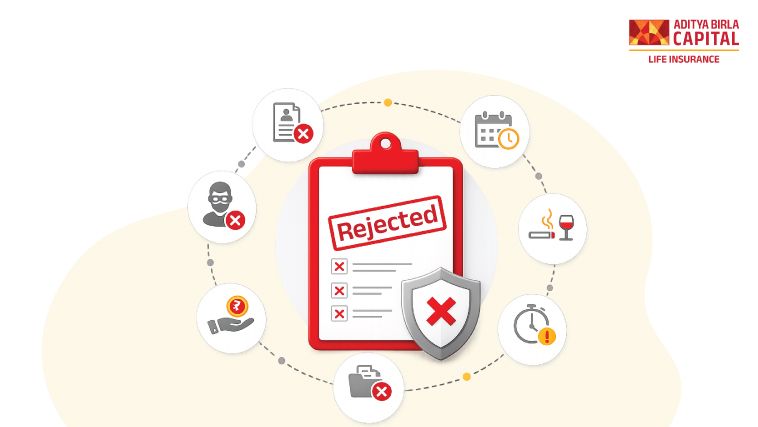
An insurer can reject a death claim only on grounds in the policy terms and the law, such as suppression or misstatement of material facts or non-genuine documents. Section 45 of the Insurance Act, 1938 limits this: after three years from the date of issue, commencement of risk or revival, whichever is later, the policy cannot be called in question on the ground of misstatement.
The rule gives families certainty once a policy has run for three years. Within the first three years the insurer can examine what was disclosed at the proposal stage, and the claim then turns on whether a fact that would have changed the underwriting decision was withheld. Commonly examined disclosures include tobacco use, existing medical conditions, income and other insurance.
What should you do if a death claim is rejected or delayed?
First write to the insurer's grievance redressal officer and keep proof of the complaint. If the response is late or unsatisfactory, register the complaint with IRDAI through the Bima Bharosa portal, on toll-free 155255 or 1800 4254 732, or by email to complaints@irdai.gov.in. For eligible disputes, the Insurance Ombudsman under the Insurance Ombudsman Rules, 2017 is the next route. Consider legal advice for a rejected claim of high value.






 October 27, 2026
 5 mins





 Table of Contents


 BUY ONLINE