Aditya Birla Sun Life Insurance Company Limited

Early cancer warning signs and when to seek care

Icon-Calender October 22, 2026
Icon-Clock5 mins read
★
4.5
Rated by 1000 readers
https://lifeinsurance.adityabirlacapital.comnullCLOSE-BUTTON

Plan Smarter, Live Better!

*Min 3 characters allowed
+91
*Please enter a valid 10 digit Mobile No
https://lifeinsurance.adityabirlacapital.comnullCLOSE-BUTTON
ICON-TICK

Thank you for your details. We will reach out to you shortly.

https://lifeinsurance.adityabirlacapital.comnullCLOSE-BUTTON
ICON-TICK

Currently we are facing some issue. Please try after sometime.

banner-imagemob-image
  • Icon-Index
    Table of Contents

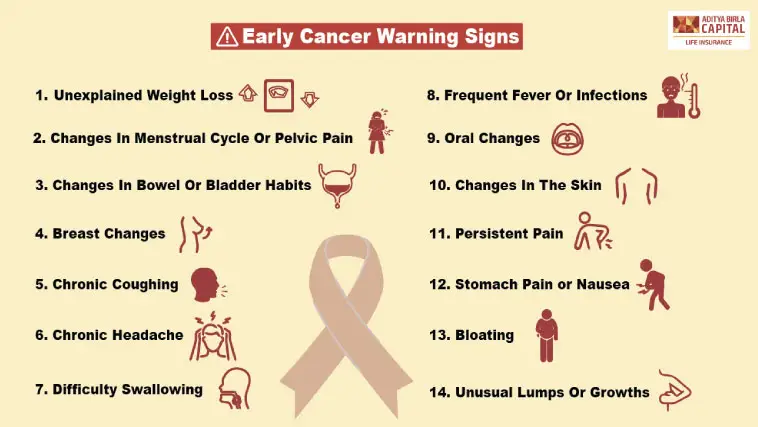
A new lump, unexplained bleeding, a persistent cough, or an unexpected change in weight deserves medical attention. These changes often have causes other than cancer, but a symptom checklist cannot tell you the cause. Speak to a doctor about changes that persist, worsen, or are unusual for you.

Which changes should you discuss with a doctor?

Look for a change from what is normal for your body, rather than trying to match every symptom to a cancer type. Changes in breathing, digestion, skin, appetite, or energy can warrant assessment. A doctor can evaluate the pattern and decide whether investigation or follow-up is appropriate.

  • A new lump or swelling, including in the breast, neck, or elsewhere.
  • Unexplained bleeding, blood in urine or stool, or unusual vaginal bleeding.
  • A cough or hoarse voice that persists or worsens, or difficulty swallowing.
  • A mouth ulcer or skin sore that does not heal, or a changing mole.
  • Persistent bowel changes, repeated bloating, unexplained weight loss, or unusual tiredness.

This is a prompt to seek assessment, not a diagnostic checklist. Record what changed and tell your clinician which concern brought you to the appointment. Avoid deciding that a symptom is harmless simply because it does not appear in this list.

Do painless breast changes need attention?

Yes. A new breast lump needs assessment even if it does not hurt. Other changes include skin dimpling, a newly inward-turning nipple, unusual nipple discharge, or swelling near the armpit. Many breast changes are benign, but neither pain nor the absence of pain can establish their cause.

Describe where the change is and when you first noticed it. Mention whether it has altered since then, and bring any previous breast reports. Do not use a photograph or online description to decide that a lump is safe to leave unchecked.

How long should you wait before asking for help?

Do not use a fixed waiting period for every symptom. Arrange assessment for a new concerning change, and see a doctor if an unexplained symptom does not improve over a few weeks. Seek help sooner when symptoms worsen or bleeding occurs. Do not wait for pain to develop.  When you book, describe the symptoms so the clinical team can advise on urgency.

If you are told to monitor it, ask when to return, what changes should trigger an earlier visit and who will communicate any test results. A clear follow-up plan is more useful than an open-ended instruction to wait.

When does coughing up blood require urgent care?

Even a few blood streaks in phlegm need urgent medical assessment. Seek emergency care if you cough up more than a few spots or streaks, or if coughing blood occurs with breathing difficulty, chest or upper-back pain, or a very fast heartbeat. These symptoms have several possible serious causes.

Go to the nearest emergency department or arrange emergency assistance. Do not spend time trying to identify the cause online. Tell the medical team about the amount of blood, accompanying symptoms, and medicines you take. This emergency advice is about immediate safety, not a prediction that you have cancer.

What should you prepare for a medical appointment?

Prepare a short account of your symptoms, previous illnesses, family history, and current medicines. The clinician may ask questions and examine you before deciding what tests are needed. Bringing previous results can help the discussion. There is no need to arrange a package of cancer tests before this assessment.

A practical appointment note can include when the change began, whether it is constant or recurring, what makes it better or worse, and how it affects eating, sleeping, or daily activities. Write down your questions too, especially if anxiety makes it hard to remember them during the consultation.

Before leaving, ask what the proposed test is intended to clarify, how to prepare, when results should arrive, and how to obtain them. Keep a copy of the plan. If the explanation is unclear, ask the clinician to repeat it in everyday language.

How do doctors find out whether a symptom is cancer?

There is no single test that diagnoses every cancer. Depending on the symptoms and examination, a doctor may arrange laboratory tests, imaging, or another procedure. A biopsy, which examines a tissue sample, is often needed to confirm cancer. Tests are chosen for the clinical question, rather than as a universal checklist.

Ask what a normal or abnormal result would mean for your next step. If symptoms continue after an initial assessment, contact your clinician again and refer to the follow-up plan. Keep reports together so another clinician can see what has already been investigated.

How is screening different from investigating symptoms?

Screening looks for a particular cancer or precancer in people who do not have symptoms. Investigating a lump, bleeding, or persistent cough is diagnostic assessment. A screening programme cannot replace an appointment for a new symptom, and an abnormal screening result requires further evaluation before a diagnosis can be made.

For example, a breast investigation prompted by a lump answer, a different question from screening someone without symptoms. Tell the clinician about the lump even if you recently attended screening. Do not wait for the next routine invitation to raise a new concern. Ask a doctor which screening is appropriate for your age, medical history and risk in India.

Screening has potential harms as well as benefits, including false-positive results and overdiagnosis. More testing is not automatically more useful, and overseas screening schedules should not be presented as universal Indian advice.

How can ABSLI help with Insurance questions?

For an existing ABSLI policy, ask the servicing team to explain the cover and claim requirements in your own policy documents. Bring the policy schedule and wording, and request a written explanation of any unclear terms. This article does not assess eligibility, recommend a product, or establish that a diagnosis is covered. Medical assessment should proceed independently of an insurance purchase or claim enquiry.

How Much Helpful You Found This Article?

Rating_Star
Rated by 0 reader
/ 5 ( 0 reviews )
Not helpful
Somewhat helpfull
Helpful
Good
Best
RatingTick

Thank you for your feeback

Don’t forgot to share helpful information in your circle

Frequently asked questions

No. Many symptoms have other causes. Assessment is needed to establish the reason for a persistent or concerning change. A symptom list cannot confirm or exclude cancer.

Yes. Cancer may not cause pain, so a painless change should not be dismissed. Discuss a new lump or other concerning change with a doctor.

No. Raise a new symptom with a clinician rather than waiting for routine screening. Screening and the investigation of symptoms serve different purposes.

No single test can diagnose every cancer. The appropriate investigation depends on the clinical assessment, and a biopsy may be required. Ask what your particular result does and does not establish.

Show All
Hide

References

[1] National Cancer Institute, Symptoms of Cancer. Accessed 21 October 2026.
https://www.cancer.gov/about-cancer/diagnosis-staging/symptoms

[2] NHS, Cancer. Accessed 21 October 2026.
https://www.nhs.uk/conditions/cancer/

[3] NHS, Coughing up blood. Accessed 21 October 2026.
https://www.nhs.uk/symptoms/coughing-up-blood/

[4] National Cancer Institute, How Cancer Is Diagnosed. Accessed 21 October 2026.
https://www.cancer.gov/about-cancer/diagnosis-staging/diagnosis

[5] World Health Organization, Guide to cancer early diagnosis. Accessed 21 October 2026.
https://www.afro.who.int/sites/default/files/2017-05/9789241511940-eng.pdf

[6] National Cancer Institute, Screening Tests. Accessed 21 October 2026.
https://www.cancer.gov/about-cancer/screening/screening-tests

[7] American Cancer Society, Breast Cancer Signs and Symptoms. Accessed 21 October 2026.
https://www.cancer.org/cancer/types/breast-cancer/screening-tests-and-early-detection/breast-cancer-signs-and-symptoms.html

[8] Why cancer insurance matters. Accessed 21 October 2026.
https://lifeinsurance.adityabirlacapital.com/articles/health-insurance/importance-of-cancer-insurance-plan/

[9] Cancer policy and critical illness policy differences. Accessed 21 October 2026.
https://lifeinsurance.adityabirlacapital.com/articles/health-insurance/difference-between-cancer-policy-and-critical-illness-policy/

[10] ABSLI original article and corporate footer. Accessed 21 October 2026.
https://lifeinsurance.adityabirlacapital.com/articles/health-insurance/early-cancer-warning-signs-you-shouldnt-ignore/

Thank you for your details. We will reach out shortly.

Thanks for reaching out. Currently we are facing some issue.

Give ₹1,00,000 for 6 years
and Get ₹14.48 lakhs#

This field is required
+91phone-icon
Please enter valid 10 digit Number
*This field is required.

ABSLI Akshaya Plan

Whole Life Insurance with Cash Bonus

ICON-CLICK

Flexible Bonus Payouts

ICON-CLICK

Two options for benefit payouts

Icon-Whole life cover

Life Cover

ICON-CLICK

Tax Benefits

Give:
₹1 lakh for 6 years

Get:
₹14.48 lacs#

This article provides general health and insurance information. It does not provide a diagnosis, personalised medical advice or a recommendation to buy insurance. Consult a qualified medical practitioner about symptoms, tests and treatment. Insurance benefits, eligibility, exclusions and claim requirements are governed by the applicable policy contract.

BEWARE OF SPURIOUS PHONE CALLS AND FICTITIOUS / FRAUDULENT OFFERS. IRDAI or its officials do not involve in activities like selling insurance policies, announcing bonus or investment of premiums. Public receiving such phone calls are requested to lodge a police complaint.

whatsapp-imagewhatsapp-image