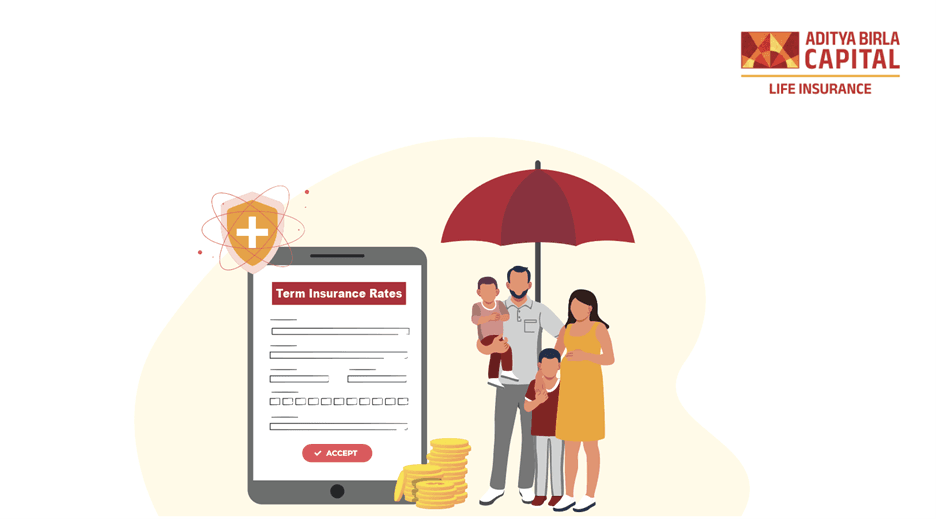
Insurance is a legal contract between you and an insurer, where you pay a premium regularly and the insurer agrees to pay a defined amount if a specified event, such as an accident, illness, or death, happens during the policy term. The insurer pools premiums collected from many policyholders and uses this pool to pay valid claims, which is why Insurance works at scale rather than for any single policyholder.
When the event covered by your policy occurs, you or your nominee files a claim, the insurer checks it against the policy terms and pays the agreed amount if it qualifies. If no such event occurs, a pure protection policy, such as a Term Plan, pays nothing at the end of the term, since the premium only ever funded the risk cover.
What are the main types of Insurance?
Insurance broadly falls into two broad categories:
- General Insurance: This covers assets and liabilities other than life such as Health insurance, Motor Insurance, Home insurance, Travel Insurance, etc.
- Life Insurance: This covers the financial impact of your death or, on some plans, your survival to a certain age.
Life Insurance, the second category, is covered in more detail.
What is Life Insurance?
Life Insurance is a financial protection product that provides a payout to your nominee if you die during the policy term, in exchange for regular or one-time premiums. Depending on the type of policy, it may offer only life cover or combine protection with savings, investments, or other benefits. For example, if you buy a Life Insurance Policy with a ₹1 crore sum assured and pass away while the policy is active, your nominee may receive the applicable death benefit as per the policy terms. The payout structure and benefits depend on the type of life insurance plan you choose.
What are the types of Life Insurance?
Life Insurance Plans can be broadly classified based on the type of protection and benefits they offer. Some plans focus primarily on life cover, while others combine protection with savings or investment components. Common types of Life Insurance include:
- Term Insurance: Provides life cover for a specified period and pays a death benefit if the policyholder dies during the policy term. It is primarily a protection-oriented product.
- Whole Life Insurance: Provides life cover for an extended period, potentially up to the policyholder's lifetime, depending on the plan. It may also provide benefits that can support long-term financial or legacy planning.
- Endowment Plans: Combine Life Insurance with a savings component. They can provide a death benefit if the policyholder dies during the policy term or a maturity benefit if they survive the term, subject to the policy terms.
- Child Insurance Plans: Combine life cover with a savings or investment component to help build funds for future goals such as a child's education or other milestones.
- Annuity Plans: Provides regular income from a lumpsum or retirement corpus, typically for a fixed period or for life, depending on the annuity option.
- Pension Plans: Helps build a corpus for retirement and provides financial support after you stop working, through lump-sum benefits, regular income, or both, depending on the plan.
What are the benefits of Life Insurance?
- Financial protection: Eases the financial strain of unexpected medical, accident, or liability costs.
- Asset safeguard: Protects valuable assets, such as your home or vehicle, from losses caused by accidents, theft, or natural disasters.
- Income support: Replaces lost income for your family in the event of disability or death.
- Risk management: It helps individuals and businesses manage financial uncertainty more confidently.
- Tax benefits: Certain products offer premium deductions or tax-exempt payouts under the Income-tax Act, 2025, subject to prevailing provisions.
Is Group Insurance different from an Individual Life Insurance Policy?
Yes. Group Insurance for employees is a single policy an employer buys to cover all eligible employees under one master contract, usually at a lower per-person cost and with simpler underwriting than an individual policy bought on your own. Because group cover is tied to your employment, it typically ends when you leave the job, and the cover amount is often standard for all employees rather than tailored to individual needs.
An Individual Life Insurance Policy, by contrast, stays with you regardless of your employer and can be sized to your own income, liabilities, and family goals.
Do you need an Individual Life Insurance Policy if you have Group Insurance through your employer?
Employer-provided Group Life Insurance can provide valuable financial protection, but it may not be enough to meet your family's long-term financial needs. An Individual Life Insurance Policy can provide additional cover that you control independently of your employment.
- Coverage continues when you change jobs: An Individual Policy is not tied to your employer, so the cover can continue even when you switch jobs or leave the workforce, as long as you meet the policy terms and premium requirements.
- You can choose the level of cover: Group Insurance typically provides a predefined level of cover. With an Individual Policy, you can choose the sum assured based on your income, liabilities, dependents, and financial goals.
- You control the policy term: An Individual Policy allows you to select a policy term based on the period for which your family may need financial protection.
- Provides protection beyond workplace benefits: Employer-provided cover may change when you change jobs, retire, or leave the organisation. An Individual Policy can help maintain continuity of life cover independently of these changes.
- Can complement your existing group cover: You do not necessarily have to choose between the two. An Individual Life Insurance Policy can supplement employer-provided Group Insurance if the latter does not provide sufficient cover for your needs.
How to choose the right type of Life Insurance?
Consider your financial goals, coverage needs, and budget before comparing different plans. Then:
- Identify your goal: Protection, savings, investment, or retirement income?
- Choose the right plan type: Match the plan to your financial goal.
- Decide the cover and policy term: Consider your income, liabilities, and dependents.
- Compare premiums and benefits: Look at what you pay and what the policy offers.
- Check exclusions and terms: Understand the conditions before buying.
How to select the right Life Insurer?
Consider these key factors before choosing an insurer:
- Claim settlement track record: Look at how consistently the insurer settles valid claims.
- Financial strength: Check the insurer’s solvency ratio and the ability to meet long-term obligations.
- Plan options: Check whether it offers plans and features suited to your needs.
- Premiums and benefits: Compare premiums, coverage, and benefits across insurers.
- Service and reputation: Consider customer service, digital services, and overall experience.
Why consider ABSLI for your Life Insurance needs?
- 25 years of legacy: With 25 years of experience in the life insurance industry, ABSLI combines industry expertise with the backing of the Aditya Birla Group.
- 98.86% individual claim settlement ratio: A high claim settlement ratio reflects an insurer's track record of honoring valid claims.
- Strong solvency position: ABSLI reported a solvency ratio of 1.87 times as of September 30, 2025, reflecting its financial capacity to meet its long-term obligations.
- Wide range of solutions: Offers Life Insurance Plans across protection, savings, investment, and retirement planning to address different financial needs and life stages.
- Convenient policy servicing & customer service: ABSLI provides convenient digital services to help policyholders manage their policies throughout the policy period, including online premium payments, updating profile details, downloading statements and forms, tracking service requests and accessing policy information. It also offers WhatsApp servicing for added convenience.
Explore Life Insurance Plans by ABSLI






 September 7, 2026
 5 mins read




 Table of Content


 BUY ONLINE