Both Individual and Joint Term Insurance provide life cover for a defined period, but the key difference is how many lives are covered under the policy and how the benefit works when one of the insured people passes away. With an Individual Term Plan, one person is covered under one policy. Each couple can have separate policies, allowing them to choose their own sum assured, policy term, and other benefits based on their individual income, responsibilities, and protection needs.
With a Joint Term Plan, two people are covered under a single policy. The policy is designed around both lives, with the death benefit and continuation of cover depending on the specific policy terms. This can make policy management simpler, but it is important to understand what happens to the cover after the death of one insured person.
Individual vs. Joint Life Term Insurance: Which is better?
Choosing between Individual and Joint Term Insurance is really a question of how you want each person’s life cover to work for the household. The right choice depends on:
- Income & liabilities: Consider how much each partner earns, owes, and contributes to the household.
- Individual protection needs: Your age, health, occupation, and financial responsibilities may mean you each need different levels of cover.
- Policy flexibility: Separate policies can allow each partner to choose cover, tenure, and benefits based on their own requirements.
- What happens after a claim: Understand how the policy works for the surviving partner if one insured person dies.
- Long-term fit: Choose the structure that continues to meet your family’s protection needs as your circumstances change.
When does Individual Term Insurance make more sense for a couple?
Separate policies can make more sense when the two people do not have the same protection needs. Think about a couple where one partner is the primary earner and the other has a different income, or where one has a larger loan or business liability. Giving both people the same cover simply because they are married can leave one person underinsured and the other overinsured.
Individual Policies can also let each person choose their own policy term and additional protection, subject to the product rules. This matters when age, health, occupation, or lifestyle factors differ materially.
A useful test is simple: if either person died tomorrow, would the surviving family face the same financial gap? If the answer is no, separate cover deserves serious consideration.
When can Joint Term Insurance be useful?
Joint Term Insurance can be useful when two people want protection under a single policy, and their needs are sufficiently aligned. It can simplify policy administration, but convenience should not replace checking the payout structure. Before choosing a Joint Plan, check:
- Whether the benefit is paid on the first death or another defined event.
- How the sum assured is allocated between the two lives.
- Whether the policy continues after one person’s death.
- What happens to the surviving person’s cover after a claim.
- Which riders or additional benefits are available, if any.
A Joint Policy may not provide the same flexibility as separate policies, so compare the actual policy terms rather than assuming both structures work the same way.
How do age, income, and lifestyle affect the choice between individual and joint cover?
Age, income, and lifestyle can affect both the amount of cover you need and the premium offered after underwriting. They also matter when deciding whether one joint structure fits both people. For example, two people may be close in age but have very different incomes or tobacco-use disclosures. Their protection requirements can still be different even if they are buying cover together. Likewise, a significant age gap can make a single policy structure less straightforward if one person needs cover for much longer.
A common mistake is to compare only the premium. Compare the death benefit, policy duration, payout rules, and flexibility first, then look at premium.
Does a Home Loan change when you need to choose between Individual or Joint Insurance?
A Home Loan can make the cover decision more important, but it does not automatically make Joint Insurance the right answer. The useful question is: whose death would create the bigger repayment and income-replacement problem for the family? If both partners contribute significantly to the Loan and household expenses, both lives may need meaningful cover. If one person carries most of the repayment responsibility, that person may need a higher individual sum assured.
This is also why people researching Home Loan Insurance Plans should distinguish between cover linked specifically to a Loan and Individual Insurance that can address the Loan alongside other family expenses. The policy structure should reflect the full financial need, not just the outstanding Loan.
How can you compare Individual and Joint Term Insurance before buying?
Use a simple five-point check:
- Cover needed for each person: Estimate the financial gap created if either person dies.
- Policy duration: Match the term to the period when dependants and liabilities need protection.
- Payout structure: Understand exactly when the death benefit is paid and what happens afterwards.
- Flexibility: Check whether each person can have different cover, terms, and optional benefits.
- Total premium: Compare the cost only after confirming that the cover is adequate.
How can ABSLI help you choose between Individual and Joint Insurance?
ABSLI offers Term Insurance Plans that can be evaluated based on individual protection needs as well as joint requirements. The ABSLI DigiShield Plan is a Pure Term Plan wherein Joint Life Protection is available as an optional benefit. Under this option, the secondary life insured’s applicable sum assured is 50% of the applicable sum assured of the primary life insured.
Because product options, eligibility, exclusions, and benefit structures can differ, read the applicable product brochure and policy terms before choosing between individual and joint coverage. You can use the ABSLI Term Insurance calculator to explore cover requirements and premium estimates. You can also review other ABSLI Term Insurance Plans before deciding which structure to examine further.






 September 15, 2026
 5 mins


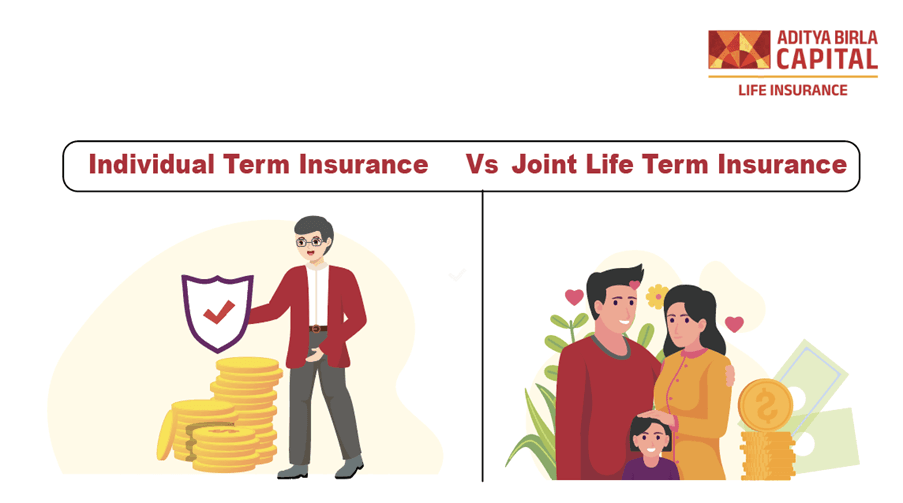
 Table of Contents


 BUY ONLINE