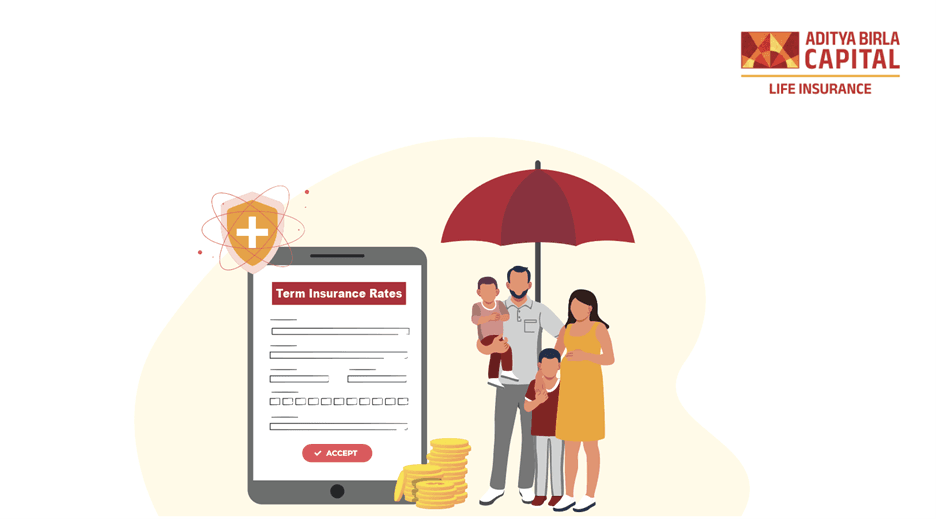
Uncertainty is not limited to the economy or financial markets. It can show up in everyday life through rising expenses, changing income, health concerns, family responsibilities, employment changes, or an emergency that was not part of the original plan. ABSLI अ-Nishchit Index 2.0 looks at uncertainty across 11 life parameters and 49 real-life statements. Its findings cover concerns ranging from money and health to career, family responsibilities, retirement and the environment.
The study is based on responses from 3,583 people across India. You cannot predict every uncertainty, and term insurance is not designed to address all of them, but it has an important role to play.
What kinds of uncertainty can affect a family today?
Uncertainty can show up in different ways. It could be a sudden medical expense, income that does not keep pace with rising costs, mounting debt, or concerns about retirement and family responsibilities. The अ-Nishchit Index 2.0 reflects the top anxiety triggers of Indians today:
- 80% point to economic and financial instability as a source of uncertainty.
- 80% identify health and medical risks as a concern.
- 79% are uncertain about income, debt and financial planning.
- 75% experience uncertainty about family and social responsibilities.
- 75% are concerned about retirement and ageing.
These concerns may be different, but many of them eventually have one thing in common. They can have a financial impact on a family.
What kinds of financial uncertainty can affect family today?
The different uncertainties a family faces are more connected than you may realise.
- A medical emergency can bring an unexpected expense
- Rising costs can put pressure on savings
- Changing income can make it harder to manage regular commitments
- Mounting debt can further stretch available resources
- Growing family responsibilities
The result is that one uncertainty can often create another. That makes financial preparedness an important part of dealing with uncertainty. The question is not whether every unexpected event can be prevented, but whether a family has the resources to absorb its financial impact when it happens.
How can a family prepare for the financial impact of uncertainty?
The financial pressures behind uncertainty can feel overwhelming. Savings may lose value as the cost of living rises, income may not always keep pace with increasing expenses, and an unexpected expense can put pressure on an emergency buffer. Many of these situations, however, can be managed over time. Savings can be rebuilt, expenses can be adjusted, income can change, and an emergency fund can help absorb a temporary financial setback.
But there is another uncertainty that can have a particularly significant impact on a family's finances: the loss of an earning member. While the loss is permanent, the family's financial responsibilities continue, even as they navigate life without their loved one.
Why is the loss of an earning member a different kind of uncertainty?
The death of an earning member can create a permanent change in household income:
- Regular expenses may continue
- Loan repayments may still be due
- Children's education has to complete
- Healthcare expenses may still arise
- Dependent parents may still need support
- Long-term goals may still need funding
The question, therefore, is not only how much a family has saved today. It is also how the family's financial plan would change if one of its earning members were no longer there. Term Insurance can help address the financial impact of a permanent loss of income by providing a death benefit to the nominee if the life assured dies during the policy term.
Cannot existing savings absorb an unexpected loss of income?
Savings can help, but they may already be earmarked for goals such as a child’s education, a home or retirement. Using them to replace the lost income could mean putting those plans on hold. The more important question is: How much of my family’s financial commitments could continue if my income stopped permanently?
Term Insurance can complement existing savings and assets by addressing this specific risk. The right cover depends on factors such as dependents, liabilities, financial goals, existing assets, and life cover.
How should you think about financial preparedness when the future is uncertain?
Preparedness does not mean trying to insure against every possible event. It means identifying risks that could have a significant financial impact and deciding which ones you can absorb yourself and which ones may need dedicated protection.
- Emergency savings can help manage unexpected short-term expenses.
- Health insurance can help with eligible healthcare costs, subject to the policy terms.
- Savings and investments can be allocated towards future financial goals.
- Term insurance can provide a death benefit if the life assured dies during the policy term
These roles should not be mixed. Term Insurance has a specific role. It is designed to address the financial impact of losing an earning member, not job loss, inflation, or investment uncertainty.
How can you prepare for an uncertainty you cannot predict?
You do not need to know when an adverse event will happen to plan for its financial consequences. Start with the people and commitments that would be affected if your income stopped. Ask yourself these 4 questions:
- Who depends on you financially?
- Which liabilities would remain?
- Which goals still need funding?
- What resources are already available?
Then consider how much of the potential gap could be absorbed by existing savings and assets and how much may require life insurance.
Does the need for a safety net change as responsibilities change?
Yes. The financial impact of losing an earning member can change as the household changes. Any person early in their career may have fewer financial dependents. Later, marriage, children, a Home Loan, or responsibility for parents can increase the number of people and commitments linked to an income. Over time, accumulated assets may also become a larger part of the family's resources.
That is why Term Insurance should be reviewed in the context of current responsibilities rather than treated as a one-time decision. A significant change in income, liabilities, dependents, or existing assets may be a reason to reassess whether the current safety net still fits.
How should you assess whether Term Insurance fits your safety net?
A practical assessment can start with five questions:
- Who depends on my income today?
- Which debts or financial commitments would remain if I pass away?
- Which long-term goals would my family still need to fund?
- What savings, assets and existing life cover are already available?
- How much additional protection would help bridge the gap created by the loss of my income?
A Term Insurance calculator can help you work through inputs such as desired cover, policy tenure, income, existing life cover, loan liabilities and savings.
What should you do after putting a Term Insurance safety net in place?
A safety net only helps if the policy remains active and your family knows it exists.
- Pay premiums on time and understand the applicable premium payment schedule.
- Keep the policy document and key policy details accessible to your nominee or family.
- Review your cover when there is a significant change in income, liabilities, dependants or financial responsibilities.
- Make sure nominee details are accurate and updated when required.
- Inform your nominee about the policy and the claim process
- Read the policy document carefully so you understand the benefits, exclusions, conditions and claim process.
These steps do not remove uncertainty. They reduce the chance that an existing protection plan becomes difficult for the family to use when it is needed.
How can ABSLI Term Plans help create a financial safety net?
If you are considering Term Insurance as part of your family’s financial safety net, you can explore ABSLI Term Insurance Plans based on your protection needs. The right choice should depend on your own financial responsibilities and protection needs. Read the policy document and sales literature carefully before making a decision.






 September 17, 2026
 5 mins read



 Table of Contents


 BUY ONLINE