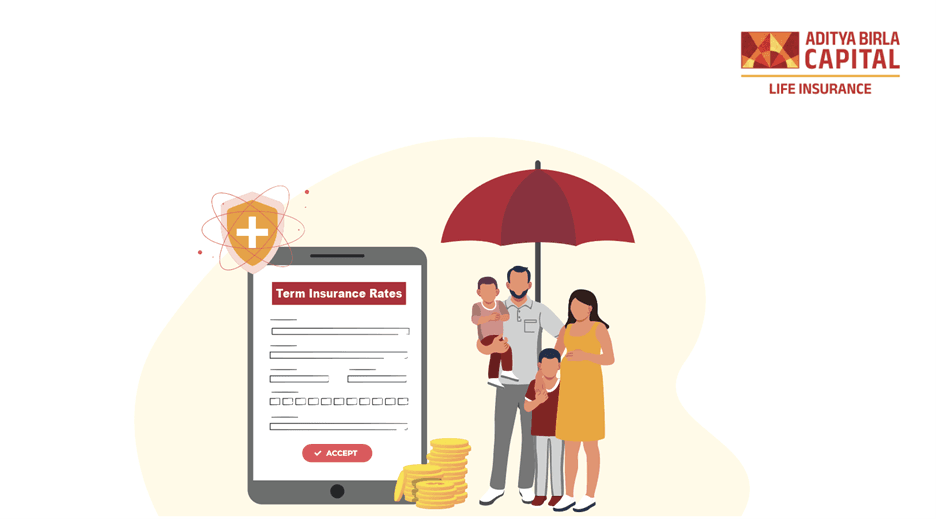
For salaried Indians, Term Insurance should primarily provide financial protection, while any tax benefit should be treated as an additional advantage. This distinction matters in 2026 because the default new tax regime does not provide many of the deductions available under the old tax regime. Aditya Birla Sun Life Insurance (ABSLI) offers Term Insurance Plans under the regulatory oversight of the Insurance Regulatory and Development Authority of India (IRDAI). Before purchasing a plan, first assess the protection your family needs, and then check the tax treatment applicable under the regime you choose.
What is Term Insurance and how does it work?
Term Insurance is a type of Life Insurance that provides financial protection for a fixed policy term. The policyholder pays premiums to keep the policy active. If the life insured passes away during the policy term, the nominee receives the death benefit, subject to the policy terms. If the life insured survives the term, no maturity benefit is usually payable unless the plan includes a Return of Premium option.
How can Term Insurance support a salaried household?
A salaried household may depend heavily on one or more regular incomes to manage daily expenses, loan repayments, education costs, and long-term goals. If the life insured passes away during the policy term, the death benefit can help the family manage these financial responsibilities, subject to the policy terms.
These Term Insurance benefits are particularly relevant when family members depend on the policyholder’s income. When choosing a Life Insurance Policy in India, consider the amount of cover, affordability, policy term, exclusions, and claims process. Tax savings should be an additional consideration, not the primary reason for purchasing the policy.
How much Term Insurance Cover should a salaried person consider?
There is no single cover amount that is suitable for every salaried person. The requirement will depend on household expenses, outstanding loans, financial dependents, future goals, existing Life Insurance, and the period for which the family may need income support. Review the amount after major events such as marriage, childbirth, a home loan, or a significant change in income.
You can also use the ABSLI Human Life Value Calculator to obtain an initial estimate based on your financial details. The final cover should provide meaningful protection while keeping the premium affordable.
Can employer-provided insurance leave a protection gap?
Employer-provided Life Insurance and Health Insurance can provide useful protection, but the cover remains subject to the employer’s scheme and its eligibility conditions. The amount available may not reflect all the employees’ household expenses, loans, financial dependents, and future goals. Employees should also distinguish between Life Insurance and Health Insurance. A Family Health Plan helps cover eligible medical expenses, while Term Insurance provides a death benefit if the life insured passes away during the policy term.
One cannot replace the other. If the employer-provided Life Insurance is not sufficient, the employee may consider separate personal cover, subject to eligibility, underwriting, affordability, and policy terms.
Can Term Insurance premiums reduce tax under the default new tax regime?
The default new tax regime generally does not allow the deduction traditionally available for qualifying Life Insurance premiums under Section 80C of the Income-tax Act, 1961. Eligible taxpayers who choose the old tax regime may claim qualifying premiums within the overall Section 80C limit of Rs. 1.5 lakh, subject to the applicable conditions and the combined limit for eligible investments and expenses.
The provisions have been reorganized under the Income-tax Act, 2025, which applies from 1 April 2026. Since section references may differ between the two Acts, taxpayers should refer to the law applicable to the relevant tax year and consult a qualified tax professional before claiming a deduction.
A portion of the premium attributable to an eligible health-related rider may qualify for a deduction under the applicable health-insurance tax provisions when the required conditions are met and the taxpayer has chosen the old tax regime. This does not mean that the entire Term Insurance premium qualifies as a Health Insurance deduction. Refer to the premium certificate and applicable tax provisions before claiming the deduction.
Is the Term Insurance death benefit tax-exempt?
The death benefit received by the nominee under a Life Insurance Policy is generally exempt from income tax, subject to the applicable law and policy conditions. This treatment is separate from the rules that apply to maturity or survival benefits under other types of Life Insurance policies.
Since tax provisions and section references may change, policyholders and nominees should verify the rules applicable at the time the benefit is received. A qualified tax professional can provide guidance based on the policy type and individual circumstances.
What does the latest IRDAI claims data say about ABSLI?
Before purchasing a plan, customers may review the insurer’s claim settlement ratio, or CSR, which represents the percentage of claims settled out of claims received. As per annual audited figures submitted to IRDAI for FY 2025-26, ABSLI settled 98.86% of individual claims. This figure covers individual Life Insurance claims across Products and is not specific to Term Insurance. CSR provides useful context, but it does not guarantee the outcome of a particular claim.
How can you shortlist and buy a suitable Term Insurance Plan?
- Calculate the cover your family may need, and consider the effect of inflation.
- Compare benefits, exclusions, payout options, riders, and premium payment terms.
- Disclose your medical history, occupation, income, and lifestyle habits accurately.
- Review the claim settlement ratio along with the applicable Product and policy terms.
- Keep the nominee informed and ensure that the policy documents are accessible to the family.
To explore the available options, use the ABSLI Term Insurance Calculator and compare the Term Plans offered by ABSLI. Review the applicable Product brochure, benefit illustration, Customer Information Sheet, and policy contract before making a decision. If the selected ABSLI Term Insurance Plan suits your needs, you may proceed through the relevant Buy Online journey after reviewing the Product documents.






 August 27, 2026
 5 mins read




 Table of Contents


 BUY ONLINE