Aditya Birla Sun Life Insurance Company Limited

How to get a Term Insurance Plan in India with pre-existing health conditions?

Icon_Calender August 28, 2026
Icon-Clock5 mins read
★
4.5
Rated by 1000 readers
https://lifeinsurance.adityabirlacapital.comnullCLOSE-BUTTON

Plan Smarter, Live Better!

*Min 3 characters allowed
+91
*Please enter a valid 10 digit Mobile No
https://lifeinsurance.adityabirlacapital.comnullCLOSE-BUTTON
ICON-TICK

Thank you for your details. We will reach out to you shortly.

https://lifeinsurance.adityabirlacapital.comnullCLOSE-BUTTON
ICON-TICK

Currently we are facing some issue. Please try after sometime.

banner-imagemob-image
  • Icon-Index
    Table of Contents

Aditya Birla Sun Life Insurance (ABSLI) offers life protection solutions in a 2026 insurance environment where medical underwriting, digital applications and policyholder disclosures are increasingly important. The Insurance Regulatory and Development Authority of India (IRDAI) continues to regulate the sector and strengthen policyholder-protection and servicing standards.

Having pre-existing health conditions does not automatically mean you cannot buy Term Insurance. Insurers assess the condition, its severity, treatment history, current health status, and other underwriting factors before deciding whether to offer cover and at what premium. The post-budget tax environment should be reviewed separately from the protection need. Tax treatment depends on the prevailing law and applicable conditions. The primary purpose of a term plan remains financial protection for the nominee.

What is a pre-existing health condition for Term Insurance underwriting?

A pre-existing condition generally refers to a medical condition, illness, or health issue that existed before the insurance policy was applied for or issued, depending on the applicable policy definition. Examples can include diabetes, hypertension, asthma, thyroid disorders, heart conditions, previous surgeries or other diagnosed illnesses. The underwriting approach varies by condition and by the applicant’s age, medical history, treatment, lifestyle, and requested sum assured.

A condition should never be concealed simply to obtain a lower premium. Accurate disclosure allows the insurer to assess the risk using the information available at application stage.

How do insurers assess applicants with existing health conditions?

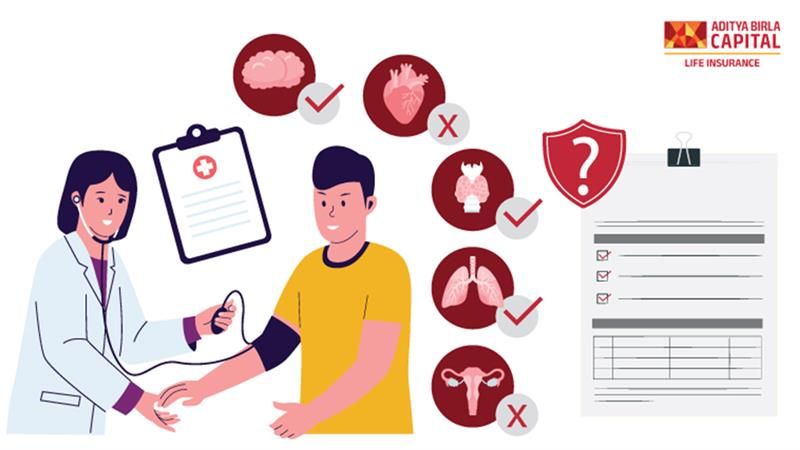
Underwriting may involve a review of the proposal form, medical history, current medication, previous reports, lifestyle information and, where required, medical examinations or diagnostic tests. The insurer may then offer standard terms, apply an additional premium, request further information, postpone the decision or decline the proposal, depending on the assessed risk. The outcome is individual rather than automatic for everyone with the same diagnosis.

The best approach is to provide complete and truthful information and submit relevant medical records when requested. This gives the underwriter a clearer picture of the applicant’s current health.

Does having diabetes or high blood pressure prevent you from buying Term Insurance?

Not necessarily. Diabetes and hypertension are common conditions, but eligibility depends on factors such as severity, control, treatment, complications, age, lifestyle, and the insurer’s underwriting rules. An applicant with well-controlled health conditions may receive an offer after medical assessment, while another applicant with complications or multiple risk factors may receive different terms. The final decision is made after underwriting.

Customers should disclose diagnosis, medication, and treatment history accurately rather than assuming that a condition automatically leads to rejection.

Will a pre-existing condition make Term Insurance premiums higher?

It can. When an existing condition increases the assessed mortality risk, the insurer may charge an additional premium or offer cover on modified terms. The amount varies according to the condition and the overall risk profile. Premiums are also influenced by age, sum assured, policy terms, smoking or tobacco use, occupation and other underwriting factors. There is no single loading percentage that applies to every condition.

An online Term Insurance calculator can provide an initial estimate, but the final premium can only be determined after the insurer has assessed the information supplied in the application.

What documents and medical tests may be required?

Requirements depend on the applicant and the cover requested. The insurer may ask for recent prescriptions, diagnostic reports, hospital records, discharge summaries, specialist consultations, or other evidence relevant to the declared condition. Medical examinations can include routine measurements and condition-specific tests. The exact tests are determined through underwriting rather than by a single universal checklist.

Keeping medical records organised can make the application process easier and help ensure that the insurer receives an accurate picture of the applicant’s health history.

How can you improve your chances of getting Term Insurance with health conditions?

Start by disclosing the condition completely, including diagnosis date, treatment, medication, hospitalisation and relevant complications. Avoid incomplete answers or assumptions about what needs to be declared. Next, choose a realistic sum assured and policy term and keep supporting medical records available. Maintaining a healthy lifestyle and following prescribed treatment can also support an accurate assessment, although it does not guarantee a particular underwriting outcome.

Comparing plans and using an insurer’s calculator can help with initial planning, but eligibility and final pricing remain subject to underwriting.

What are the 4 types of Life Insurance and where does Term Insurance fit?

The phrase “4 types of Life Insurance” is commonly used to describe broad categories such as Term Insurance, Whole Life Insurance, Savings Plans, and Unit-Linked Insurance Plans (ULIPs). Exact product categories can vary by insurer and regulatory classification. Term Insurance is primarily protection-focused.

Whole Life provides long-duration life cover, while Savings Plans combine Insurance with a savings-oriented structure. ULIPs combine Life Insurance with market-linked investment options and associated investment risks. Someone with a pre-existing condition can compare these categories based on the financial objective, but underwriting and eligibility requirements still apply to life insurance products.

Is a Death Insurance Policy the same as Term Insurance?

“Death Insurance Policy” is not generally a separate standard product category. The phrase is often used informally to describe Life Insurance that provides a death benefit. A Term Plan is one type of Life Insurance designed primarily for this purpose. Under a Term Plan, the nominee receives the applicable death benefit if the insured dies during the policy term, subject to the policy conditions. The amount is specified through the policy’s sum assured and payout structure.

Consumers should therefore look at the formal product name, policy document, exclusions, and benefit wording rather than relying only on informal terms such as Death Insurance Policy.

How does ABSLI’s latest claim settlement ratio help a buyer with a health condition?

ABSLI’s current FY 2025-26 disclosure states that 98.86% of individual claims were settled, with ₹630+ crore in total claims settled. ABSLI presents this as annual audited FY 2025-26 data submitted to IRDAI. The figure can be a useful reference when comparing insurers, but it does not mean every claim will be accepted. A claim remains subject to the policy wording, exclusions, disclosures, underwriting information and applicable law.

For applicants with pre-existing conditions, accurate health disclosure is especially important because the underwriting record forms part of the insurer’s assessment.

How should you compare a Term Insurance Plan in India when you have a medical condition?

Compare the sum assured, policy term, premium payment term, exclusions, riders, medical requirements, and claim-servicing process. Do not compare only the lowest premium because underwriting terms can differ. Also check whether the product meets the family’s income-replacement needs and whether the insurer’s application process can appropriately assess the disclosed condition. Review the final policy document before accepting the cover.

ABSLI’s Term Insurance calculator and plan-comparison destination can help with initial research, followed by formal underwriting for an individual quote.

How Much Helpful You Found This Article?

Rating_Star
Rated by 0 reader
/ 5 ( 0 reviews )
Not helpful
Somewhat helpfull
Helpful
Good
Best
RatingTick

Thank you for your feeback

Don’t forgot to share helpful information in your circle

Frequently asked questions

Yes, having a medical condition does not automatically make an applicant ineligible for term insurance. The insurer assesses the condition, treatment, complications, age and overall risk before deciding the terms. ABSLI reports a 98.86% individual claim settlement ratio for FY 2025-26 based on annual audited figures submitted to IRDAI. Applicants should disclose all relevant health information accurately during underwriting.

It may be higher if underwriting determines that the condition increases the assessed risk. The additional premium, if any, depends on the condition, severity, treatment and the applicant’s overall profile. There is no universal loading percentage for all diseases. The final premium is determined only after underwriting, although an online calculator can provide an initial estimate.

Disclose the diagnosis, treatment, medication, hospitalisation and relevant medical history accurately and provide reports when requested. Do not omit a condition because it appears minor or well controlled. Underwriting may require medical examinations or diagnostic tests based on the applicant’s profile. Complete disclosure helps reduce uncertainty around future claims and allows the insurer to assess the risk appropriately.

Accuracy note: FY2025-26 ended on 31 March 2026, so an IRDAI FY2025-26 Annual Report could not have been published in April 2025. This article therefore does not attribute the FY2025-26 ABSLI CSR to an April 2025 IRDAI report. It uses ABSLI’s current FY2025-26 claims disclosure, which states that 98.86% of individual claims were settled based on annual audited figures submitted to IRDAI. The article also avoids presenting any disease-specific premium loading or medical-test requirement as universal because underwriting varies by applicant and insurer.
ABSLI – Term Insurance Plans
ABSLI – Term Insurance Calculator
ABSLI – Super Term Plan / Buy Now
ABSLI – FY2025-26 claims disclosure
ABSLI – Annual Report 2024-25
IRDAI – official regulatory website and circulars

Show All
Hide

Thank you for your details. We will reach out shortly.

Thanks for reaching out. Currently we are facing some issue.

Buy ₹1 Crore Term Insurance at Just ₹575/month*

Please enter a valid First Name.
+91phone-icon
Please enter a valid Mobile Number.
*This field is required.

ABSLI Super Term Plan

Term plan designed for salaried individual.

Icon-Illustration Insurance

3 Plan Options

Icon-Whole life cover

Health Management Service Worth ₹74000

ICON-CLICK

100% return of premium

Life Cover
₹1 crore

Premium:
₹575/month*

This article is for general informational purposes only and does not constitute financial, tax, medical, legal or insurance advice. Insurance products, premiums, eligibility, underwriting, benefits, tax treatment and claims are subject to applicable laws, regulations and specific policy terms. Readers should review the latest policy documents and consult the insurer or an appropriate qualified professional where required. Claim settlement ratios are historical indicators and do not guarantee future claim outcomes or individual underwriting decisions.

whatsapp-imagewhatsapp-image