A regular annuity provides scheduled retirement income, while an available lumpsum withdrawal leaves money accessible for immediate needs. The useful choice depends on your income shortfall, emergency reserve, and family responsibilities. First establish whether your pension arrangement actually permits a lumpsum: paying one premium to buy an annuity does not mean receiving its value back on demand.
What does regular annuity vs lumpsum actually mean?
A regular annuity is income paid at agreed intervals under an Insurance contract. A lumpsum is money received at once, where a pension scheme or policy allows it. The phrase “lumpsum annuity” can confuse a purchase payment with a withdrawal or benefit, so ask which transaction is being discussed. Keep these separate: the purchase price goes from you to the insurer; annuity instalments come back according to the contract.
Commutation converts an eligible part of pension entitlement into cash. A Return of Purchase Price benefit is another contractual event, often linked to death. None creates a general right to withdraw the entire capital whenever you wish.
What is an annuity and how does it work in India?
How do income, flexibility, and family benefits compare?
Compare the income you would receive with the capital you would retain, rather than treating either option as automatically preferable. Annuity terms determine payment timing, access, and survivor benefits. An available lump sum gives you spending discretion, but you must decide how to preserve enough money for future household needs.
|
Decision point
|
Regular annuity
|
Permitted lump sum
|
|
Routine bills
|
Scheduled income under the chosen contract
|
You decide the withdrawals and budget
|
|
Living longer
|
A lifetime option continues while the covered life survives
|
You must plan how long the available money should last
|
|
Emergency access
|
Subject to surrender or loan terms, if available
|
Cash received remains available until spent or committed
|
|
Rising costs
|
A level payment does not automatically rise with prices
|
Holding cash alone does not solve rising costs
|
|
Family provision
|
Survivor and capital benefits depend on chosen option
|
Plan ownership, nomination, and succession for retained money
|
|
Tax
|
Assess taxable receipts and total annual income
|
Identify the benefit source and any applicable exemption
|
These are decision criteria, not equivalent product promises. Request the actual benefit schedule before choosing.
How much regular income do you need?
Start with essential household spending and subtract income you already expect to receive reliably. The remaining gap is the amount to investigate for scheduled income, after allowing for tax. Separately list emergency costs and planned large expenses. This budgeting exercise helps you avoid committing money that you may need soon.
Hypothetical example: Essential spending is Rs. 45,000 a month and existing pension is Rs. 20,000. The initial gap is Rs. 25,000 a month. These are assumed household figures, not an annuity quote. The purchase price needed to meet that gap requires an individual quotation and may change with the selected benefits.
Include costs that do not arrive monthly, such as annual insurance premiums, repairs, and family visits. Divide those budgeted costs across the year for planning, while keeping the actual payment dates visible. Discuss the plan with the person who would manage household bills if you could no longer do so.
When should you preserve access to a lumpsum?
Consider retaining accessible money when you have near-term commitments, uncertain medical spending or an emergency reserve to build. Check first that a withdrawal is permitted and understand its effect on future pension income. A lumpsum should have a clear purpose and a spending plan, rather than being treated as surplus retirement money. Write down which expenses the reserve will cover, who can access it, and when you will review the balance.
If most essential bills are already met, your need for additional scheduled income may differ from that of someone with no existing pension. Avoid choosing solely because one quoted amount looks larger.
Can you combine regular income with accessible money?
You can plan to use part of your available retirement resources for income and keep another part accessible, subject to the rules governing those resources. This does not mean every Pension Policy permits a split or partial withdrawal. Obtain a written explanation of the options available under your particular arrangement. Ask for the income available after any permitted commutation and compare it with your household gap.
Also ask when payments begin. Immediate and deferred annuities address different starting dates. Neither label by itself tells you whether the capital can be withdrawn. Read about the
Types of annuity plans and their differences
What should you check for your spouse and nominee?
Check what happens after the first death and after the last covered death. A joint-life option may continue income to a surviving annuitant, while a Return of Purchase Price option may provide a separate capital benefit. The amounts, recipients, and payment triggers depend on the chosen terms, not on the word “annuity” alone. Ask for a written illustration of each event. Do not assume that naming a nominee creates a death benefit that the policy does not provide.
Keep nomination details, bank information and policy documents accessible to your family, and seek advice where inheritance arrangements are complex. For related guidance, read:
What happens to an annuity after the annuitant dies?
How should inflation affect your decision?
Plan for the possibility that household costs rise while a level annuity stays unchanged. A fixed amount can then cover less of your shopping, utilities, or care costs. An increasing payment option, where offered, follows its own contract. Do not assume that its increases will match your actual future expenses. For a simple hypothetical stress test, if your monthly costs rose from Rs. 45,000 to Rs. 50,000 while income stayed unchanged, the shortfall would rise by Rs. 5,000. This is arithmetic, not an inflation forecast. Revisit the budget periodically and identify how you would meet a larger gap.
Is one option automatically more tax-efficient?
No. Annuity income is taxable, while a commuted pension or another lumpsum benefit can have different treatment depending on its source and applicable conditions. Receiving smaller instalments does not establish a tax saving, and receiving a lumpsum does not establish that the full amount is taxable. Compare the amount available to spend after considering your total income, applicable tax regime and the precise benefit involved.
Ask a tax adviser to check the rules for the year of receipt. Do not apply an employer-pension exemption automatically to a personally purchased annuity or an unrelated policy payment.
What should you confirm before accepting an annuity quote?
Confirm the purchase price, first payment date, frequency, chosen life or lives, survivor benefit, and access restrictions. Ask whether the quotation uses the exact option you requested. A higher instalment can reflect different benefits, so compare the full contract and household consequences before deciding which terms suit your needs. Request the applicable prospectus, benefit illustration, and policy wording. Check any surrender or loan provisions, required survival documentation and servicing process.
If you are reviewing a policy already purchased, distinguish free-look cancellation rights from later surrender: they are separate processes with their own conditions. Do not assume switching is available.
How can ABSLI help you examine the options?
Aditya Birla Sun Life Insurance can provide the applicable annuity documents and an individual quotation for an available option. Ask for an explanation of payment commencement, survivor benefits, and access restrictions. Use that information alongside your household budget and independent tax advice before deciding. Availability and benefits remain subject to the relevant policy terms.






 October 19, 2026
 5 mins read




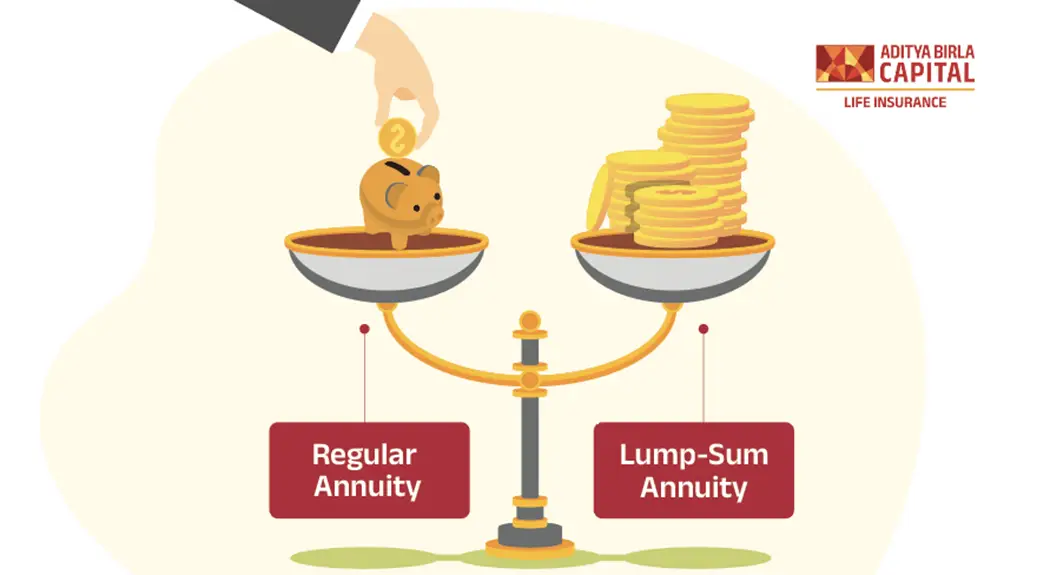
 Table of Contents


 ENQUIRE NOW