Aditya Birla Sun Life Insurance Company Limited

How to plan retirement when both partners retire at different ages?

Icon_Calender September 18, 2026
Icon-Clock5 mins read
★
4.5
Rated by 1000 readers
https://lifeinsurance.adityabirlacapital.comnullCLOSE-BUTTON

Plan Smarter, Live Better!

*Min 3 characters allowed
+91
*Please enter a valid 10 digit Mobile No
https://lifeinsurance.adityabirlacapital.comnullCLOSE-BUTTON
ICON-TICK

Thank you for your details. We will reach out to you shortly.

https://lifeinsurance.adityabirlacapital.comnullCLOSE-BUTTON
ICON-TICK

Currently we are facing some issue. Please try after sometime.

banner-imagemob-image
  • Icon-Index
    Table of Contents

Retirement does not always happen on the same day for both partners. One may retire at 55 while the other continues working until 60, creating a transition period where the household moves from two incomes to one. This period needs to be planned separately from full retirement. The working partner may still be earning and contributing, while the retired partner may already need access to retirement savings. A good plan should account for each partner’s:

  • Retirement age
  • Existing savings
  • Household expenses
  • Joint liabilities
  • Employer-linked benefits
  • Exiting Insurance
  • Retirement income each partner may need

What should you do when one partner retires before the other?

Treat the period between the two retirement dates as a separate financial phase. If the working partner’s income can cover essential household expenses, the retired partner may not need to immediately draw down their entire retirement corpus. Set a budget for the retired partner, decide which costs will come from salary, and which may come from retirement savings, and continue the working partner’s retirement contributions where possible. Keep an emergency reserve separate from retirement savings.

How can couples calculate the income gap when one partner retires first?

You can start by calculating:

  • Your expected monthly household expenses during the transition
  • The working partner’s current income and expected income growth before retirement
  • Any income available to the retired partner from existing retirement resources

The difference shows whether salary can meet the household’s needs or whether retirement resources may need to supplement it. Do this calculation before the first partner retires.

How should couples plan when there is a five-year gap between their retirement ages?

Treat the gap as a bridge period. During these years:

  • The working partner can continue earning and contributing
  • The retired partner’s savings remain earmarked for later needs, where practical.
  • Manage liabilities and review Insurance
  • Prepare for the eventual shift from one salary to retirement income

How should couples account for gratuity when partners retire at different ages?

Treat gratuity as one potential retirement resource rather than the entire plan. Each partner should understand their expected eligibility and the benefit they may reasonably receive individually. The four Labour Codes came into effect on 21 November 2025, and Ministry of Labour FAQs provide updated guidance on gratuity provisions. Review your own employment situation rather than assuming both partners will receive the same benefit.

How should women account for career breaks when planning retirement as a couple?

A career break can affect retirement savings twice: fewer years of contributions and fewer years for those savings to grow. If you have taken a career break, focus on actively rebuilding the gap:

  • Calculate the contribution gap: Compare what you have saved with what you may have accumulated without the career break.
  • Step up contributions after returning to work: Increase your retirement contribution as your income grows instead of keeping it at the pre-break level.
  • Use increments and bonuses strategically: Direct a portion of future salary increases or bonuses towards rebuilding retirement savings.
  • Build retirement savings in your own name: Avoid relying entirely on your partner’s retirement corpus for your post-retirement income.
  • Consider women-focused retirement solutions: The retirement benefit under ABSLI HER Insurance can be evaluated as one part of a broader retirement strategy.
  • Review the plan regularly: Recalculate your retirement gap after a career break, job change or significant increase in income.

Should I choose a Pension or Annuity Plan when planning retirement at different ages?

They can serve different stages of retirement planning. A Pension Plan can be considered while building towards retirement, while an Annuity can be relevant when you are closer to retirement and want to convert retirement capital into regular income:

Consideration

Pension Plan

Annuity

Best suited for

Building retirement savings

Creating regular income from retirement capital

When to consider

While you still have years before retirement

When you are closer to or at retirement

Primary purpose

Accumulate funds for retirement

Convert retirement capital into an income stream

For couples retiring at different ages

Can suit the partner who is still accumulating

Can suit the partner who is closer to retirement

Key factors to assess

Time to retirement, contributions and retirement goal

Available corpus, desired income and payout option

Can both be part of one plan?

Yes

Yes, at different stages of retirement

How can couples calculate retirement needs when they retire at different ages?

Instead of calculating one retirement target for the household, work out the requirement in two stages:

  1. The transition period: Calculate how much the household will need between the first partner’s retirement and the second partner’s retirement. Factor in the working partner’s income, the retired partner’s expenses, and any other expected income.
  2. The post-retirement period: Once both partners retire, calculate the income needed to cover household expenses, healthcare, travel, and other ongoing needs.
  3. Account for each partner separately: Include each person’s current age, retirement age, existing savings, future contributions, and employer-linked benefits.
  4. Test different scenarios: Try different retirement ages and contribution levels to see how they affect the retirement requirement.

The ABSLI Retirement Planning calculator can help you test these assumptions and estimate the retirement contribution you may need. The result is an estimate based on the inputs provided, not a guaranteed outcome.

How can ABSLI help couples plan for retirement when they retire at different ages?

ABSLI offers retirement and pension solutions that can be considered at different stages of the retirement journey. If one partner is still building a retirement corpus, the ABSLI Nishchit Pension Plan can be explored as an accumulation option. If the other partner is closer to retirement and looking to create regular lifelong income, ABSLI Guaranteed Annuity Plus offers whole-life annuity options.

The idea is not that both partners need the same product. Their retirement timelines, existing savings, and income requirements can be different, so the retirement strategy can be structured accordingly.

How Much Helpful You Found This Article?

Rating_Star
Rated by 0 reader
/ 5 ( 0 reviews )
Not helpful
Somewhat helpfull
Helpful
Good
Best
RatingTick

Thank you for your feeback

Don’t forgot to share helpful information in your circle

Frequently asked questions

Calculate each partner’s retirement gap separately before looking at the household corpus. This helps identify whether additional contributions, a later retirement date, or a different retirement income strategy may be needed.

Ideally, plan before either partner retires. Knowing the dates in advance gives the couple time to estimate the income gap, review Insurance, and decide how retirement savings will be used.

Identify the shortfall first, then consider practical levers such as increasing contributions, directing future income increases towards retirement, reducing liabilities, or extending the working period. Avoid assuming that taking more investment risk alone will solve the gap.

Each partner can assess their retirement needs separately, including their retirement age, existing corpus and expected income requirement. This can help determine whether both need a Pension Plan and whether the timing or contribution needs to differ.

A couple can use pension savings to build retirement resources over their working years and consider an annuity when part of those resources needs to be converted into regular income. If one partner retires earlier, an annuity can potentially provide that partner with a regular income while the other continues working and building their retirement savings.

Show All
Hide

Thank you for your details. We will reach out to you shortly.

Thanks for reaching out. Currently we are facing some issue.

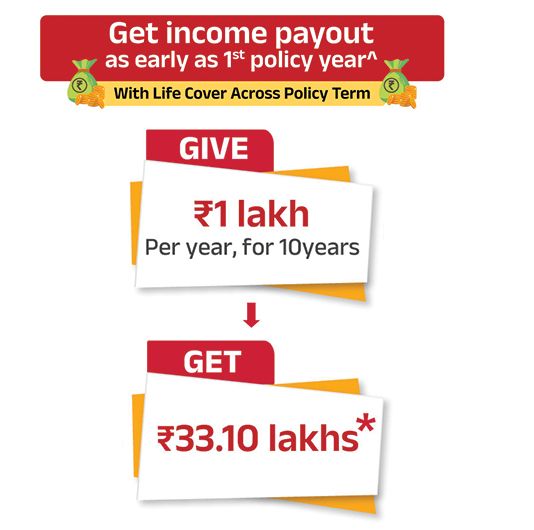
Give ₹1 lakh/ month for 5 years and Get ₹ 4.01 lakhs every year till your life1

*Min 3 characters
+91phone-icon
*Please enter a valid 10 digit Mobile No.
*This field is required.

ABSLI Guaranteed Annuity Plus

Multiple annuity options, Regular income stream.

ICON-CLICK

Guaranteed# lifelong income

Icon-Income-Benefit

Top-up option for annuity

ICON-CLICK

Single/Joint Life cover option

ICON-CLICK

Deferred annuity option

Give :
₹ 1 lakhs/Month for 5 year¹

Get :
₹4.01 lakhs/-

This article is for informational purposes only. The information provided is subject to change and should not be considered as financial, legal, medical or tax advice. Insurance is the subject matter of solicitation. Please refer to the policy document, prospectus and terms and conditions for complete details. Tax benefits are subject to change as per prevailing tax laws (Income Tax Act, 2025). Please consult a qualified tax advisor.

BEWARE OF SPURIOUS PHONE CALLS AND FICTITIOUS / FRAUDULENT OFFERS. IRDAI or its officials do not involve in activities like selling insurance policies, announcing bonus or investment of premiums. Public receiving such phone calls are requested to lodge a police complaint.

Tax benefits are subject to change as per prevailing tax laws. Please consult a qualified tax advisor.

whatsapp-imagewhatsapp-image