
- All Insurance
- Endowment PlansNew
- Savings PlansNew
- Term InsuranceNew
- Pension PlansNew
- Critical Illness Insurance
- ULIP PlanNew
- Group Insurance
- Protection Solutions
- Employer Employee
- Voluntary
- Affinity
- Credit Life
- Retirement Solutions
- Annuity Scheme
- Gratuity
- Leave Encashment
- Post Retirement Medical Benefits Scheme
- Superannuation
- Withdrawn Products
- Articles
- Where Do I?
- Term Insurance
- Manage My Policy
- Her Insurance

Connect
Aditya Birla Sun Life Insurance Company Limited



Aditya Birla Sun Life Insurance Company Limited
Safe Investment Options for Retired Individuals
 January 23, 2026
 5 mins read

Plan Smarter, Live Better!


 Table of Contents
How Much Helpful You Found This Article?

Rated by 0 reader
/ 5 ( reviews )
Not helpful
Somewhat helpfull
Helpful
Good
Best

Thank you for your feeback
FAQs
Safe investment options for retirees include the Senior Citizens Savings Scheme (SCSS), Public Provident Fund (PPF), Fixed Deposits, Post Office Monthly Income Scheme (POMIS), and RBI Floating Rate Savings Bonds.
Safe investments are crucial for retirees because they help preserve capital, provide regular income, have low risk, offer tax benefits*, and ensure liquidity for emergencies.
The current interest rate for SCSS is 8.2% per annum, compounded quarterly and paid out quarterly.
PPF offers a 7.1% annual interest rate, tax benefits* under Section 80C, and a 15-year tenure with an option to extend, making it a reliable long-term investment for retirees.1
Yes, most fixed deposits offer premature withdrawal options, although they may come with a penalty. This provides liquidity in case of emergencies.
Both SCSS and PPF offer tax benefits* under Section 80C of the Income Tax Act,1961 allowing deductions up to ₹1.5 lakhs annually.2
POMIS offers a 7.4% interest rate, with interest paid monthly. The scheme has a tenure of 5 years and provides a regular income stream.
The maximum investment limit for SCSS is ₹15 lakhs per individual.
Retirees can maximize returns by diversifying their investments, taking advantage of senior citizen-specific benefits, reinvesting interest payouts, and planning for tax efficiency.
No, Non-Resident Indians (NRIs) are not eligible to invest in SCSS or open new PPF accounts, although they can continue existing PPF accounts until maturity.
Show All
Hide
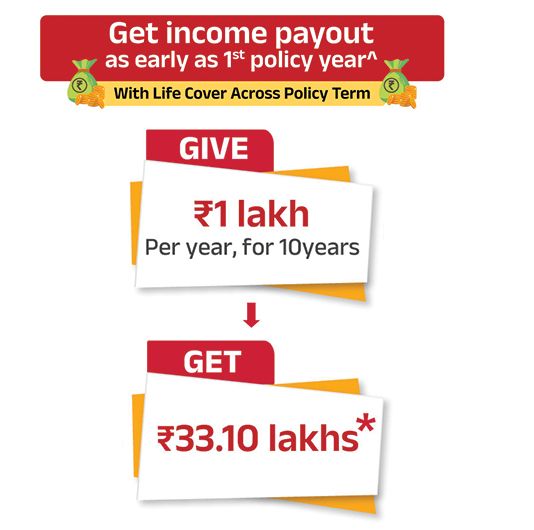
Give ₹1 lakh/ month for 5 years and Get ₹ 4.01 lakhs every year till your life1
ABSLI Guaranteed Annuity Plus
Multiple annuity options, Regular income stream.

Guaranteed# lifelong income

Top-up option for annuity
Single/Joint Life cover option
Deferred annuity option
Give :
₹ 1 lakhs/Month for 5 year¹
Get :
₹4.06 lakhs/-
 ENQUIRE NOW
Recently Added Article




Most Popular Calculator


*Tax benefits are subject to changes in tax laws. Kindly consult your financial advisor for more details
#Provided all due premiums are paid.
2https://www.myscheme.gov.in/schemes/scss
3https://www.nsiindia.gov.in/(S(n3lal5ulwjl2ik55nnvdrf55))/InternalPage.aspx?Id_Pk=178
4https://www.myscheme.gov.in/schemes/pomis
This content is intended for general informational purposes only and does not constitute financial, legal, or tax advice. Life insurance products are subject to terms, conditions, and underwriting guidelines as specified by the insurer and regulated by the Insurance Regulatory and Development Authority of India (IRDAI). Readers are advised to review product brochures carefully and consult a qualified insurance advisor before making any purchasing decisions. The examples and references used are for illustration only and do not imply endorsement or promotion of any specific policy, character, or individual.
Please note that we have provided our above views based on current interpretation of income tax provisions.
Such interpretations may differ at customer’s consultant level. ABSLI shall not be responsible for tax positions adopted by customer.
This blog is for information and awareness purposes only and does not purport to any financial or investment services and do not offer or form part of any offer or recommendation. The information is not and should not be regarded as investment advice or as a recommendation regarding any particular security or course of action.
Every effort is made to ensure that all information contained in this blog is accurate at the date of publication, however, the Aditya Birla Sun Life shall not have any liability for any damages of any kind (including but not limited to errors and omissions) whatsoever relating to this material.
ADV/1/25-26/1548

