
- All Insurance
- Endowment PlansNew
- Savings PlansNew
- Term InsuranceNew
- Pension PlansNew
- Critical Illness Insurance
- ULIP PlanNew
- Group Insurance
- Protection Solutions
- Employer Employee
- Voluntary
- Affinity
- Credit Life
- Retirement Solutions
- Annuity Scheme
- Gratuity
- Leave Encashment
- Post Retirement Medical Benefits Scheme
- Superannuation
- Withdrawn Products
- NRI PlansNew
- Articles
- Where Do I?
- Term Insurance
- Manage My Policy
- Her Insurance

Connect
Aditya Birla Sun Life Insurance Company Limited



Aditya Birla Sun Life Insurance Company Limited
Gratuity Calculation for Employees with Less Than 5 Years of Service
 April 10, 2026
 5 mins read

Plan Smarter, Live Better!


 Table of Contents
How Much Helpful You Found This Article?

Rated by 0 reader
/ 5 ( reviews )
Not helpful
Somewhat helpfull
Helpful
Good
Best

Thank you for your feeback
FAQs
Generally, no. For permanent employees, the law still requires a "continuous service" period that effectively rounds up to 5 years. However, if you have completed 4 years and 190 days (in a 5-day week office) or 4 years and 240 days (in a 6-day week office), you are legally "deemed" to have completed 5 years and can claim your gratuity.
No. This is a common point of confusion. The 1-year eligibility is a new provision under the Social Security Code 2020 that specifically targets Fixed-Term Employees (those on a specific contract) and contract workers. Regular permanent employees still need to cross the 5-year threshold.
A Fixed-Term Employee (FTE) is someone hired directly by a company for a specific period mentioned in their offer letter (e.g., a "2-year contract"). Unlike a permanent employee who has no end date, an FTE’s contract has a clear finish line. These workers are now eligible for pro-rata gratuity after just 12 months of service.
If you are a permanent employee, being fired (unless for serious misconduct) doesn't change the 5-year rule. If you haven't hit the 4-year-and-7-month "shortcut" mark, you won't be eligible. However, if you are a Fixed-Term Employee, you only need to have completed 1 year to be eligible for your payout, regardless of how the employment ended.
This depends on your contract. If you are a "Retainer" or "Independent Consultant" (not on the payroll), you are generally not considered an employee and don't get gratuity. But if you are a Fixed-Term Employee (on the payroll, with PF deductions), you are eligible after 1 year.
Working journalists have a special "middle ground." Under the law, they are eligible for gratuity after completing 3 years of service, rather than the 5 years required for most other permanent professionals.
No. If an employee suffers a permanent disability or dies due to an accident or disease, the 5-year requirement is waived completely. The employer must pay the gratuity based on the actual time served, even if it was just a few weeks or months.
The Nominee mentioned in "Form F" (or the legal heir if no nominee is named) will receive the gratuity. In 2026, the law ensures that the family is protected from day one of the employee's service in the event of an untimely death.
No. Gratuity is tied to a single employer. When you leave "Company A" after 3 years, you cannot add those years to "Company B" to claim gratuity later. The only exception is if your entire company is bought over or merged, and your "continuity of service" is legally protected in the merger.
The formula is exactly the same: Last drawn wages x 15 x years of service / 26. The only difference is that the "Number of Years" can be a smaller number like 1 or 2. This ensures you get a "piece" of the gratuity pie instead of losing it all.
Show All
Hide
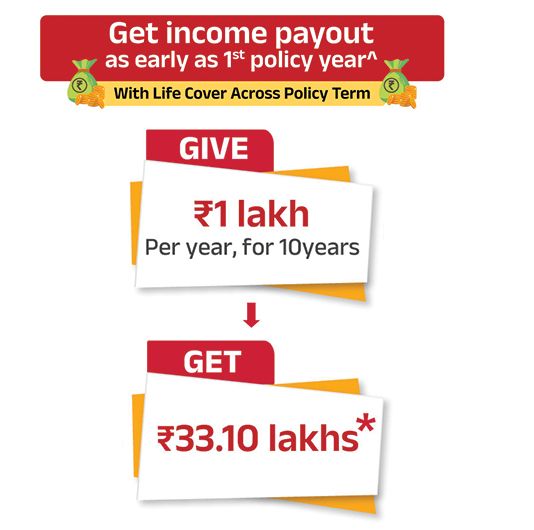
Give ₹1 lakh/ month for 5 years and Get ₹ 4.01 lakhs every year till your life1
ABSLI Guaranteed Annuity Plus
Multiple annuity options, Regular income stream.

Guaranteed# lifelong income

Top-up option for annuity
Single/Joint Life cover option
Deferred annuity option
Give :
₹ 1 lakhs/Month for 5 year¹
Get :
₹4.06 lakhs/-
 ENQUIRE NOW
Recently Added Article




Most Popular Calculator


Disclaimer
This blog is for information and awareness purposes only and does not purport to any financial or investment services and do not offer or form part of any offer or recommendation. The information is not and should not be regarded as investment advice or as a recommendation regarding any particular security or course of action.
Every effort is made to ensure that all information contained in this blog is accurate at the date of publication, however, the Aditya Birla Sun Life shall not have any liability for any damages of any kind (including but not limited to errors and omissions) whatsoever relating to this material.
ADV/4/26-27/12

