Section 80C of the Income Tax Act, 1961, allows individual taxpayers and Hindu Undivided Families (HUFs) to deduct up to ₹1,50,000 each financial year from their gross total income under the Old Tax Regime. By claiming eligible investments and specified expenses, taxpayers directly reduce their taxable income, lowering their net tax payable.*
Under Indian income tax laws, deductions under Chapter VI-A are designed to incentivise long-term personal savings, social security protection, and vital family expenditures such as children's education and housing. When you claim a deduction under Section 80C, the invested or spent amount is subtracted from your gross total income before your final tax liability is calculated using prevailing slab rates.
For instance, if an individual has a gross taxable income of ₹12,00,000 under the Old Tax Regime and utilizes the full ₹1,50,000 limit across qualifying instruments like Life Insurance premiums and Employee Provident Fund (EPF), their net taxable income drops to ₹10,50,000.
For an individual in the 30% tax slab, this translates into direct tax savings of ₹46,800 (including applicable 4% Health and Education Cess).* However, to optimise your tax strategy, it is essential to understand how this section operates under India's two distinct income tax frameworks.
Can you claim Section 80C deductions under the new tax regime?
No, Section 80C deductions cannot be claimed under the New Tax Regime (Section 115BAC). The New Tax Regime offers lower concessional slab rates but eliminates Chapter VI-A deductions, including Section 80C, 80CCC, and 80D. Section 80C deductions remain available exclusively to taxpayers who actively choose to file under the Old Tax Regime.*
Since the New Tax Regime serves as the default tax regime in India, taxpayers must evaluate their annual deduction profile before deciding whether to opt for the Old Tax Regime during tax filing. If your total eligible deductions (combining Section 80C, Section 80D Health Insurance, HRA, and Home Loan interest under Section 24b) exceed the differential tax benefit of the revised slabs, opting for the Old Tax Regime can lead to substantial cash savings.
|
Feature / Parameter
|
Old Tax Regime
|
New Tax Regime (Sec 115BAC)
|
|
Section 80C Benefit
|
Deduction up to ₹1,50,000 allowed
|
Not available (deduction foregone)
|
|
Eligible Instruments
|
Life Insurance, PPF, ELSS, EPF, tuition fees
|
No deductions permitted under 80C
|
|
Tax Slab Rates
|
Higher base slab rates (up to 30%)
|
Lower concessional slab rates
|
|
Best Suited For
|
Taxpayers with major investments, Insurance & Loans
|
Taxpayers with minimal deductions or lower gross income
|
What is the complete list of eligible deductions under Section 80C?
The Section 80C deduction list spans two broad categories: specified investment instruments (such as Life Insurance Premiums, Public Provident Fund, ELSS Mutual Funds, and EPF) and qualifying family expenditures (such as children's school tuition fees, stamp duty on residential property, and housing loan principal repayment), capped at ₹1,50,000 annually.*
Taxpayers can fulfill the ₹1,50,000 threshold using any combination of financial instruments and eligible expenditures. The tables below break down the qualifying options by lock-in period, risk profile, and regulatory eligibility criteria.
Table 1: Eligible investment avenues under Section 80C
|
Investment Instrument
|
Lock-in Period
|
Risk Profile
|
Return Type
|
Key Eligibility Rule
|
|
Life Insurance Premium (Term, Endowment, ULIP)
|
Policy Term
|
Low to Moderate
|
Fixed / Market Linked*
|
Premium must be <= 10% of Sum Assured*
|
|
Public Provident Fund (PPF)
|
15 Years
|
Sovereign / Low
|
Government Backed
|
Max ₹1.5L deposit per fiscal year
|
|
Employee Provident Fund (EPF / VPF)
|
Until Retirement
|
Low
|
Statutory Interest
|
Mandatory employee contribution portion
|
|
Equity Linked Savings Scheme (ELSS)
|
3 Years
|
Market Risk
|
Market Linked
|
Equity exposure. Shortest 80C lock-in
|
|
National Savings Certificate (NSC)
|
5 Years
|
Sovereign / Low
|
Fixed Interest
|
Interest accrued is deemed re-invested
|
|
Tax-Saving Fixed Deposit (5-Year)
|
5 Years
|
Low
|
Fixed Interest
|
Issued by scheduled banks. No premature withdrawal
|
Table 2: Eligible household & family expenses under Section 80C
|
Expense Category
|
Eligible Claim Component
|
Excluded Payments
|
Key Statutory Condition
|
|
Children's School Tuition Fees
|
Full-time education tuition fees paid to schools/colleges
|
Development fees, transport, donation, coaching
|
Restricted to maximum 2 children per individual
|
|
Home Loan Principal Repayment
|
Principal component repaid to scheduled banks / housing lenders
|
Interest repayment (covered under Sec 24b)
|
Property must not be sold within 5 years of possession
|
|
Stamp Duty & Registration Charges
|
Registration fee and stamp duty paid during house purchase
|
Commercial properties or non-residential plots
|
Claimable only in the fiscal year of actual payment
|
How do Section 80CCC, 80CCD, and Section 80CCE interact?
Section 80CCE imposes an overarching aggregate cap of ₹1,50,000 across Section 80C, Section 80CCC (pension funds), and Section 80CCD(1) (employee NPS contributions). However, Section 80CCD(1B) provides an exclusive additional deduction of up to ₹50,000 for voluntary NPS contributions, enabling a total combined deduction of up to ₹2,00,000.*
Many taxpayers mistakenly believe that Section 80C, 80CCC, and 80CCD provide separate ₹1.5 lakh deduction limits. In reality, Section 80CCE legally pools these three sections together under a single ₹1,50,000 threshold. Understanding the sub-provisions helps avoid common filing errors:
- Section 80CCC: Covers contributions paid toward approved annuity or pension plans of life insurance companies for receiving pension payouts. Claimable within the aggregate ₹1.5 lakh cap under Section 80CCE.*
• Section 80CCD(1): Covers employee or individual contributions to the National Pension System (NPS) or Atal Pension Yojana (APY), capped at 10% of salary for salaried employees or 20% of gross total income for self-employed individuals, subject to the pooled ₹1.5 lakh limit.*
• Section 80CCD(1B): Allows a distinct, independent deduction of up to ₹50,000 for voluntary self-contributions to Tier-1 NPS accounts. This deduction is strictly over and above the ₹1.5 lakh limit of Section 80CCE.*
What rules govern Life Insurance deductions under Section 80C and Section 10(10D)?
Life Insurance premiums qualify for Section 80C deductions if paid for yourself, your spouse, or your dependent/independent children. To qualify, the annual premium must not exceed 10% of the minimum sum assured for policies issued on or after April 1, 2012. Furthermore, policies must be maintained for at least two years to retain claimed deductions.*
Life Insurance represents a fundamental pillar of personal financial security, blending income replacement with tax-efficient wealth accumulation. However, taxpayers must remain cognizant of strict compliance conditions to safeguard their deductions and maturity tax exemptions:
|
Compliance Parameter
|
Statutory Rule / Requirement
|
Impact of Non-Compliance
|
|
Premium-to-Sum-Assured Cap
|
Annual premium must not exceed 10% of sum assured (for policies issued on or after 01/04/2012)*
|
Deduction under 80C is restricted proportionately to exactly 10% of sum assured
|
|
Minimum Policy Holding Period
|
Individual must keep policy active for at least 2 consecutive years (traditional) or 3 years (ULIP)*
|
If terminated earlier, past deductions claimed under 80C are treated as taxable income in surrender year
|
|
Eligible Family Beneficiaries
|
Premiums paid for self, spouse, or children (minor or adult, married or unmarried)
|
Premiums paid for parents, siblings, or in-laws are NOT eligible for Section 80C deductions
|
|
Section 10(10D) Maturity Exemption
|
Maturity proceeds exempt if ULIP aggregate annual premium <= ₹2.5L and Non-Linked policy premium <= ₹5.0L*
|
Excess earnings taxed as capital gains or income from other sources (death benefit remains 100% tax-free)
|
What common mistakes should you avoid when claiming Section 80C?
The most frequent Section 80C errors include bundling parents' Insurance premiums into your claim, ignoring the 10% premium-to-sum-assured cap, claiming non-tuition school charges, selling property within five years of acquisition, and attempting to claim 80C deductions while filing under the New Tax Regime.*
- Claiming Parents' Life Insurance: Section 80C strictly limits Insurance deductions to policies held for self, spouse, and children. Paying premiums for elderly parents' policies does not qualify under Section 80C (though Health Insurance premiums paid for parents can qualify under Section 80D).*
2. Premature surrender of policies: Surrendering a Life Insurance contract before completing two full premium paying years results in the complete reversal of previously claimed Section 80C tax deductions under Section 80C(5).*
3. Premature property sale: If a residential property against which Home Loan principal repayment was claimed under Section 80C is sold within five years from the end of the financial year in which possession was obtained, all earlier deductions are added back to taxable income.*
4. Last-minute tax hurrying: Investing in high-risk or ill-suited instruments during March simply to exhaust the ₹1.5 lakh cap can disrupt cash flow and lead to misallocated long-term capital.
How do Life Insurance solutions complement your tax and protection planning?
Balancing tax efficiency with lifelong family protection requires choosing life insurance products that match your specific life stages. Aditya Birla Sun Life Insurance (ABSLI) offers a comprehensive suite of Individual Life Insurance solutions designed to provide comprehensive financial protection while qualifying for applicable deductions under Section 80C of the Income Tax Act, 1961, under the Old Tax Regime.*
- Pure Risk Protection: ABSLI DigiShield Plan (UIN: 109N108V13) is a Non-Linked Non-Participating Individual Life Insurance Plan that offers extensive cover options to safeguard your family's financial horizon against unforeseen life events, with premiums qualifying for tax benefits.*
• Guaranteed long-term savings: ABSLI Nishchit Aayush Plan (UIN: 109N137V12) is a Non-Linked Non-Participating Savings Plan designed to offer regular guaranteed income streams alongside maturity benefits, provided all due premiums are paid.*
• Market-linked wealth creation: ABSLI Wealth Aspire Plan (UIN: 109L100V06) is a Unit-Linked Insurance Plan that combines life cover with diversified market investment opportunities tailored to long-term wealth goals.
Policyholders also benefit from ABSLI's proven operational track record, highlighted by an individual Death Claim Settlement Ratio of 98.86%* for FY 2024-25, reflecting sustained commitment to dependable family support when it matters most.






 October 26, 2026
 10 mins read




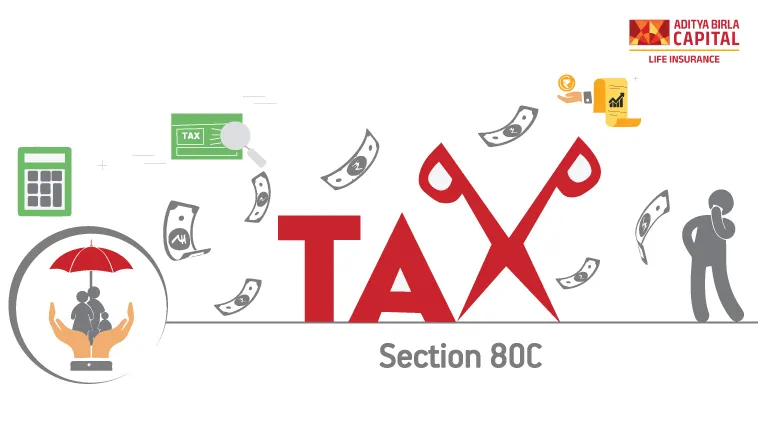
 Table of Contents


 BUY ONLINE