

- All Insurance
- Endowment PlansNew
- Savings PlansNew
- Term InsuranceNew
- Pension PlansNew
- Critical Illness Insurance
- ULIP PlanNew
- Group Insurance
- Protection Solutions
- Employer Employee
- Voluntary
- Affinity
- Credit Life
- Retirement Solutions
- Annuity Scheme
- Gratuity
- Leave Encashment
- Post Retirement Medical Benefits Scheme
- Superannuation
- Withdrawn Products
- NRI PlansNew
- Articles
- Where Do I?
- Term Insurance
- Manage My Policy
- Her Insurance

Connect
Aditya Birla Sun Life Insurance Company Limited



Aditya Birla Sun Life Insurance Company Limited
From Day One: How a Woman Can Start an Education Fund for Her Child
 March 24, 2026
 5 mins read

Plan Smarter, Live Better!


 Table of Contents
How Much Helpful You Found This Article?

Rated by 0 reader
/ 5 ( reviews )
Not helpful
Somewhat helpfull
Helpful
Good
Best

Thank you for your feeback
FAQs
Starting early allows you to leverage the power of time and compounding. It helps you stay ahead of education inflation in India and keeps your monthly contributions manageable, reducing the stress of saving large amounts later in your child's life.
Education inflation refers to the rate at which the cost of schooling and higher studies increases over time. In India, this rate is often higher than general inflation. A good plan must account for these rising costs to ensure the fund remains sufficient for the future.
A regular savings account provides a place to store money, but it lacks a protective safety net. A child insurance plan combines savings or income with a life cover. This ensures that the educational goal is met even if the parent is no longer there to contribute.
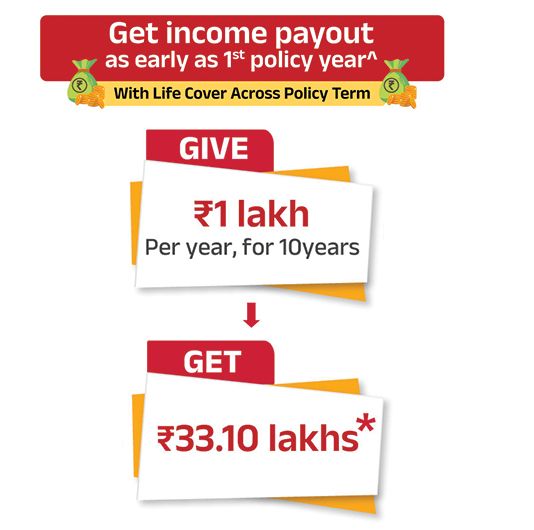
Yes. The plan offers "guaranteed# instant income" payouts that can be received annually. This regular income can be a reliable way to manage recurring expenses like annual school fees or extracurricular costs.
Absolutely. The Akshaya Plan is designed for "long-term stability" and "meeting life's big goals". It provides a combination of regular income and life cover, making it a strong tool for building a substantial fund for higher education.
“Plans within the Her Insurance suite offers critical illness benefit that covers women-specific conditions, which is available at an additional cost as an optional add-on. This provides a financial buffer that helps manage health costs without depleting the funds dedicated to your child's education.
An increasing income option (for example, growing by 5% annually) can be a strategic way to combat education inflation in India. A fixed income provides predictability. The choice depends on your overall strategy and the specific milestone you are planning for.
Yes. The key is to start "from day one" with whatever amount is sustainable for you. Consistency is more important than the initial size. Over time, as your income grows, you can scale your contributions.
Life cover is the ultimate protection. It guarantees a "death benefit" or a lump sum payout to your family in your absence. This ensures that your child’s educational journey can continue exactly as you envisioned.
"Her Insurance" provides solutions that are "made for every woman" and "built around you". It offers the flexibility, protection, and growth potential needed for women to take confident charge of their family's future milestones.
Show All
Hide
Get immediate income payout after 1 day of policy issuance^
ABSLI Nishchit Aayush Plan

Guaranteed# income

Life Cover across policy term
Lumpsum Benefit at policy maturity, in addition to Income
Get :
₹33.74 lakhs~
Pay: ₹10K/month for 10 years
 BUY ONLINE
Recently Added Article




Most Popular Calculator


ABSLI Nishchit Aayush is a non-linked non-participating individual savings life insurance plan (UIN No 109N137V14)
ABSLI Akshaya Plan - This policy is underwritten by Aditya Birla Sun Life Insurance Company Limited (ABSLI). This is a Non-Linked Participating Individual Savings Life Insurance Plan. UIN: 109N136V04
The risk factors of the bonuses projected under the product are not guaranteed.
Past performance doesn't construe any indication of future bonuses.
These products are subject to the overall performance of the insurer in terms of investments, management of expenses, mortality and lapses.
#Provided all due premiums are paid.
ADV/3/25-26/1862

