

- All Insurance
- Endowment PlansNew
- Savings PlansNew
- Term InsuranceNew
- Pension PlansNew
- Critical Illness Insurance
- ULIP PlanNew
- Group Insurance
- Protection Solutions
- Employer Employee
- Voluntary
- Affinity
- Credit Life
- Retirement Solutions
- Annuity Scheme
- Gratuity
- Leave Encashment
- Post Retirement Medical Benefits Scheme
- Superannuation
- Withdrawn Products
- NRI PlansNew
- Articles
- Where Do I?
- Term Insurance
- Manage My Policy
- Her Insurance

Connect
Aditya Birla Sun Life Insurance Company Limited



Aditya Birla Sun Life Insurance Company Limited
Decoding Your First Paystub: How a Woman Can Read Her Salary Slip and Save on Taxes
 March 24, 2026
 5 mins read

Plan Smarter, Live Better!


 Table of Contents
How Much Helpful You Found This Article?

Rated by 0 reader
/ 5 ( reviews )
Not helpful
Somewhat helpfull
Helpful
Good
Best

Thank you for your feeback
FAQs
No. Basic salary is just one component of your earnings. Your take-home pay is what remains after adding all allowances (like HRA) and subtracting all deductions (like PF, PT, and TDS).
Yes. While the mandatory employee contribution is 12%, you can opt for a Voluntary Provident Fund (VPF) to contribute more from your basic pay. This increased amount also qualifies for 80C1 benefits but is not matched by the employer.
Professional tax is a state-levied tax, allowing each state government to set its own rates and slabs to generate revenue for local development.
It is a flat deduction of ₹50,000(old tax regime) and ₹75,000(new tax regime) that is subtracted from your gross salary to lower your taxable income. No proof of expense is required to claim it.
If you pay rent to your parents (and they declare it as rental income), you can technically claim HRA exemption, provided you have a formal rental agreement and receipts.
No. EPF is for salaried employees in organizations with 20+ staff. PPF is a voluntary savings scheme open to all Indian citizens, including the self-employed.
Generally, no. Most deductions under Chapter VI-A (including 80C1 and 80D) are only available under the Old Tax Regime. The New Regime offers lower tax rates instead of these deductions.
Your employer will deduct a higher TDS. However, you can still claim these deductions and get a refund when you [file your Income Tax Return (ITR) at the end of the year.
Under Section 80C1, you can claim a deduction for premiums paid for yourself, your spouse, or your children.
Banks and financial institutions use your salary slip, especially your basic salary and net take-home pay, to assess your repayment capacity before approving a loan.
Show All
Hide
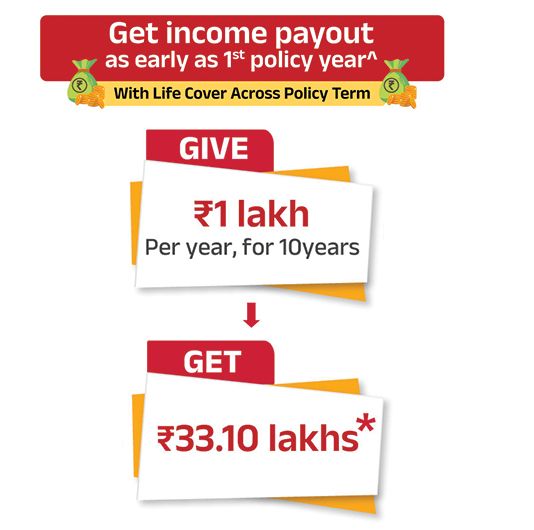
Get immediate income payout after 1 day of policy issuance^
ABSLI Nishchit Aayush Plan

Guaranteed# income

Life Cover across policy term
Lumpsum Benefit at policy maturity, in addition to Income
Get :
₹33.74 lakhs~
Pay: ₹10K/month for 10 years
 BUY ONLINE
Recently Added Article


Most Popular Calculator


*Tax benefits are subject to changes in tax laws. Kindly consult your financial advisor for more details
**Sec 10(10D) benefit is available subject to fulfilment of conditions specified therein. 1Deduction under section 80C is available subject to tax regime.
Please note that we have provided our above views based on current interpretation of income tax provisions. Such interpretations may differ at customer’s consultant level. ABSLI shall not be responsible for tax positions adopted by customer.
ABSLI Param Suraksha - This is a unit-linked non-participating individual life insurance savings plan. This policy is underwritten by Aditya Birla Sun Life Insurance Company Limited (ABSLI). UIN: 109L149V01
ABSLI Salaried Term Plan - This Policy is underwritten by Aditya Birla Sun Life Insurance Company Limited (ABSLI). This is a non-linked non-participating individual pure risk premium life insurance plan; upon Policyholder’s selection of Plan Option 2 (Life Cover with ROP) this product shall be a non-linked non-participating individual savings life insurance plan. (UIN:109N141V05)
Linked Insurance Products do not offer any liquidity during the first five years of the contract. The policyholder will not be able to withdraw/surrender the money invested in Linked Insurance Products completely or partially till the end of the fifth year from inception.
Linked insurance products are different from the traditional insurance products and are subject to the risk factors.
The premium paid in linked insurance policies are subject to investment risks associated with capital markets. The NAVs of the units may go up or down based on the performance of fund and factors influencing the capital market and the insured is responsible for his/her decisions.
Aditya Birla Sun Life Insurance is only the name of the Life Insurance Company and ABSLI Param Suraksha is only the name of the linked insurance contract and does not in any way indicate the quality of the contract, its future prospects or returns.
Please know the associated risks and the applicable charges, from your insurance agent or intermediary or policy document issued by the insurance company.
The various funds offered under this contract are the names of the funds and do not in any way indicate the quality of these plans, their future prospects and returns.
Past performance is not necessarily an indication of future performance.
ADV/3/25-26/1863

