

- All Insurance
- Endowment PlansNew
- Savings PlansNew
- Term InsuranceNew
- Pension PlansNew
- Critical Illness Insurance
- ULIP PlanNew
- Group Insurance
- Protection Solutions
- Employer Employee
- Voluntary
- Affinity
- Credit Life
- Retirement Solutions
- Annuity Scheme
- Gratuity
- Leave Encashment
- Post Retirement Medical Benefits Scheme
- Superannuation
- Withdrawn Products
- NRI PlansNew
- Articles
- Where Do I?
- Term Insurance
- Manage My Policy
- Her Insurance

Connect
Aditya Birla Sun Life Insurance Company Limited



Aditya Birla Sun Life Insurance Company Limited
How to Earn Tax-Free Income Through Long-Term Investment Plans
 December 31, 2025
 10 mins read

Plan Smarter, Live Better!

 Table of Contents
How Much Helpful You Found This Article?

Rated by 0 reader
/ 5 ( reviews )
Not helpful
Somewhat helpfull
Helpful
Good
Best

Thank you for your feeback
FAQs
No. While the principal invested in a 5-year Tax Saving FD is deductible under Section 80C, the interest earned annually is fully taxable as per your income slab.
You can claim an additional deduction of up to ₹50,000 for contributions made to the NPS Tier I account under Section 80CCD(1B). This is over and above the ₹1.5 Lakh limit of Section 80C.
Tax-Free Bonds are backed by government agencies, making them highly secure regarding default risk. However, they carry interest rate risk and liquidity risk (they are difficult to sell quickly), so they are not entirely risk-free.
If your ULIP or the aggregate premium for all your ULIPs (purchased after Feb 1, 2021) exceeds ₹2.5 Lakh in any year, the maturity proceeds will become taxable as capital gains, losing the Section 10(10D)** exemption(1).
No. The death benefit received by the nominee or beneficiary from any life insurance policy is always 100% tax-free under Section 10(10D)** of the Income Tax Act, regardless of the premium amount or Sum Assured(1).
Show All
Hide
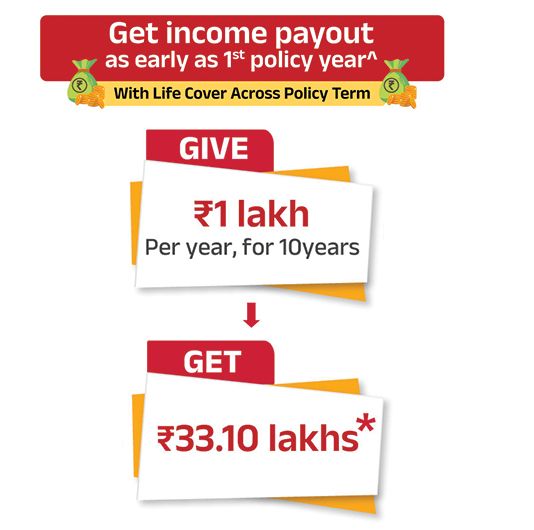
Get immediate income payout after 1 day of policy issuance^
ABSLI Nishchit Aayush Plan

Guaranteed# Income
Life Cover across policy term
Lumpsum Benefit at policy maturity.
Get:
₹33.74 lakhs~
Pay:
₹10K/month for 10 years
 BUY ONLINE
Recently Added Article





Most Popular Calculator


***Tax benefits are subject to changes in tax laws. Kindly consult your financial advisor for more details
#Provided all due premiums are paid.
**Schedule II benefit is available subject to fulfilment of conditions specified therein
5Deduction under section 80C, 80CCD(1B), 80D is allowable subject to fulfillment of other provisions of the Act
Please note that we have provided our above views based on current interpretation of income tax provisions.
Such interpretations may differ at customer’s consultant level. ABSLI shall not be responsible for tax positions adopted by customer.
In the Unit Linked Policy, the investment risk in the investment portfolio is borne by the Policyholder.
Linked Life insurance products are different from the traditional life insurance products and are subject to the risk factors.
Linked Insurance Products do not offer any liquidity during the first five years of the contract.
The policyholder will not be able to withdraw/surrender the monies invested in Linked Insurance Products completely or partially till the end of the fifth year from inception. Please know the associated risks and the applicable charges, from your Insurance agent or the Intermediary or policy document. The premium paid in unit linked life insurance policies are subject to investment risk associated with equity markets and the unit price of the units may go up or down based on the performance of fund and factors influencing the capital market and the policyholder is responsible for his/her decisions. Tax benefits may be available as per prevailing tax laws. For more details on risk factors, terms and conditions please read sales brochure carefully before concluding the sale.
ADV/12/25-26/1475

