Aditya Birla Sun Life Insurance Company Limited

How do I avoid paying high taxes on pension income?

Icon-Calender January 16, 2026
Icon-Clock5 mins read
4.5
Rated by 1000 readers
https://lifeinsurance.adityabirlacapital.comnullCLOSE-BUTTON

Plan Smarter, Live Better!

*Min 3 characters allowed
+91
*Please enter a valid 10 digit Mobile No
https://lifeinsurance.adityabirlacapital.comnullCLOSE-BUTTON
ICON-TICK

Thank you for your details. We will reach out to you shortly.

https://lifeinsurance.adityabirlacapital.comnullCLOSE-BUTTON
ICON-TICK

Currently we are facing some issue. Please try after sometime.

banner-imagemob-image
  • Icon-Index
    Table of Contents

Retirement is supposed to be the "Golden Age," but for many, it becomes the "Taxable Age."
You spent 30 years paying taxes on your salary. Now, when you finally start living off your savings, the government asks for a share again.
Most retirees make the mistake of buying an Immediate Annuity with their entire corpus.

  • Scenario: You invest ₹1 Crore in an annuity plan.
  • Income: You get ₹6 Lakh/year.
  • Tax: This ₹6 Lakh is added to your other income and taxed at your slab rate.

But you don't have to accept this default setting. By using the 2025 Tax Rules smartly, you can legally slash your tax bill.
Here is your guide to keeping more of your hard-earned pension.

The short answer: Don't take it all as "Salary"

If you receive your entire retirement corpus as a monthly annuity (pension), it is fully taxable as salary, which can push you into a 30% tax bracket. The secret to lowering tax is Structural Planning:
1.Commute the maximum allowed portion (usually 60%) as a tax-free*** lump sum.
2.Invest that lump sum into a Systematic Withdrawal Plan (SWP) in Mutual Funds.
   ○ Result: Instead of paying 30% income tax on your pension, you pay roughly 5-8% effective tax (Capital Gains) on your SWP income.
Strategy 1: The "Commutation" Hack (The 60% Rule)
"Commutation" means withdrawing a part of your pension corpus as a lump sum upfront, instead of taking it as monthly income.

  • For NPS / Pension Plans: You can withdraw up to 60% of your total accumulated corpus tax-free***.
  • For Gratuity-Linked Pension:

   ○ Government Employees: 100% of commuted pension is tax-free***.
   ○ Private Employees: 1/3rd of the pension (if you get gratuity) or 1/2 (if no gratuity) is tax-free***.
The Strategy:
Always commute the maximum permissible amount.

  • Why: A lump sum in your hand is tax-free***. A monthly pension from that same money is taxable.
  • Action: Take the 60% out. Invest it separately (see Strategy 2). Only use the remaining 40% to buy the taxable annuity.

Strategy 2: The SWP Route (Income vs. Capital Gains)
This is the most powerful tax-saving tool for retirees in 2025.
Instead of buying an annuity that gives you taxable "interest," invest your commuted corpus in a Debt Mutual Fund or Conservative Hybrid Fund and set up a Systematic Withdrawal Plan (SWP).
Why SWP wins on tax:

  • Annuity/FD: The entire payout is taxed.
  • SWP: You are withdrawing your own capital back. Only the profit portion is taxed.
  • Example: You withdraw ₹50,000/month.

   ○ In the early years, ₹45,000 is your principal (tax-free***) and only ₹5,000 is profit.
   ○ You only pay tax on that tiny ₹5,000 profit.
Effective Tax Rate:

  • Annuity: 30% (if you are in the highest slab).
  • SWP: Often less than 5-10% of the total withdrawal amount.

Strategy 3: Utilize "Senior Citizen" Deductions
The Income Tax Act offers specific buffers for seniors (Age 60+) that you must utilize before paying a single rupee of tax.
1.Standard Deduction:
   ○ As of FY 2025-26, pensioners are eligible for a Standard Deduction of ₹75,000.
   ○ Benefit: The first ₹75,000 of your pension income is straightaway tax-free***.
2.Section 80TTB (Interest Income):
   ○ Standard citizens get no deduction on FD interest.
   ○ Senior Citizens get a ₹50,000 deduction on interest from FDs, Savings Accounts, and Post Office schemes.
   ○ Strategy: Ensure your FD interest stays within this limit to enjoy tax-free*** returns.
3.Section 80D (Medical Insurance):
   ○ Seniors can claim up to ₹50,000 for health insurance premiums.
   ○ Hidden Gem: If you don't have insurance, you can claim this ₹50,000 for medical expenses (bills for medicines/doctors) provided you have no health policy.
Strategy 4: Income Splitting (The Spouse Strategy)
If your spouse has no income or falls in a lower tax slab, do not invest everything in your own name.

  • The Move: Gift money to your spouse.
  • The Rule: While income from gifted money is usually "clubbed" with your income, if you invest in tax-free*** instruments (like PPF in spouse's name) or huge long-term growth assets, you can manage the clubbing provisions or use the "pin money" allowance.
  • Better Route: Invest in a Joint Life Annuity. The income comes to you first. After your death, it goes to your spouse. Since your spouse likely has no other salary, this pension might fall in the zero-tax bracket for them.

Strategy 5: New vs. Old Tax Regime
For retirees in 2025, the New Tax Regime is often the winner.

  • Rebate Limit: Income up to ₹12 Lakh is effectively tax-efficient under the New Regime due to higher rebate limits and standard deduction.
  • No Investment Headache: You don't need to lock money in Section 80C instruments just to save tax. You can keep your money liquid. Check: If your total pension income is under ₹12 Lakh, you might pay zero tax just by switching to the New Regime.

Summary Checklist: Your Tax-Saving Plan

Income Source Tax Treatment Optimization Strategy
NPS/Pension Corpus 60% tax-free*** Commute fully. Don't buy annuity with this part.
Monthly Annuity Taxed as Salary Keep this portion small (only 40% of corpus).
Mutual Fund Income Taxed as Capital Gains Use SWP. Pay tax only on profits.
FD Interest Taxed as Income Limit interest to ₹50k (Section 80TTB).
Total Income Slab Rates Opt for New Tax Regime (up to ₹12L tax-free*** buffer).

Final Thoughts

You cannot avoid taxes entirely, but you can choose which tax to pay.

  • Paying Income Tax (30%) on pension is expensive.
  • Paying Capital Gains Tax (12.5% LTCG) on investments is cheap.

Shift your retirement income from "Pension Products" to "Investment Products" (like SWP) wherever possible.
At ABSLI, we often recommend customers to take the tax-free*** Lump Sum options in our pension plans and only annuitize what is mandatory. This keeps your money flexible and your tax bill low.

How Much Helpful You Found This Article?

Rating_Star
Rated by 0 reader
/ 5 ( 0 reviews )
Not helpful
Somewhat helpfull
Helpful
Good
Best
RatingTick

Thank you for your feeback

Don’t forgot to share helpful information in your circle

Frequently Asked Questions: Tax on Pension

You still have to pay tax, but you might not have to file a return. Under Section 194P, senior citizens aged 75+ are exempted from filing ITR IF they have only Pension and Interest income from the same bank. The bank will deduct the necessary tax (TDS) automatically. It is a compliance relief, not a tax waiver.

Yes. For Family Pension (received by dependents after the employee's death), the deduction is ₹15,000 or 1/3rd of the pension (whichever is lower).
● Note: This is different from the ₹75,000 Standard Deduction available to the original pensioner.

No. HRA is an allowance given by an employer to an active employee. Pensioners cannot claim HRA. However, under Section 80GG, if you are living in a rented house and paying rent, you can claim a small deduction (up to ₹60,000/year) subject to conditions.

● Govt Employees: Fully tax-free***.
● Private Employees: tax-free*** up to ₹20 Lakh (lifetime limit). Any gratuity received above ₹20 Lakh is taxable.

● Govt Employees: Fully tax-free***.
● Private Employees: tax-free*** up to ₹25 Lakh (Limit increased in recent budgets). Amounts above this are taxable.

No. Senior citizens (aged 60+) who do not have any business income are exempt from paying Advance Tax.You can pay your total tax liability at the time of filing your ITR (Self-Assessment Tax).

Yes. Bonds issued by PSUs (like NHAI, REC) pay interest that is 100% tax-free***.
● Pros: Great for those in the 30% tax bracket.
● Cons: Liquidity is low (long lock-in), and new issues are rare. You often have to buy them from the secondary market at a premium, which lowers the yield.

Yes. Pension arising from service rendered in India is taxable in India, even if you are an NRI or foreign citizen. However, you can claim relief under the Double Taxation Avoidance Agreement (DTAA) if India has a treaty with your country of residence, so you don't pay tax twice.

No. The moment the pension hits your bank account, it is your income and you are liable to pay tax on it. What you do with the money after paying tax (gifting it) is your choice, but the tax liability cannot be shifted.

There have been discussions and bills (like the Income Tax Bill 2025 proposals) aiming to make commuted pension fully tax-free*** for all. However, until officially notified as a passed Act for the current Assessment Year, the standard rule (1/3rd tax-free*** for private employees with gratuity) applies. Always check the latest notification or consult a CA for the current year's status

Show All
Hide

Thank you for your details. We will reach out to you shortly.

Thanks for reaching out. Currently we are facing some issue.

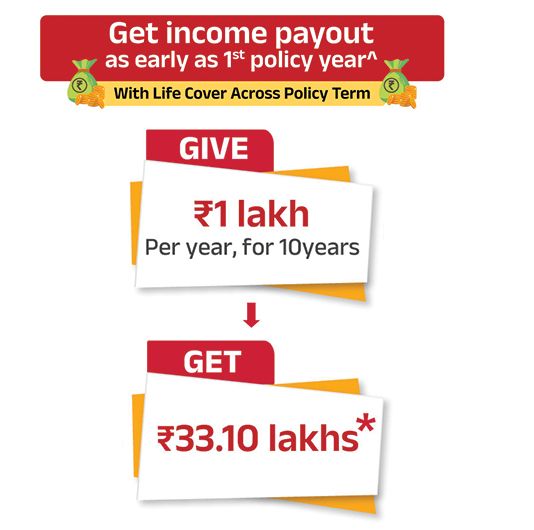
Give ₹1 lakh/ month for 5 years and Get ₹ 4.01 lakhs every year till your life1

*Min 3 characters
+91phone-icon
*Please enter a valid 10 digit Mobile No.
*This field is required.

ABSLI Guaranteed Annuity Plus

Multiple annuity options, Regular income stream.

ICON-CLICK

Guaranteed# lifelong income

Icon-Income-Benefit

Top-up option for annuity

ICON-CLICK

Single/Joint Life cover option

ICON-CLICK

Deferred annuity option

Give :
₹ 1 lakhs/Month for 5 year¹

Get :
₹4.06 lakhs/-

*** Tax benefits are subject to changes in tax laws. Kindly consult your financial advisor for more details
Please note that we have provided our above views based on current interpretation of income tax provisions.
Such interpretations may differ at customer’s consultant level. ABSLI shall not be responsible for tax positions adopted by customer.
Deductions under Chapter VI-A are available subject to applicable tax regime.
This blog is for information and awareness purposes only and does not purport to any financial or investment services and do not offer or form part of any offer or recommendation. The information is not and should not be regarded as investment advice or as a recommendation regarding any particular security or course of action.
Every effort is made to ensure that all information contained in this blog is accurate at the date of publication, however, the Aditya Birla Sun Life shall not have any liability for any damages of any kind (including but not limited to errors and omissions) whatsoever relating to this material.
ADV/1/25-26/1538

whatsapp-imagewhatsapp-image