A homemaker may need Term Insurance because unpaid care and household work has a real replacement cost. If that work suddenly stops, the family may need paid childcare, domestic support, transport, tutoring or elder care. A suitable policy can provide a financial cushion, subject to eligibility, underwriting and policy terms.
The decision should not depend only on whether the homemaker draws a salary. It should reflect the services the household relies on, the years for which those services may be needed, outstanding liabilities, future family goals, existing life cover and the premium the family can sustain. This 2026 guide uses “homemaker” as an inclusive term for any spouse or partner whose principal contribution is unpaid household and care work.
Why can a homemaker need life cover without a salary?
Income is not the only measure of financial contribution. A homemaker may coordinate childcare, cooking, cleaning, schooling, healthcare, elder care, transport, and household administration. If the homemaker dies, some of these responsibilities may have to be replaced with paid services or absorbed through reduced working hours by another family member.
India’s Supreme Court has recognised, in the context of motor-accident compensation, that homemakers’ work has economic value. That legal context does not determine Life Insurance sum assured, but it supports a practical point: unpaid work can create a measurable financial dependency. A family should therefore inventory the services actually performed instead of assigning a token amount or assuming that no earned income means no need for cover.[1]
What could the death benefit help the family pay for?
The death benefit may help fund replacement care, immediate expenses, liabilities, and time-bound family goals. It is not a substitute for the person or for emotional support, and it does not guarantee that every future need will be met. Its role is to provide money that the nominee can use according to the family’s circumstances.
- Childcare, domestic assistance, meal support, transport, or elder care
- A surviving spouse’s temporary reduction in work or unpaid leave
- Outstanding household debt for which the family remains responsible
- Children’s education and other defined future goals
- Immediate expenses and an emergency reserve
Term Insurance generally pays the applicable death benefit when the life assured dies during the policy term, provided the policy is in force and the claim is admissible under the policy. Exact benefits, exclusions, payout choices, and claim requirements are governed by the policy document.
Can a homemaker qualify for Term Insurance in India?
A homemaker can apply where the insurer’s product and underwriting rules permit it. Issuance is not automatic. The insurer may assess age, health, lifestyle, occupation, household finances, the earning spouse’s cover and income, requested sum assured, policy term, and other information relevant to the risk.
The insurer may request identity, address, age, health, and financial documents, and may require medical tests. Requirements differ by applicant and product. The proposal form should be completed accurately and fully. A family should never conceal tobacco use, medical history, existing policies, or other material information because those details can affect underwriting and a later claim.
How much term cover should a homemaker consider?
Use a needs-based estimate, not a fixed headline figure. Add the present cost of replacing the homemaker’s essential services for the period they are likely to be required, plus relevant liabilities and family goals. Then subtract resources are already available for those needs. Finally, test whether the premium is affordable over the full payment term.
Illustrative framework: Replacement-services cost + immediate expenses + relevant debt + defined future goals − existing resources available to the family = indicative cover need.
For example, list the monthly market cost of childcare, domestic assistance, transport, and elder care in the family’s city. Decide how long each cost may continue, account for future price increases, and avoid double counting expenses already included elsewhere. The result is only a planning estimate. The insurer may offer a lower or different sum assured after underwriting.
Useful internal guide: How much term insurance cover should you choose?
Should the family choose an Individual or Joint Insurance?
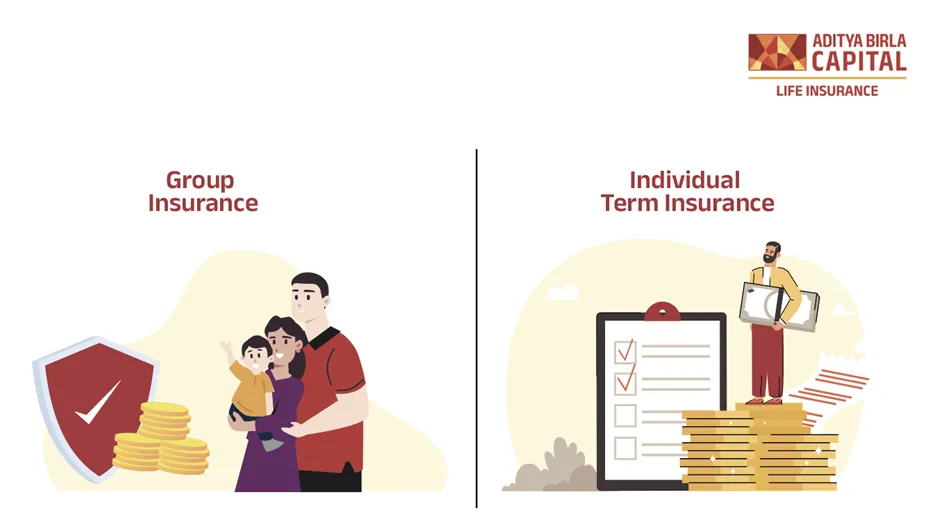
Choose according to how each life is covered, when benefits are paid and whether cover continues after a claim. An individual policy covers one life under its own contract. A joint structure may cover two lives, but the sum assured, trigger, continuation, and premium rules vary by product. Read the policy wording before deciding.
|
Decision point
|
Individual policy
|
Joint-life structure
|
|
Contract
|
Separate policy on one life
|
One product structure may cover two lives
|
|
Cover amount
|
Selected and underwritten for that life
|
May be separate, shared or proportionate, depending on product
|
|
After a death claim
|
Other spouse’s separate policy is unaffected
|
Continuation or termination depends on product terms
|
|
Flexibility
|
Can be reviewed independently
|
May simplify servicing but can be less flexible
|
|
Best check
|
Adequacy, affordability and nominee details
|
Exact death trigger, payout, continuation and exclusions
|
This comparison is general and does not describe every product. Product prospectus and policy documents prevail.
What disclosures and documents matter at application?
Accurate disclosure is central to underwriting and claim readiness. The life to be insured should review the proposal form, even if another family member assists with the application. Keep copies of the submitted form, medical reports, benefit illustration where applicable, policy schedule, premium receipts, and nominee details.
- Declare medical conditions, treatments, medicines and family history as asked
- Disclose tobacco, nicotine, and alcohol usage accurately
- List existing and concurrent Insurance applications when requested
- Check names, dates of birth, contact details, and nominee information
- Read exclusions, waiting provisions if any, premium obligations, and claim requirements
IRDAI’s policyholder-protection framework requires insurers to provide clear information and prescribed policy servicing, but the policyholder must also provide complete and correct information and read the policy terms.
When should the family review the cover?
Review the need after birth or adoption, a new Loan, a move to a higher-cost city, a material change in care responsibilities, divorce or separation, the homemaker entering paid work, or a major change in existing assets, or Insurance. A review does not always require a new policy, but it can reveal a gap.
Also check nominee details and contact information periodically. A nominee should know that the policy exists, where the documents are stored, and how to contact the insurer. Policy servicing changes and claims should be made only through authorised channels.
How can ABSLI help?
Aditya Birla Sun Life Insurance Company Limited provides information about Life Insurance, a Term Insurance calculator, and product documents that families can use to explore cover needs and indicative premiums. Calculator results are illustrative. Eligibility, premium, sum assured, and policy issuance remain subject to the selected product, underwriting, and applicable terms.
Read about term insurance plans
What should a family do before buying one?
Start with the household’s dependency, not a round-number cover amount. Compare policy structures on like-for-like terms, verify that the premium remains manageable, disclose all requested information, and read the sales brochure and policy wording. Seek professional advice if the family’s finances, ownership, or nomination needs are complex.
- List the homemaker’s essential unpaid services and replacement costs
- Add liabilities and clearly defined future needs
- Subtract resources genuinely available for those needs
- Compare individual and joint-life structures carefully
- Confirm underwriting requirements, exclusions, nominee details, and claim process






 August 31, 2026
 5 mins read




 Table of Contents


 BUY ONLINE