

- All Insurance
- Endowment Plans
- Savings PlansNew
- Term Insurance
- Pension Plans
- Critical Illness Insurance
- ULIP PlanNew
- Group Insurance
- Protection Solutions
- Employer Employee
- Voluntary
- Affinity
- Credit Life
- Retirement Solutions
- Annuity Scheme
- Gratuity
- Leave Encashment
- Post Retirement Medical Benefits Scheme
- Superannuation
- Withdrawn Products
- NRI Plans
- Articles
- Where Do I?
- Find Customer Service
- Learn About Life Insurance
- Become a Life Insurance Advisor
- Know Our Funds
- Manage My Claim
- Know more about UPI Autopay
- Read FAQs
- Register For One ABC Id
- Download Forms
- Read Market Outlook
- Download Public Disclosures
- Disclosure of Key Performance and Financial Parameters
- Financial Calculator
- Know your Advisor
- Term Insurance
- Manage My Policy
- Her Insurance

Connect
Aditya Birla Sun Life Insurance Company Limited



Aditya Birla Sun Life Insurance Company Limited
Endowment Plans in 2026: How they work and what to check before you buy
 September 3, 2026
 5 min read

Plan Smarter, Live Better!



 Table of Contents
How Much Helpful You Found This Article?

Rated by 0 reader
/ 5 ( reviews )
Not helpful
Somewhat helpfull
Helpful
Good
Best

Thank you for your feeback
Frequently asked questions
No. A policy may contain guaranteed benefits, non-guaranteed benefits, or both. In a Participating Plan, future bonuses depend on declaration by the insurer and are not guaranteed. Use the signed benefit illustration and policy schedule to identify which amounts are contractual and which are illustrative.
A policy may be surrendered after it acquires surrender value under its terms. The amount may be lower than the premiums paid, especially in the early years. Check the guaranteed surrender value, any special surrender value provision and the effect of outstanding Policy Loans before deciding.
The policy may lapse or continue with reduced paid-up benefits if the contractual conditions are met. Revival may be available within the stated period, subject to payment of arrears, interest, and any evidence required by the insurer. Review the policy’s grace-period, paid-up and revival clauses.
Some Endowment Plans permit a Policy Loan after the policy acquires surrender value. Availability, maximum amount, interest, and repayment rules are product specific. An unpaid Loan and accrued interest can reduce claim, or maturity proceeds and may affect the policy if the debt becomes too high.
Not automatically. The death benefit should be tested against your family’s income needs, debts, and future goals. If the Endowment Plan’s cover is insufficient, consider how to close the protection gap separately. Avoid choosing a maturity benefit at the expense of essential life cover.
Show All
Hide
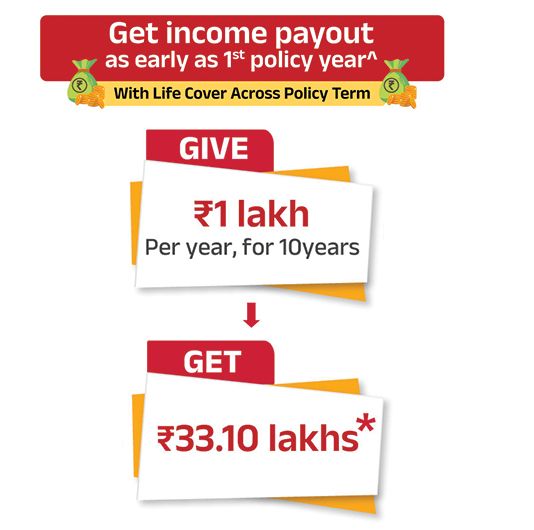
Get immediate income payout after 1 day of policy issuance^
ABSLI Nishchit Aayush Plan

Guaranteed# income

Life Cover across policy term
Lumpsum Benefit at policy maturity, in addition to Income
Get :
₹33.74 lakhs~
Pay: ₹10K/month for 10 years
 BUY ONLINE
Recently Added Article




Most Popular Calculator


This article is for general information and education only. It is not financial, legal or tax advice and does not constitute a recommendation or solicitation. Life insurance benefits, exclusions, surrender values, bonuses, riders, eligibility and premium terms vary by product. Please read the applicable sales prospectus, benefit illustration, Customer Information Sheet and policy document carefully before concluding a sale. In case of conflict, the policy contract prevails.
For more details on risk factors, terms and conditions, please read the sales prospectus carefully before concluding the sale.
Aditya Birla Sun Life Insurance Company Limited (ABSLI), Registered Office: One World Center, Tower 1, 16th Floor, Jupiter Mill Compound, 841, Senapati Bapat Marg, Elphinstone Road, Mumbai 400013. CIN: U99999MH2000PLC128110. IRDAI Registration No. 109. Toll-free: 1800 270 7000. Website: https://lifeinsurance.adityabirlacapital.com/
Trade Logo “Aditya Birla Capital” is owned by Aditya Birla Management Corporation Private Limited and used by Aditya Birla Sun Life Insurance Company Limited under licence.
BEWARE OF SPURIOUS PHONE CALLS AND FICTITIOUS / FRAUDULENT OFFERS: IRDAI or its officials do not engage in activities such as selling insurance policies, announcing bonuses or investing premiums. Members of the public receiving such calls should lodge a police complaint.

