Aditya Birla Sun Life Insurance Company Limited

What to check in a life insurance proposal form?

Icon_Calender January 13, 2026
Icon-Clock5 mins read
4.5
Rated by 1000 readers
https://lifeinsurance.adityabirlacapital.comnullCLOSE-BUTTON

Plan Smarter, Live Better!

*Min 3 characters allowed
+91
*Please enter a valid 10 digit Mobile No
https://lifeinsurance.adityabirlacapital.comnullCLOSE-BUTTON
ICON-TICK

Thank you for your details. We will reach out to you shortly.

https://lifeinsurance.adityabirlacapital.comnullCLOSE-BUTTON
ICON-TICK

Currently we are facing some issue. Please try after sometime.

banner-imagemob-image
  • Icon-Index
    Table of Contents

When you buy a car or a house, you read every line of the contract. But when people buy life insurance, a product worth crores, they often casually sign where the agent points their finger.

This is a dangerous habit.

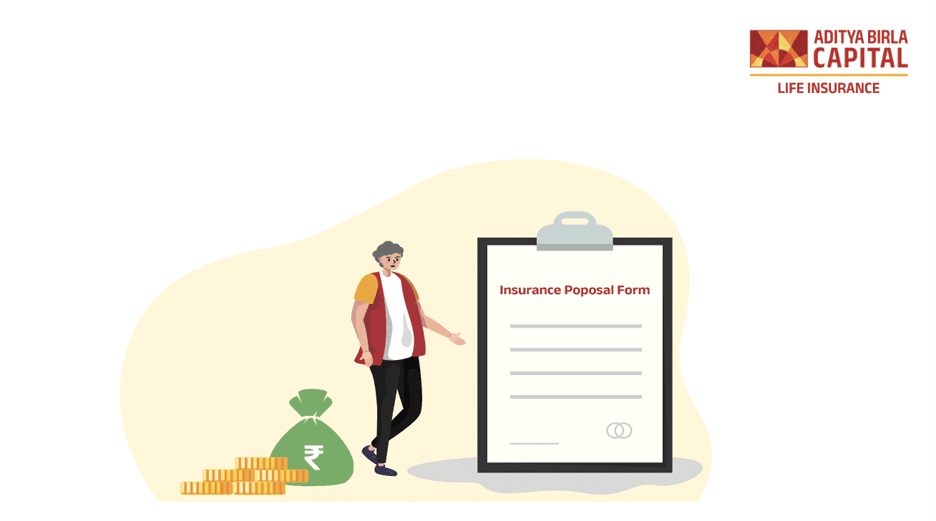
In the insurance world, the "Proposal Form" is the single most important document you will ever create. It is your sworn statement to the insurance company. If you pass away, the claims team will pull out this exact form and compare it against the reality of your life. If they find a discrepancy (e.g., you said you were a non-smoker, but medical records show otherwise), your policy could become worthless paper.

Here is your comprehensive checklist of what to verify before you click "Submit" or sign the dotted line.

The short answer: Treat it like a legal affidavit, not a signup form

The life insurance proposal form is not just "paperwork"; it is the legal foundation of your contract. If the information in this form is incorrect, whether by accident or intentional omission, the insurance company has the legal right to reject your family's claim later. Before you sign, you must personally verify three critical areas: Medical History (disclose every surgery/illness), Lifestyle Habits (smoking/drinking), and Existing Insurance details. Do not let an agent fill this form without your strict supervision.

1. The "Medical History" Section (The Danger Zone)
This is the number one reason for claim rejections in India. Many people fear that if they mention a past surgery or a minor condition, their policy will be rejected. So, they tick "No" to everything.

The Reality:

  • Most minor conditions (like a kidney stone 5 years ago or mild asthma) will NOT get your policy rejected. They might just increase your premium slightly.
  • However, hiding them is considered "non-disclosure of material facts."

What to check:

  • Surgeries: Have you listed every surgery you’ve had in the last 5-10 years? (Even a C-section or appendix removal).
  • Chronic Conditions: Diabetes, Hypertension (BP), Thyroid. If you take a pill for it, you must declare it.
  • Family History: If the form asks about hereditary diseases (like if your parents had heart issues or cancer), answer truthfully. This helps the insurer price your risk accurately. Rule of Thumb: If you are unsure whether to mention a doctor's visit, mention it. It is better to have a policy with a slightly higher premium than a policy that pays nothing.

2. Lifestyle Habits (The "Smoker" Test)
Insurance companies differentiate sharply between smokers and non-smokers. A non-smoker pays significantly less.

  • The Trap: You smoke occasionally (socially) but tick "Non-Smoker" to get the cheaper rate.
  • The Consequence: Nicotine traces remain in your body/medical records. If you die of a respiratory or heart issue and the investigation reveals a history of smoking, the claim will be denied for fraud.

What to check:

  • Tobacco: Cigarettes, gutka, vapes, nicotine patches.
  • Alcohol: Frequency and quantity.
  • Occupation: If you work in a hazardous environment (mining, chemical factory, high-altitude), declare it.

3. Existing Insurance Details
The form will ask: "Do you hold any other life insurance policies?"

You must list all of them, including that old policy your dad bought for you ten years ago.

Why it matters:

Insurers calculate your Human Life Value (HLV), the maximum cover you are allowed to have based on your income.

  • If your income justifies a ₹2 Crore cover, and you already have ₹1.5 Crore from another company, you are only eligible for ₹50 Lakhs more.
  • If you hide the existing ₹1.5 Crore policy to get another ₹2 Crore, you are "over-insuring" yourself. This is a major red flag for fraud.

4. The "Nominee" Details (The Payout Destination)
Imagine your family struggling to claim the money because you spelled your wife's name wrong.

What to check:

  • Spelling: Does the nominee’s name match their Pan Card/Aadhar Card exactly? (e.g., "Sushmita A. Sharma" vs "Sushmita Sharma").
  • Relationship: Is the relationship clearly defined? (Spouse, Son, Father).
  • Allocation %: If you have multiple nominees (e.g., Wife and Mother), check the percentage split (50%-50% or 70%-30%).

5. Contact Information

  • Email ID: Ensure your personal email ID is used, not the agent's or your office email. All renewal notices and policy updates will go here.
  • Address: Ensure the address matches your current KYC proof.

The "Agent" Warning

In many cases, a helpful agent will say, "Sir/Ma'am, don't worry, just sign the last page. I will fill in the rest at the office to save your time."

NEVER DO THIS.

The agent’s goal is to sell the policy. They might inadvertently (or intentionally) tick "No" on medical questions to ensure the policy gets issued quickly without medical tests.

  • The Victim: You. When the claim is rejected 10 years later, the agent will not be there to take the blame. You are responsible for every word in that form.
  • The Fix: Sit with the agent and watch them fill it, or ask for a draft copy before final submission.

The "Free Look" Period: Your Safety Net

Even after you sign and receive the policy, you have a second chance.

Every life insurance policy comes with a Free Look Period (usually 15 days for offline, 30 days for online policies).

When the policy document arrives:

  1. Open the photocopy of the Proposal Form attached to the policy bond.
  2. Read it again.
  3. If you find an error (e.g., the agent marked you as a non-smoker by mistake), contact ABSLI immediately to correct it.
  4. If the insurer refuses to correct it, you can return the policy and get a refund.

Summary Checklist: Before you Sign

SectionWhat to VerifyWhy?
Personal DetailsName spelling, DOB, PAN NumberEnsures identity match for claims.
NomineeName match with their ID, Allocation %Prevents legal disputes later.
MedicalSurgeries, chronic meds, hospitalizations#1 Cause of Claim Rejection.
HabitsSmoking/Drinking statusPrevents "Fraud" classification.
Existing CoverList of all previous policiesPrevents "Over-insurance" issues.
Bank DetailsAccount number for auto-debitPrevents policy lapse.

Final Thoughts

Filling out a proposal form is tedious. It asks uncomfortable questions about your health and mortality. But that 20 minutes of honest, detailed work is what gives your family a guaranteed# payout when they need it.

At ABSLI, we encourage you to be "boringly honest." Tell us everything. We would rather ask you for an extra medical test today than ask your family difficult questions tomorrow.

How Much Helpful You Found This Article?

Rating_Star
Rated by 0 reader
/ 5 ( 0 reviews )
Not helpful
Somewhat helpfull
Helpful
Good
Best
RatingTick

Thank you for your feeback

Don’t forgot to share helpful information in your circle

FAQs

It depends on the "materiality" of the surgery. If it was something minor like a tonsil removal or a fractured arm that has fully healed, it is unlikely to cause a rejection. However, if it was related to a major organ (heart, kidney, brain) or a recurring condition, it is serious. Fix: You can write to the insurer (ABSLI) now to update your records. This is called a "rectification." They may charge a small late fee or ask for a test, but your policy will be safe.

Yes, most insurers allow proposal forms to be filled in major regional languages or provide a vernacular declaration. However, the standard processing is often done in English. If you are not comfortable with English, ask the agent to explain every question, and ensure there is a "Vernacular Declaration" signed by a witness confirming that the contents were explained to you in your language.

This is dangerous. Inflating your income to get a higher Sum Assured is fraud. If the insurer finds out during a claim investigation (by checking your ITRs), they can deny the claim. You should contact the insurer during the Free Look Period to correct the income details or cancel the policy if the premium/cover changes significantly.

Yes. The form asks for details of all previous policies, including lapsed, surrendered, or declined ones. This helps the underwriter understand your insurance history. A lapsed policy shows a pattern of payment behavior that the insurer needs to know.

Post-2020, many proposal forms have a specific section asking if you have ever tested positive for COVID-19 or were hospitalized for it. You must answer this truthfully. Long-COVID complications can affect heart and lung health, which are material facts for term insurance.

This is for identity verification. In many parts of India, names can be very similar. Asking for the "Spouse Name" of the nominee helps in legally establishing the identity of the person receiving the money, ensuring it goes to the right "Sita Devi" or "Priya Singh."

You cannot change the original proposal form (since it is a historical record of what you said at that time). However, you can update your current details in the insurer's records. For example, you can change your address, nominee, or phone number. You generally cannot change "health answers" retrospectively to fix a lie, but you can disclose new health conditions that arise after the policy is issued (though usually, you don't need to, unless you want to).

Section 45 is your protection. It states that after 3 years of the policy being in force, the insurer cannot call the policy into question on any ground, including misstatement of facts (unless they can prove you committed criminal fraud with the intent to deceive). However, do not rely on this to lie. The first 3 years are critical.

Yes. In insurance terms, there is no "social smoker." You are either a smoker or a non-smoker. Even occasional usage leaves traces that can be found in urine/blood tests (cotinine test). If you tick "Non-Smoker" and die, and the investigation finds a history of tobacco use, your claim is at risk.

If you are buying insurance for yourself, you are both. If you are buying it for your spouse (where you pay, but they are the life assured), the Life Assured must answer the medical questions, and the Proposer must answer the financial questions. Both must sign the form.

Show All
Hide

Thank you for your details. We will reach out shortly.

Thanks for reaching out. Currently we are facing some issue.

Buy ₹1 Crore Term Insurance at Just ₹575/month*

Please enter a valid First Name.
+91phone-icon
Please enter a valid Mobile Number.
*This field is required.

ABSLI Super Term Plan

Term plan designed for salaried individual.

Icon-Illustration Insurance

3 Plan Options

Icon-Whole life cover

Health Management Service Worth ₹74000

ICON-CLICK

100% return of premium

Life Cover
₹1 crore

Premium:
₹575/month*

#Provided all due premiums are paid.

Add this disclaimer in the content-This blog is for information and awareness purposes only and does not purport to any financial or investment services and do not offer or form part of any offer or recommendation. The information is not and should not be regarded as investment advice or as a recommendation regarding any particular security or course of action.

Every effort is made to ensure that all information contained in this blog is accurate at the date of publication, however, the Aditya Birla Sun Life shall not have any liability for any damages of any kind (including but not limited to errors and omissions) whatsoever relating to this material.

ADV/1/25-26/1524

whatsapp-imagewhatsapp-image