Aditya Birla Sun Life Insurance Company Limited

Why should you buy a Term Plan before you turn 30?

Icon-Calender August 19, 2026
Icon-Clock7 mins read
4.5
Rated by 1000 readers
https://lifeinsurance.adityabirlacapital.comnullCLOSE-BUTTON

Plan Smarter, Live Better!

*Min 3 characters allowed
+91
*Please enter a valid 10 digit Mobile No
https://lifeinsurance.adityabirlacapital.comnullCLOSE-BUTTON
ICON-TICK

Thank you for your details. We will reach out to you shortly.

https://lifeinsurance.adityabirlacapital.comnullCLOSE-BUTTON
ICON-TICK

Currently we are facing some issue. Please try after sometime.

banner-imagemob-image
  • Icon-Index
    Table of Contents

If you are in your 20s in 2026, Term Insurance costs less than it have in years. Aditya Birla Sun Life Insurance (ABSLI) is registered with the Insurance Regulatory and Development Authority of India (IRDAI) as a life insurer. As per annual audited figures submitted to IRDAI for the year FY 25-26, ABSLI settled 98.86% of individual death claims with 630+ crore total claims paid.

Two things changed recently that matters specifically to young buyers. GST on Individual Life Insurance premiums was removed entirely in September 2025, and the Income-tax Act, 2025 came into force on 1 April 2026, which changes how the tax argument for Term Insurance works.

The core reason to buy before 30 has not changed, though. Term premiums are set by your age and health at the point you buy, and they stay there for the whole policy term. Every year you wait, that number goes up permanently.

Term Insurance is worth buying if you have financial dependants or outstanding Loans or expect to soon. If nobody relies on your income and you have no liabilities, there is no urgency.

What is Life Insurance?

Life Insurance is a contract where you pay a premium, and the insurer pays your nominee a sum of money if you die during the policy term. Term Insurance is the simplest and most affordable form. It is pure protection, no investment component, which is why a young buyer can get Rs. 1 crore of cover for the price of a monthly food delivery habit. It is not an investment and should not be compared to one. You are buying a payout for your family, not a return for yourself.

Why should you take a Term Plan by the time you are 30?

1. To lock in a lower premium permanently

This is the whole argument, and it is arithmetic rather than marketing. Insurers price term cover on mortality risk, which rises with age and with the lifestyle conditions that tend to show up in your 30s. Buy at 26 and that rate is fixed for the life of the policy. Buy the identical cover at 36 and you pay your age rate for the next 30 years.

For reference, an ABSLI Super Term Plan illustration published on the ABSLI site shows a 21-year-old male, salaried, non-smoker, taking Rs. 1 crore of level cover on a 10-year term at an annual premium of Rs. 6,900, which works out to Rs. 575 a month.

Run your own numbers on the ABSLI Term Insurance Calculator before you compare plans.

2. Because your premium just got affordable for everyone

Until 22 September 2025, every Individual Life Insurance premium in India carried 18% GST. As per the Ministry of Finance, that rate was reduced to zero for all Individual Life and Individual Health Insurance Policies with effect from that date. Group Term and Group Credit Life Policies were not included and still attract 18%.

In practical terms, a premium that would have cost Rs. 11,800 all-in now costs Rs. 10,000. If cost was the reason, you had been putting this off, the number you were looking at has come down by roughly a sixth, permanently.

3. To protect your family against your liabilities

A Home Loan taken at 29 typically runs into your 50s. A Car Loan, an Education Loan, or a Business Loan sits on the same balance sheet. If you die with those outstanding, your family inherits the repayment obligation alongside the grief. Term cover is the cleanest way to handle this. Seize your sum assured to cover outstanding debt plus income replacement, and the Loan stops being your family's problem.

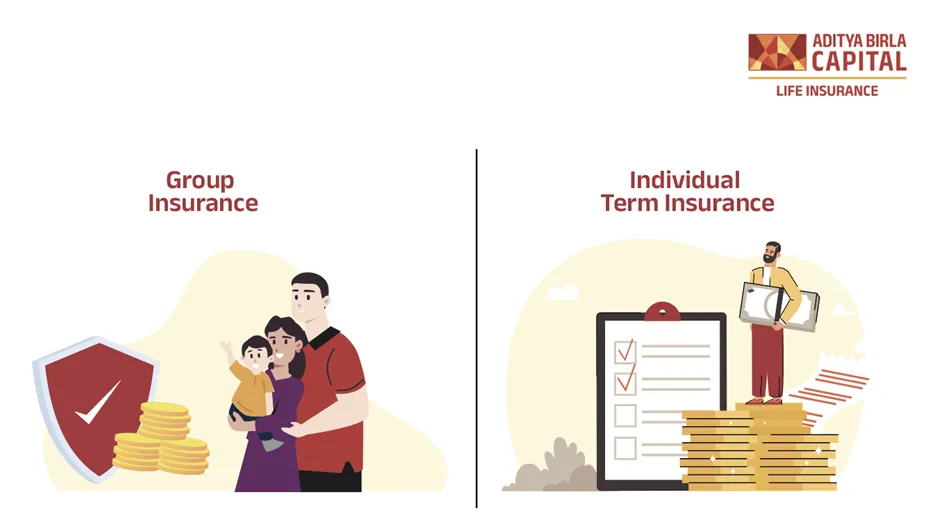
Note that lenders sometimes arrange separate Home Loan Insurance Plans in the form of group credit life, where cover reduces in step with the outstanding balance and ends when the loan closes. That is useful but narrow. An Individual Term Plan covers the Loan and everything else, stays with you if you refinance or switch lenders, and does not shrink as you repay.

4. To get through underwriting while you are still healthy

Underwriting gets harder with every year and every diagnosis. In your 20s you are likely to be accepted at standard rates with minimal medical requirements. By your late 30s, a raised blood sugar reading, a BMI outside range or a family history that has since become relevant can mean a loading on your premium, an exclusion, a postponement, or a declined application.

Once a condition is on record it does not come off. Buying while you are healthy is not just affordable, it is the difference between having the option and not having it.

5. To use the tax treatment you actually qualify for

These needs care in 2026, because the answer depends on which tax regime you are on.

What are the Term Insurance tax benefits*** in 2026? What actually applies

The Income-tax Act, 2025 replaced the Income-tax Act, 1961 with effect from 1 April 2026, applicable from tax year 2026-27. The benefits are broadly the same, but the section numbers moved.

Benefit

Old reference

New reference

Available under

Deduction on premium paid, up to Rs 1.5 lakh a year

Section 80C

Section 123, eligible items listed in Schedule XV

Old regime only

Exemption on the death benefit paid to your nominee

Section 10(10D)

Schedule II(2)

Both regimes

Deduction on health and critical illness rider premium

Section 80D

Section 126

Old regime only

Here is the part most articles skip. The new tax regime is the default, and the premium deduction is not available under it. If you are a salaried professional in your 20s who has not actively opted into the old regime, you will not get a deduction on your term premium. Anyone telling you Term Insurance is a tax-saving product without asking which regime you are on is not giving you the full picture.

What does survive under both regimes is the death benefit your nominee receives is exempt, subject to the prescribed conditions. That is the benefit that actually matters, because it is the payout, not the premium. So, treat tax as a secondary consideration rather than the reason to buy. The reason to buy is that your family needs the cover and it is the most affordable now.

Tax treatment is subject to change and to your individual circumstances. Please consult your tax advisor.

What is the best Term Insurance for a 30-year-old salaried person in India in 2026?

There is no single best plan, but for a 30-year-old salaried buyer the shortlist criteria are consistent. Look for a sum assured of at least Rs. 1 crore, which is the working adequacy benchmark for a median urban salary once you account income replacement, Loans, and inflation. Look for a policy term that runs to at least age 60, so cover does not lapse while dependants still rely on you.

Check the insurer's claim settlement ratio and prefer level cover over return-of-premium variants unless you specifically want your premiums back, because ROP costs meaningfully more for the same protection. Among ABSLI's options, the ABSLI DigiShield Plan (UIN: 109N108V13) is the most configurable, with 10 plan options covering level cover, increasing cover, monthly income payouts, joint life protection for a spouse, and a Return of Premium option.

The ABSLI Super Term Plan is built specifically for salaried buyers. Compare both against the full ABSLI Term Insurance range.

Work out your number before you shop. The ABSLI HLV Calculator estimates your Human Life Value, which is the cover your dependants would actually need. Most people underestimate it. Do this first, then compare premiums.

What are the riders worth considering at 30?

Riders are add-ons bought at inception for an extra premium. Two are worth a look for a young buyer, because they cover the risks that are statistically more likely than death in your 30s:

  • Critical illness cover. A serious diagnosis in your 30s tends to hit earning capacity rather than life, and that is a gap a pure term plan does not fill. ABSLI's Critical Illness Rider (UIN: 109B019V03) is available with DigiShield. DigiShield also offers an Accelerated Critical Illness benefit option covering 42 specified critical illnesses, paid on first diagnosis after a 90-day waiting period.
  • Accidental death and disability. ABSLI Accidental Death and Disability Rider (UIN: 109B018V03), or Accidental Death Benefit Rider Plus (UIN: 109B023V02). You can opt for one of the two, not both.

Also available with DigiShield are Waiver of Premium (UIN: 109B017V03), Surgical Care Rider (UIN: 109B015V03) and Hospital Care Rider (UIN: 109B016V03). Riders are not available with the Joint Life Protection option or with Plan Options 3 and 5. Exclusions apply, please read the rider brochures.

Buying a rider at 30 is affordable than at 40 for the same reason the base plan is. Term Insurance is often described as giving you nothing if you survive the policy term. That is true of a pure level cover plan, and you are buying protection, not a return. But it is not universally true.

Under ABSLI DigiShield, Plan Option 10 returns the total premiums paid at the end of the term, and Plan Option 9 pays a survival benefit as monthly income after age 60. These options cost more than plain level cover, so the trade-off is real. Just do not assume term insurance has only one shape.

Key takeaways

  • Term premiums are fixed at your entry age, so every year you delay raises the cost permanently
  • GST on individual life premiums has been zero since 22 September 2025, a genuine price cut of roughly a sixth
  • The premium deduction, now Section 123, is available only under the old tax regime; the new regime is the default
  • The death benefit exemption, now Schedule II (2), applies under both regimes and is the benefit that matters
  • Underwriting only gets harder. Buy while your medical record is clean
  • Rs. 1 crore is the working adequacy benchmark, but run the HLV calculator for your own number
  • If you have no dependants and no loans, there is no urgency. Buy when those changes happen

How Much Helpful You Found This Article?

Rating_Star
Rated by 0 reader
/ 5 ( 0 reviews )
Not helpful
Somewhat helpfull
Helpful
Good
Best
RatingTick

Thank you for your feeback

Don’t forgot to share helpful information in your circle

Frequently asked questions

There is no single best plan, but the criteria are consistent: a sum assured of at least Rs. 1 crore, a policy term running to at least age 60, a strong claim settlement record, and level cover rather than return-of-premium unless you specifically want the premiums back. Check the insurer's claim settlement ratio before price. ABSLI settled 98.86% of individual death claims in FY 2025-26 as per IRDAI and insurer public disclosures.

Only if you are on the old tax regime. Under the Income-tax Act, 2025, effective 1 April 2026, the old Section 80C deduction of up to Rs 1.5 lakh is now Section 123. It is not available under the new tax regime, which is the default for most salaried taxpayers. The death benefit exemption, formerly Section 10(10D) and now Schedule II (2), does apply under both regimes. Tax treatment is subject to change and to your circumstances, so confirm with a tax advisor.

Not on individual policies. GST on Individual Life Insurance premiums was reduced from 18% to zero with effect from 22 September 2025, covering Term Plans, Savings Plans, and ULIPs. A premium that used to cost Rs. 11,800 all-in now costs Rs. 10,000. Group Term Life and Group Credit Life Policies were excluded from the exemption and continue to attract 18%.

Substantially, and the saving compounds because the rate is locked for the whole policy term rather than reset each year. Premiums are priced on mortality risk, which rises with age and with the lifestyle conditions that typically appear in your thirties. The bigger risk of waiting is not the higher price, it is underwriting: a single diagnosis on record can mean a loading, an exclusion or a declined application, and that cannot be undone.

Not urgently. If nobody relies on your income and you carry no Loans, there is no gap to fill and no one to protect. The case for buying early applies from the moment you take on a dependant or a liability or can see one coming within a year or two. Buying slightly ahead of that point is sensible, because it secures the lower rate and your current health profile. Buying years ahead of it with no dependants is just paying early.

Not on its own. Employer group cover is typically designed at one to three times annual salary, against a family requirement closer to 10 times of the income, and it ends the day your employment does. Job changes, layoffs, and career breaks are exactly when a family is most exposed. An Individual Term Plan is the only life cover that continues regardless of employment, and it stays at the rate you locked in.

Yes, if you seize the cover to include it. A Term Plan pays a lump sum your family can use to clear an outstanding Home Loan alongside living expenses. Lenders also arrange group credit life, where cover reduces as the Loan is repaid and ends when the Loan closes. An Individual Term Plan covers the Loan plus everything else, follows you if you switch lenders, and does not shrink over time. Note that Property Insurance on the mortgaged asset is a General Insurance product and separate from life cover.

It is worth pricing. In your 30s, a serious diagnosis is statistically more likely than death, and it hits earning capacity rather than life, which a pure Term Plan does not address. ABSLI's Critical Illness Rider (UIN: 109B019V03) can be added to the DigiShield Plan at inception, and DigiShield also offers an Accelerated Critical Illness benefit covering 42 specified critical illnesses paid on first diagnosis after a 90-day waiting period.

Like the base plan, riders cost less the earlier you add them. Riders are not available with the Joint Life Protection option or Plan Options 3 and 5, and exclusions apply.

Show All
Hide

Thank you for your details. We will reach out shortly.

Thanks for reaching out. Currently we are facing some issue.

Buy ₹1 Crore Term Insurance at Just ₹575/month*

Please enter a valid First Name.
+91phone-icon
Please enter a valid Mobile Number.
*This field is required.

ABSLI Super Term Plan

Term plan designed for salaried individual.

Icon-Illustration Insurance

3 Plan Options

Icon-Whole life cover

Health Management Service Worth ₹74000

ICON-CLICK

100% return of premium

Life Cover
₹1 crore

Premium:
₹575/month*

ABSLI DigiShield Plan (UIN: 109N108V13) is a non-linked, non-participating individual pure risk premium life term insurance plan. ABSLI Super Term Plan (UIN: 109N153V02) is a non-linked non-participating individual pure risk premium life insurance plan. Both are underwritten by Aditya Birla Sun Life Insurance Company Limited (ABSLI). An extra premium may be charged as per ABSLI's existing underwriting guidelines for substandard lives, smokers or people having hazardous occupations. Riders are available on payment of additional premium and exclusions apply; please read the rider brochures before concluding a sale.

*** Tax benefits are subject to changes in tax laws. Kindly consult your financial advisor for more details.
This blog is for information and awareness purposes only and does not purport to any financial or investment services and does not offer or form part of any offer or recommendation. The information is not and should not be regarded as investment advice or as a recommendation regarding any particular security or course of action. Every effort is made to ensure that all information contained in this blog is accurate at the date of publication, however, Aditya Birla Sun Life shall not have any liability for any damages of any kind (including but not limited to errors and omissions) whatsoever relating to this material.

whatsapp-imagewhatsapp-image