A workable Savings Plan starts with four facts: what you earn, what you must spend, what you want to fund, and when you need the money. Convert each goal into a dated amount, protect your short-term cash needs, automate an affordable monthly contribution, and review the plan regularly. The right plan is one you can sustain, not the most ambitious figure on paper.
What does savings planning actually mean?
Savings planning is the process of assigning today’s surplus income to specific future needs. It connects a budget to named goals, a time horizon, a target amount, and a regular contribution. This turns “save more” into a decision you can measure and revise. Start by separating savings from spending money. Savings for next month’s bill is different from money reserved for an emergency, a home deposit, or retirement.
Clear labels reduce the chance that one goal quietly consumes another. SEBI’s investor-education guidance similarly links budgeting, essential expenses, emergency preparation, and future goals.
How should you assess your starting point?
Use recent records to calculate average take-home income, essential expenses, debt commitments, irregular annual costs, and the amount already saved. The difference is your present saving capacity. If income varies, use a conservative monthly baseline, and treat stronger months as opportunities to add more. Review bank and card statements instead of estimating from memory. Include costs that do not arrive every month, such as annual fees, school payments, maintenance, or Insurance premiums.
Divide those costs across the year so they do not surprise the monthly plan. Next, list outstanding debt, due dates, and interest terms. A savings target that ignores unavoidable repayments can fail quickly. If the result is negative or too tight, the first task is not selecting a product. It is restoring room in the budget by prioritising essentials, reducing avoidable outgo, and seeking qualified help where debt is difficult to manage.
How do you turn life goals into savings targets?
Write each goal as a dated requirement: purpose, target date, estimated cost, current amount reserved, and remaining gap. Rank the goals as essential, important or optional. This creates a sequence when the same monthly income cannot fund everything at once. A useful goal statement is specific: “Create an emergency reserve,” “Fund a professional course in September 2028”, or “Build a home deposit by 2031.” Avoid assigning a precise future cost without checking how prices may change.
The RBI’s inflation framework used a four per cent central target through March 2026, but actual inflation varies by period and category. Education, healthcare, or housing costs may behave differently from headline inflation.
Re-estimate each target from a current credible price, then document the inflation or cost-growth assumption. For distant goals, consider professional advice rather than treating one rate as certain.
Which goal should come first?
Protect financial stability before funding flexible wants. Keep essential bills current, build an accessible emergency reserve, maintain appropriate Insurance protection, and then direct surplus toward dated goals. Within the goal list, prioritise consequences: what would be hardest to postpone or replace?
Emergency money should be accessible when income stops or an unexpected cost arrives. The appropriate amount depends on job stability, household dependants, health needs, Insurance, fixed commitments, and how quickly income could restart. SEBI recommends building an emergency fund but does not prescribe one universal amount. That is useful discipline. Choose a target based on your circumstances, not a slogan.
Insurance and savings solve different parts of the plan. Emergency savings provide liquidity. Life Insurance can provide financial protection if the insured person dies, subject to the policy contract. A Savings Plan may also provide defined maturity or income benefits, but it should not replace accessible emergency cash.
How can you calculate the monthly amount to save?
For a first pass estimate, subtract the amount already reserved from the target and divide the remaining gap by the number of months left. This simple calculation ignores returns and changing prices, so use it as a planning baseline, not a promise of the final amount.
Illustrative example: A goal estimated at ₹6,00,000 is due in 30 months and ₹1,50,000 is already reserved. The remaining gap is ₹4,50,000, which gives a baseline of ₹15,000 a month before allowing for price changes, charges, taxes or any return. This arithmetic is an illustration created for this article, not a recommendation or benefit projection.
If the monthly result is unaffordable, change one lever at a time. Extend the date where possible, reduce the goal cost, increase income, redirect non-essential spending, or contribute an available lump sum. Do not assume a higher return will rescue an unrealistic plan.
How do you make monthly saving easier to sustain?
Automate the contribution soon after income is received, keep goal money separate from routine spending, and begin at a level that survives an ordinary month. Increase the amount when income rises or a recurring expense end, rather than waiting for a perfect starting figure.
Use separate labels or accounts for goals so progress remains visible. Schedule a calendar review rather than checking constantly. For variable income, define a modest base contribution and a rule for allocating part of additional receipts. SEBI’s guidance supports setting aside a specific portion of income for future goals after budgeting for needs.
Automation does not remove the need for oversight. Check that mandates succeeded, charges are understood, and the destination still suits the goal’s time horizon and liquidity needs.
How often should you review the plan?
Review the plan at a regular interval and whenever a major event changes income, dependents, debt, health, housing, or a goal date. Compare actual progress with the target, update cost assumptions, and adjust contributions without treating a temporary setback as failure.
A review should ask: Is the goal still relevant? Has its expected cost changed? Is the remaining time correct? Is emergency money still adequate? Are nominations and insurance details current? Can the contribution rise, or does it need a temporary reduction? Keep a short record of each change so future decisions have context.
Where can a Life Insurance Savings Plan fit?
A Life Insurance Savings Plan may fit a long-term goal when life cover is needed, the premium is affordable for the full payment term, and the contractual benefits align with the required date. It is not automatically suitable for every goal, especially money that may be needed at short notice.
Before buying, read the sales prospectus, benefit illustration, and policy wording. Check the product classification, premium payment term, policy term, death and maturity benefits, surrender terms, exclusions, Loan provisions if any, tax treatment, and what happens if a premium is missed. Benefits differ by product and are subject to its terms and conditions.
Avoid choosing from a promotional payout alone. Ask whether the premium remains manageable after essential expenses and emergency saving, and whether the benefit date matches the goal. Where the decision is material or complex, seek advice from an appropriately qualified professional.
How can ABSLI help?
Aditya Birla Sun Life Insurance Company Limited offers Life Insurance products, including Savings Plans. A suitability discussion can help you understand available product structures, but the decision should follow your assessment, affordability check, and review of the applicable product documents.
Use the official product page or sales prospectus for current features, eligibility, UIN, benefit conditions, and exclusions.
What is the practical checklist to start today?
Begin with one page. Record income and essential outgo, name each goal, set its date, and estimated cost, note existing savings, calculate the gap, and automate the first affordable contribution. Then add a review date. A small complete system is more useful than an ambitious plan that remains unwritten.
- Confirm monthly cash flow from actual records.
- Create and label an accessible emergency reserve.
- Write each goal with a date, current estimate and priority.
- Calculate the baseline monthly gap for every goal.
- Choose an appropriate route only after checking liquidity, risk, costs and terms.
- Automate contributions and record the next review date.
- Update nominees, contact details, and Insurance information when life changes.






 September 2, 2026
 5 min read
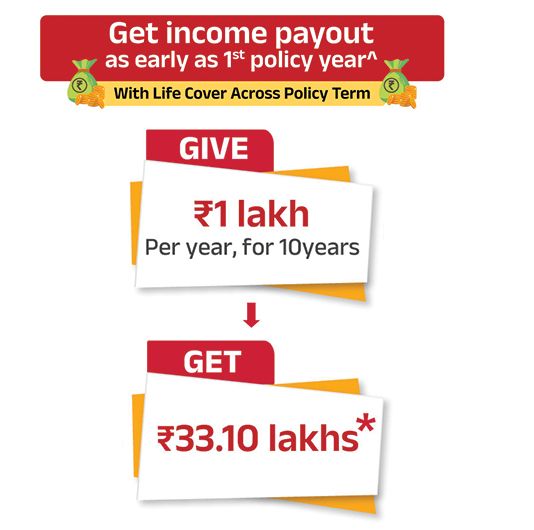



 Table of Contents


 BUY ONLINE